
Copolymer of fibroin and poly L-lactic acid, preparation method thereof through ring-opening polymerization and application thereof
A technology of fibroin and ring-opening polymerization, which is applied in the field of copolymers of fibroin and poly-L-lactic acid and their preparation, and can solve problems such as no research reports and the like
- Summary
- Abstract
- Description
- Claims
- Application Information
AI Technical Summary
Problems solved by technology
Method used
Image

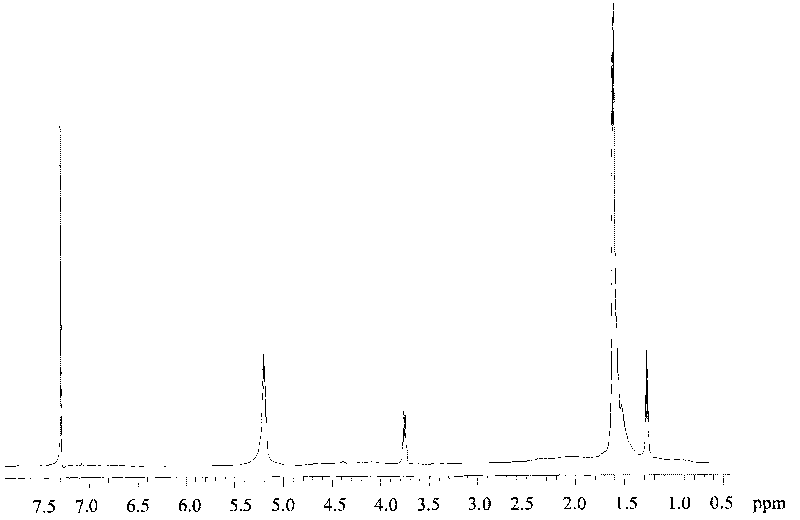
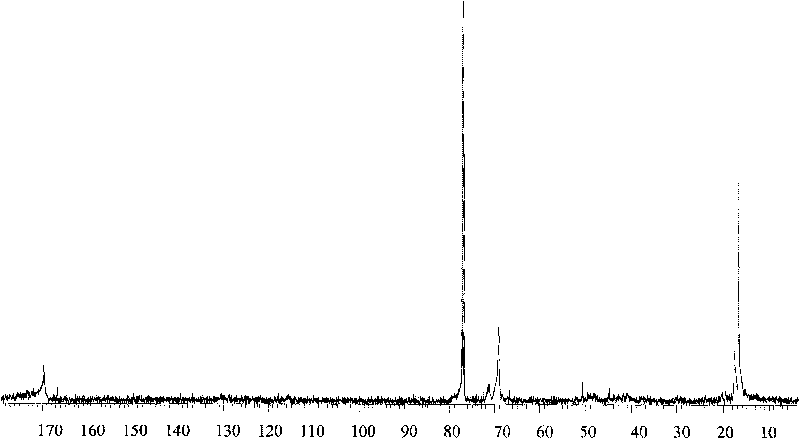
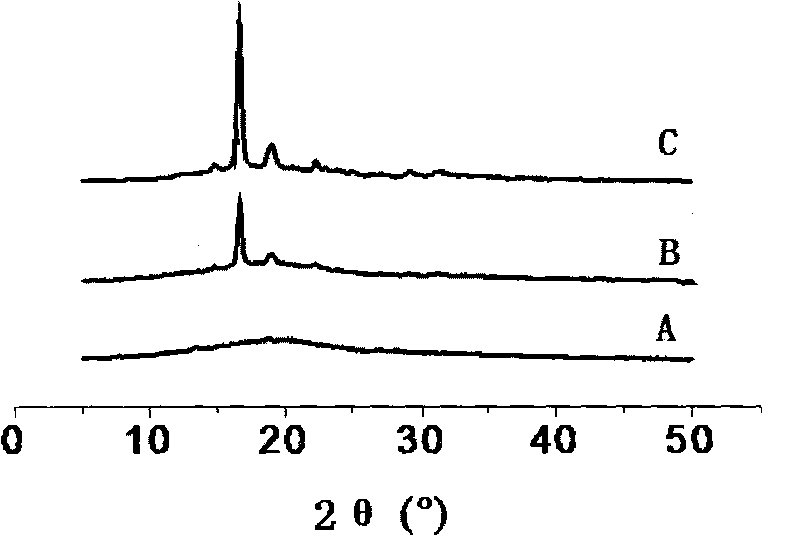
Examples
Embodiment 1
[0059] L-lactide, dehydrated silk protein powder (number-average molecular mass 3000), SnCl 2 / p-toluenesulfonic acid catalyst system (SnCl 2 The molar content accounts for 50% of the whole catalyst system) into the polymerization tank. SnCl 2 The dosage is 0.5wt% of L-lactide, and the mass ratio of L-lactide to silk protein is 4:1. The pressure of the system was gradually reduced to 0 mmHg (manometer reading) and then sealed, the reaction temperature was 170° C., and the reaction time was 10 hours. Then the temperature was lowered to 130° C., and the solid state reaction was carried out for 10 hours. After the polymerization, the obtained copolymer was dissolved in ethyl acetate, filtered and precipitated with ether, and the filtered precipitate was vacuum-dried at 65° C. for 16 hours to obtain a purified copolymer of silk protein and poly-L-lactic acid. After purification, the copolymer is a yellow powder with a molecular weight of 18,000, a yield of 73%, no melting poi...
Embodiment 2
[0061] L-lactide, dehydrated silk protein powder (the number average relative molecular mass is 3000), SnCl 2 / naphthalenesulfonic acid catalyst system (SnCl 2 The molar content accounts for 50% of the whole catalyst system) into the polymerization tank. SnCl 2 The dosage is 0.5wt% of L-lactide, and the mass ratio of L-lactide to silk protein is 6:1. The pressure of the system was gradually reduced to 10 mm Hg and then sealed, the reaction temperature was 170° C., and the reaction time was 10 hours. Then the temperature was lowered to 130° C., and the solid state reaction was carried out for 10 hours. After the polymerization was complete, the resulting copolymer was dissolved in ethyl acetate, filtered and precipitated with diethyl ether. The filtered precipitate was vacuum-dried at 65° C. for 16 hours to obtain a purified polylactic acid and silk fibroin peptide chain copolymer. The purified copolymer is a yellow powder with a molecular weight of 24,000, a yield of 73%,...
Embodiment 3
[0063] Add L-lactide, dehydrated silk protein powder (the number-average molecular mass is 1000), stannous isooctanoate / naphthalenesulfonic acid catalyst system (the molar content of stannous isooctanoate accounts for 50% of the entire catalyst system) in the polymerization kettle. The amount of stannous isooctanoate is 0.5wt% of L-lactide, and the mass ratio of L-lactide to silk protein is 10:1. The pressure of the system was gradually reduced to 2 mm Hg and then sealed, the reaction temperature was 170° C., and the reaction time was 15 hours. Then the temperature was lowered to 140° C., and the solid phase reaction was carried out for 15 hours. After the polymerization was complete, the copolymer was dissolved in ethyl acetate, filtered and precipitated with diethyl ether. The filtered precipitate was vacuum-dried at 65° C. for 10 hours to obtain a purified copolymer of silk protein and poly-L-lactic acid. The purified copolymer is a yellow powder with a molecular weight ...
PUM
| Property | Measurement | Unit |
|---|---|---|
| melting point | aaaaa | aaaaa |
| specific rotation | aaaaa | aaaaa |
| melting point | aaaaa | aaaaa |
Abstract
Description
Claims
Application Information
 Login to View More