
Comprehensive organism repairing method of eutrophication seawater cage culture zone
A technology of eutrophication and cage culture, which is applied in the field of bioremediation in eutrophic sea areas, can solve problems such as secondary pollution of water bodies, and achieve high economic value, good environment and economic benefits
- Summary
- Abstract
- Description
- Claims
- Application Information
AI Technical Summary
Problems solved by technology
Method used
Image

Examples
Embodiment 1
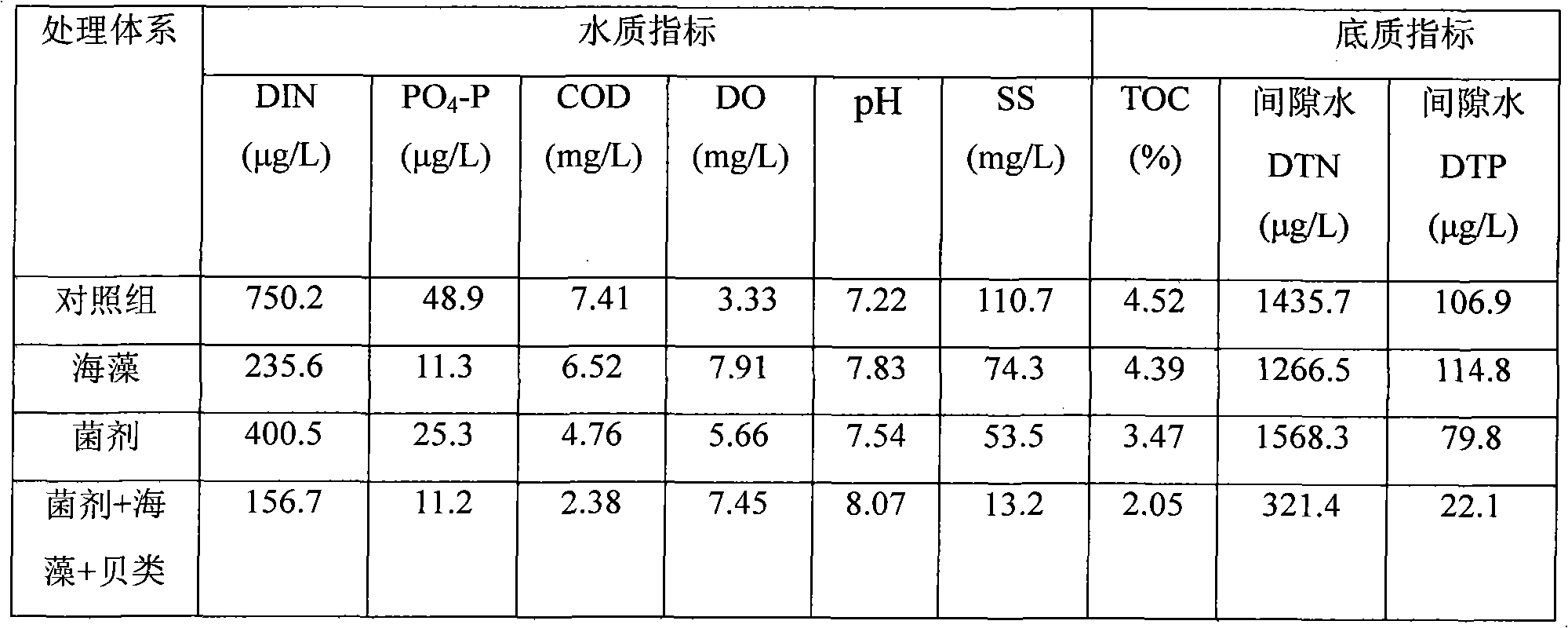
[0013] In the prawn breeding base of Ocean University of China, 5.0Kg asparagus was suspended and raised in a 1m (length) × 1m (width) × 1.5m (deep) cage, and 200 scallops were added to the bottom of the cage ( Chlamys fareri), add 2.0Kg of immobilized microorganisms obtained by mixing photosynthetic bacteria, bacillus, subdigestive bacteria and nitrifying bacteria in equal weight ratios in the net cage water body. Regular monitoring of various water quality and sediment indicators. The water quality and mud quality monitoring indicators of each bioremediation system on the 4th day are shown in Table 1. Among them, the control group is a treatment system without adding any remediation organisms. For the control group without remediation, the comprehensive environmental quality of water body and sediment is poor, both exceeding the national Class IV seawater quality and Class III marine sediment quality standards. After 4 days of restoration, compared with the control group, i...
Embodiment 2
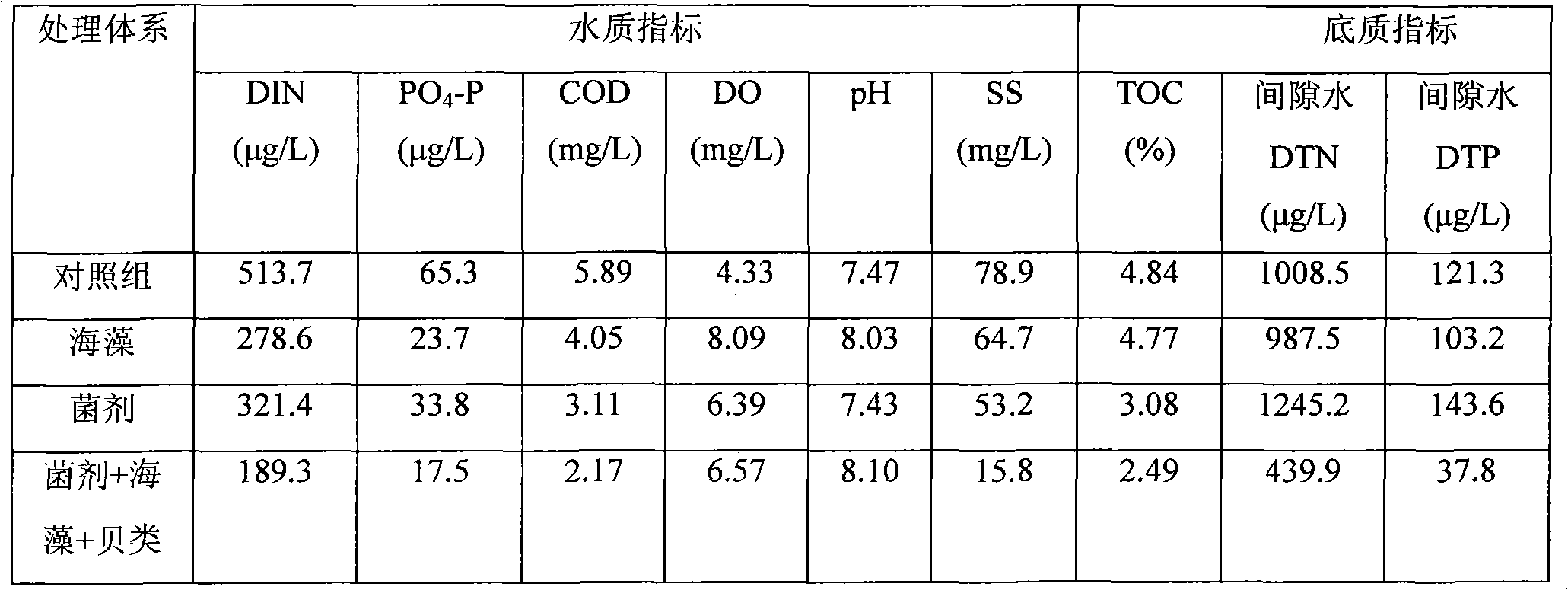
[0017] In the turbot breeding base of Ocean University of China, 0.5Kg laver was suspended in a 1m (length) × 1m (width) × 1.5m (depth) cage, and 20 Pacific oysters (Crassostrea gigas) were added to the bottom of the cage. Add 0.2Kg of immobilized microorganisms obtained by mixing photosynthetic bacteria, bacillus, subdigestive bacteria and nitrifying bacteria in equal weight proportions into the water body of the tank. Regular monitoring of various water quality and sediment indicators. The water quality and mud quality monitoring indicators of each bioremediation system are shown in Table 2. Among them, the control group is the treatment system without adding any restoration organisms. Similar to Example 1, in the control group without restoration, the comprehensive environmental quality of water body and sediment is poor, and DIN\, PO in water body 4 - Both P and COD exceed the national Class IV seawater quality standards, and the TOC in the substrate exceeds the national...
PUM
 Login to View More
 Abstract
Description
Claims
Application Information
 Login to View More