
Integral active electric power-assisted steering mechanical structure
A technology of electric power steering and mechanical structure, applied in the field of steering and steering, can solve the problems of affecting the driving stability, reducing the steering stroke, and the steering flexibility of the car has not been greatly improved, so as to ensure the road response, reduce the turning radius, Comfortable and responsive to the road
- Summary
- Abstract
- Description
- Claims
- Application Information
AI Technical Summary
Problems solved by technology
Method used
Image

Examples
Embodiment 1
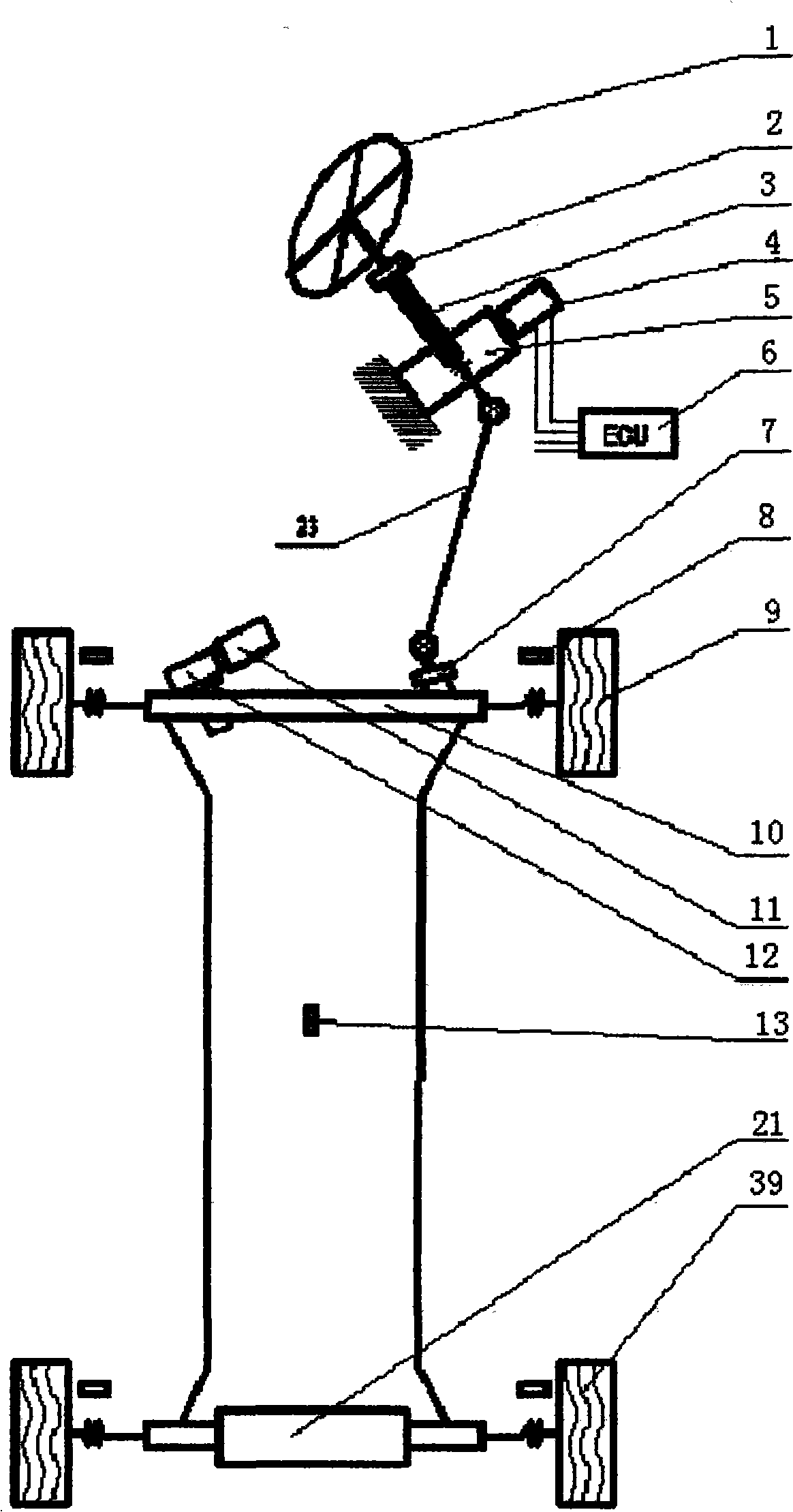
[0036] In embodiment one: the car is in the low-speed driving state:
[0037] The steering control module 14 in the controller 6 drives the front-wheel steering system and the rear-wheel steering system 21 to steer in reverse phase. Since the steering gear ratio module 15 provides a small steering transmission ratio at low speeds, the steering torque increases. The steering control module 6 must apply steering torque compensation to the power assist motor 11, so as to obtain excellent handling performance—lightweight, direct steering, and can reduce the steering radius to make the vehicle more flexible and agile.
[0038] In the second embodiment: the car is in the state of changing lanes at high speed, and performs cornering operation:
[0039] The controller 6 steering control module 14 front wheel steering system, the steering angle transmission ratio module 15 provides a large steering transmission ratio and slow steering, and then the controller 6 steering control module ...
PUM
 Login to View More
 Abstract
Description
Claims
Application Information
 Login to View More