

Use of ferritin to treat iron deficiency disorders
A ferritin and barrier technology, applied in the field of treating patients with iron deficiency disorders, can solve the problem that the concentration of lactoferrin cannot be detected, etc.
- Summary
- Abstract
- Description
- Claims
- Application Information
AI Technical Summary
Problems solved by technology
Method used
Image

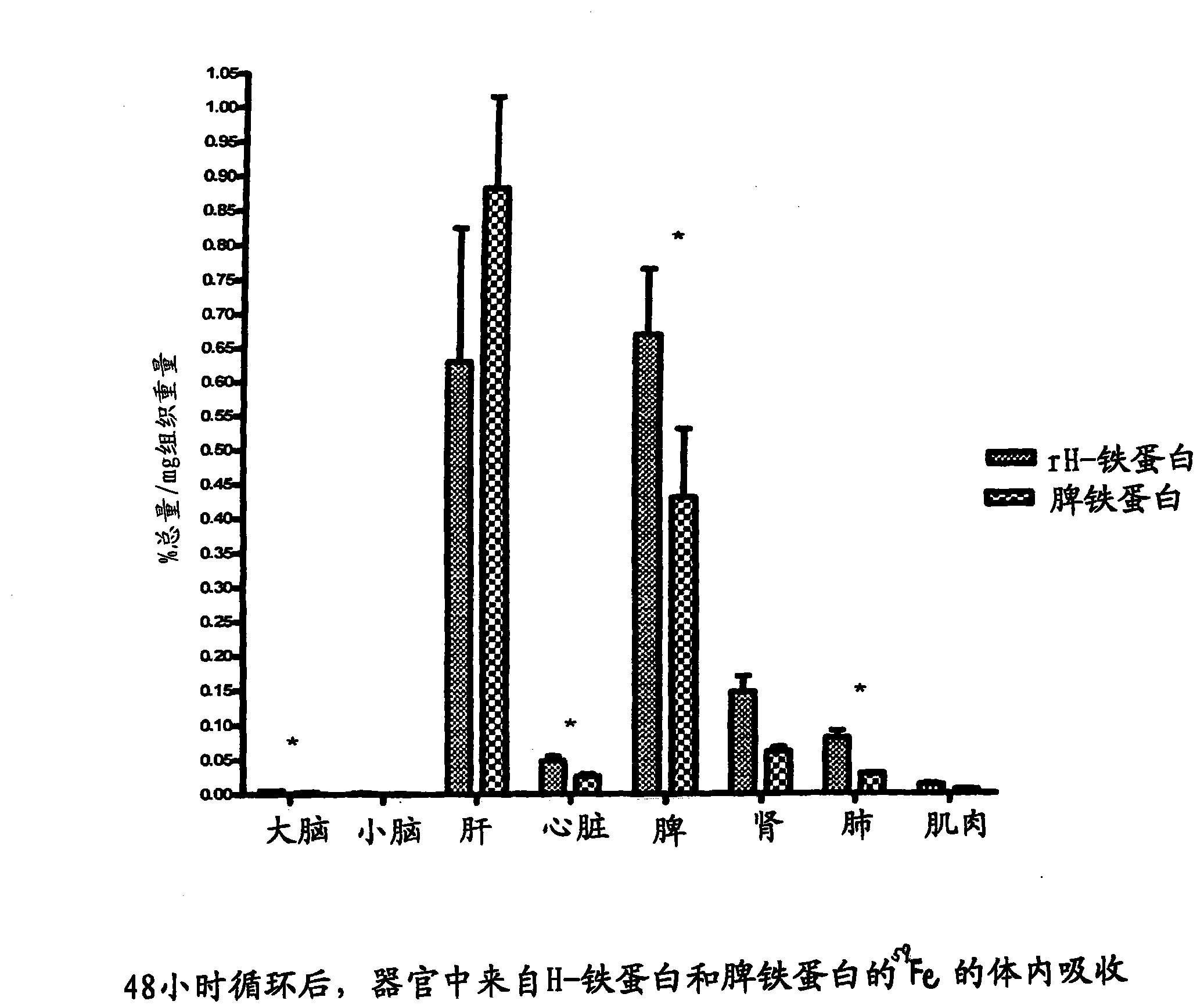
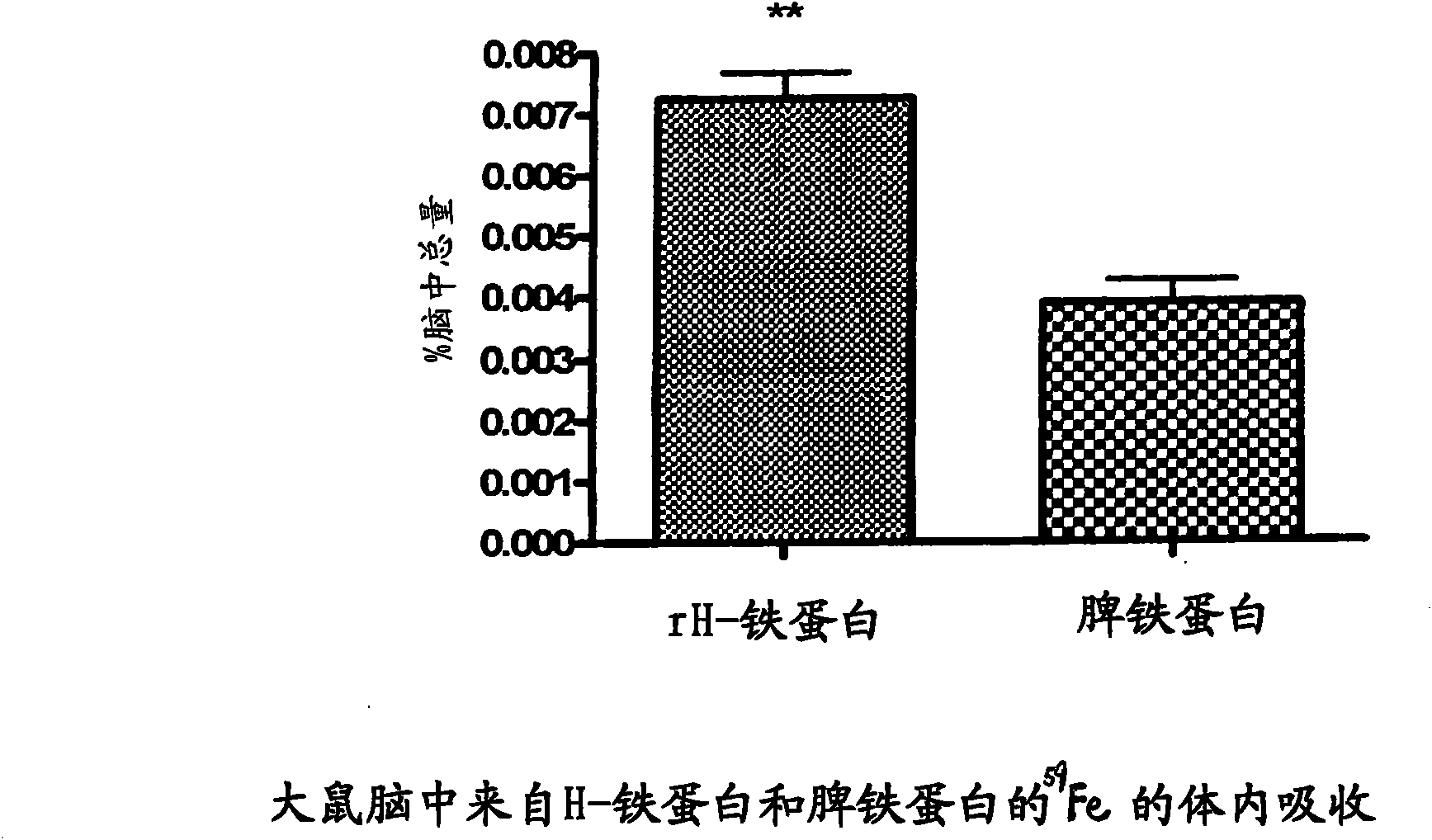
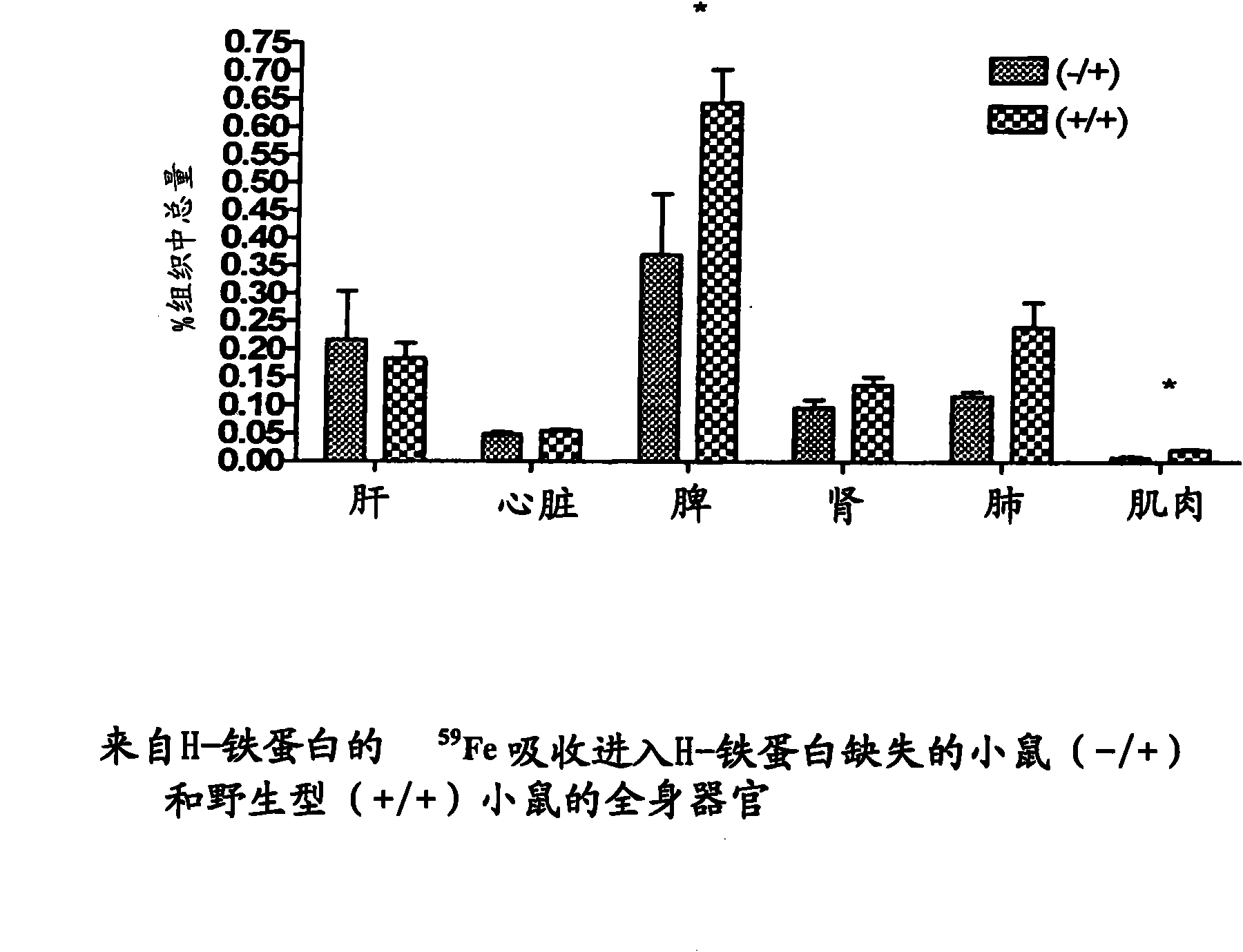
Examples
Embodiment 1
[0063] Preparation of ferritin
[0064] All experiments in this example used recombinant human H-ferritin or horse spleen ferritin. Recombinant human H-ferritin was prepared by transforming chemically competent Br21 cells with His-tagged recombinant human H-ferritin plasmid. After cell growth, the protein was purified to a final concentration of 2.8 mg / ml using a nickel protein filter column. Horse spleen ferritin was obtained commercially (Sigma) and was selected because it contained an approximate 90:10 ratio of L, H-ferritin subunits.
[0065] Cell culture and preparation of endothelial cell monolayers
[0066] We used bovine retinal cells (BRECs) as an in vitro model of the blood-brain barrier (BBB) to test the hypothesis that ferritin could be transported across the endothelial cell layer and to begin to propose a mechanism for ferritin transport across the BBB. This well-studied model has been shown to possess all the necessary properties and properties of the blood...
Embodiment 2
[0100] introduction
[0101]We developed new dietary approaches to alleviate iron deficiency. This approach is based on our findings in vivo, including the H-ferritin receptor, in the brain, and on the fact that H-ferritin is the preferred means of iron uptake into all organs except the liver relative to L-rich ferritin confirmed. Others have shown that H-ferritin is abundant in breast milk, suggesting that the protein is a mechanism for delivering iron between mother and infant. This latter statement is potentially true for all mammals, not just humans. In addition, the gene sequence and protein structure of H-ferritin are highly conserved in the animal kingdom. Therefore, the use of H-ferritin as an iron delivery protein should not be limited to humans.
[0102] We have devised a method using yeast to deliver H-ferritin as a dietary supplement. To initiate this approach, initial studies transformed yeast to express the human H-ferritin gene, which can be translated into...
PUM
| Property | Measurement | Unit |
|---|---|---|
| molecular weight | aaaaa | aaaaa |
Abstract
Description
Claims
Application Information
 Login to View More