
Method for adjusting and controlling braking force of motor
A technology of motor braking and control methods, which is applied to electric braking systems, motors, brakes, etc., and can solve problems such as low control accuracy, difficult control of frictional braking torque, and restricted control effects
Patent Information
- Authority / Receiving Office
- CN · China
- Current Assignee / Owner
- Publication Date
- 2011-08-10
Smart Images
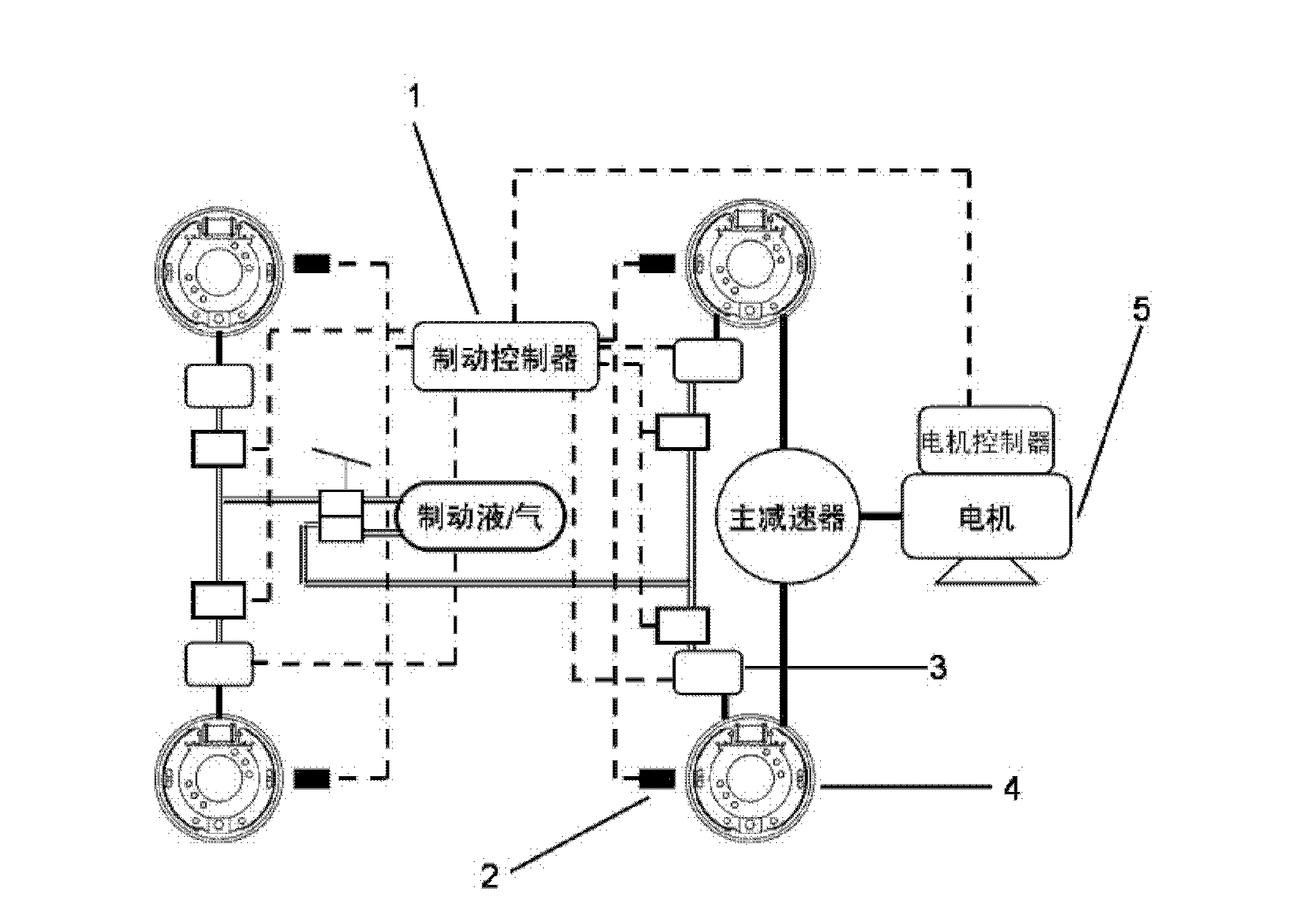
Figure 1 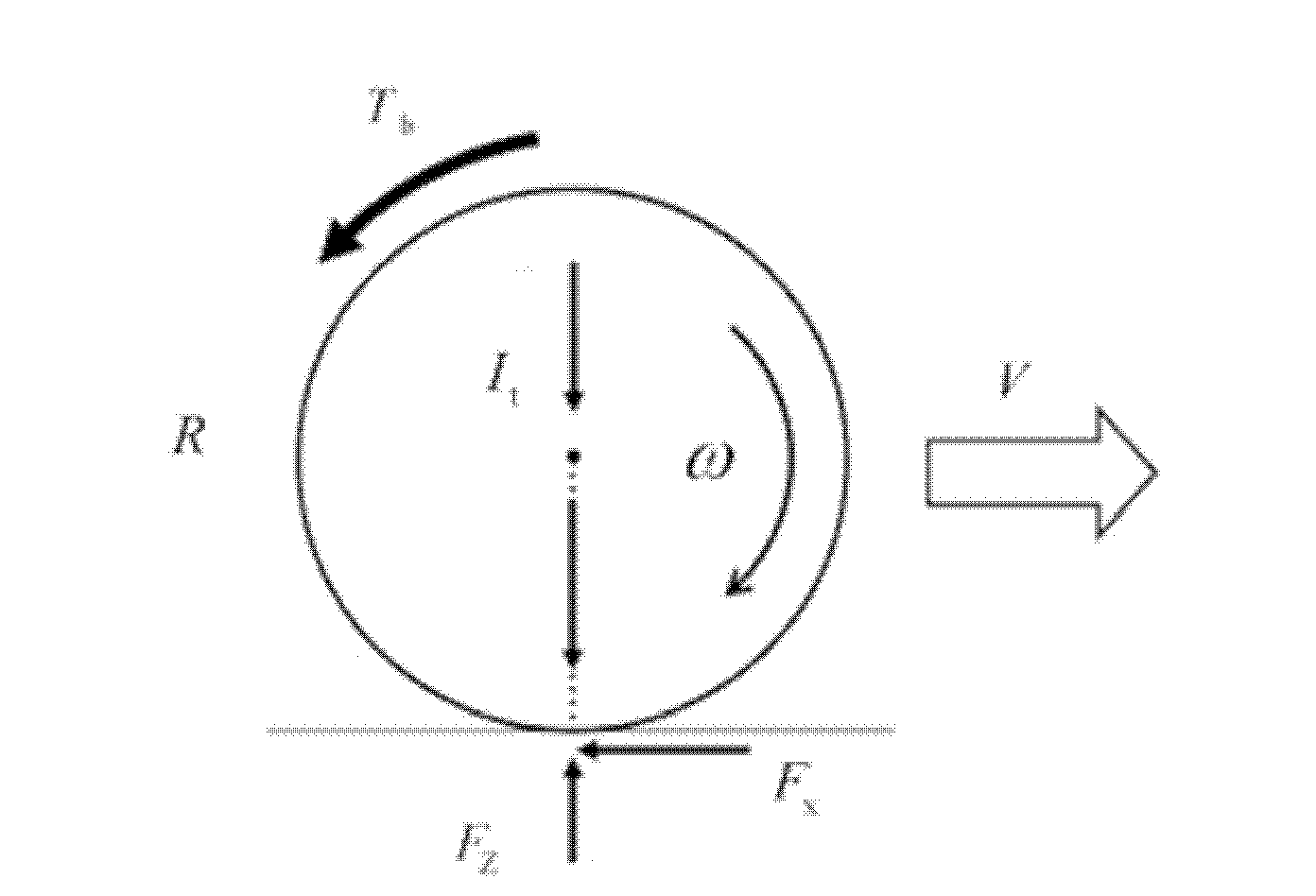
Figure 2 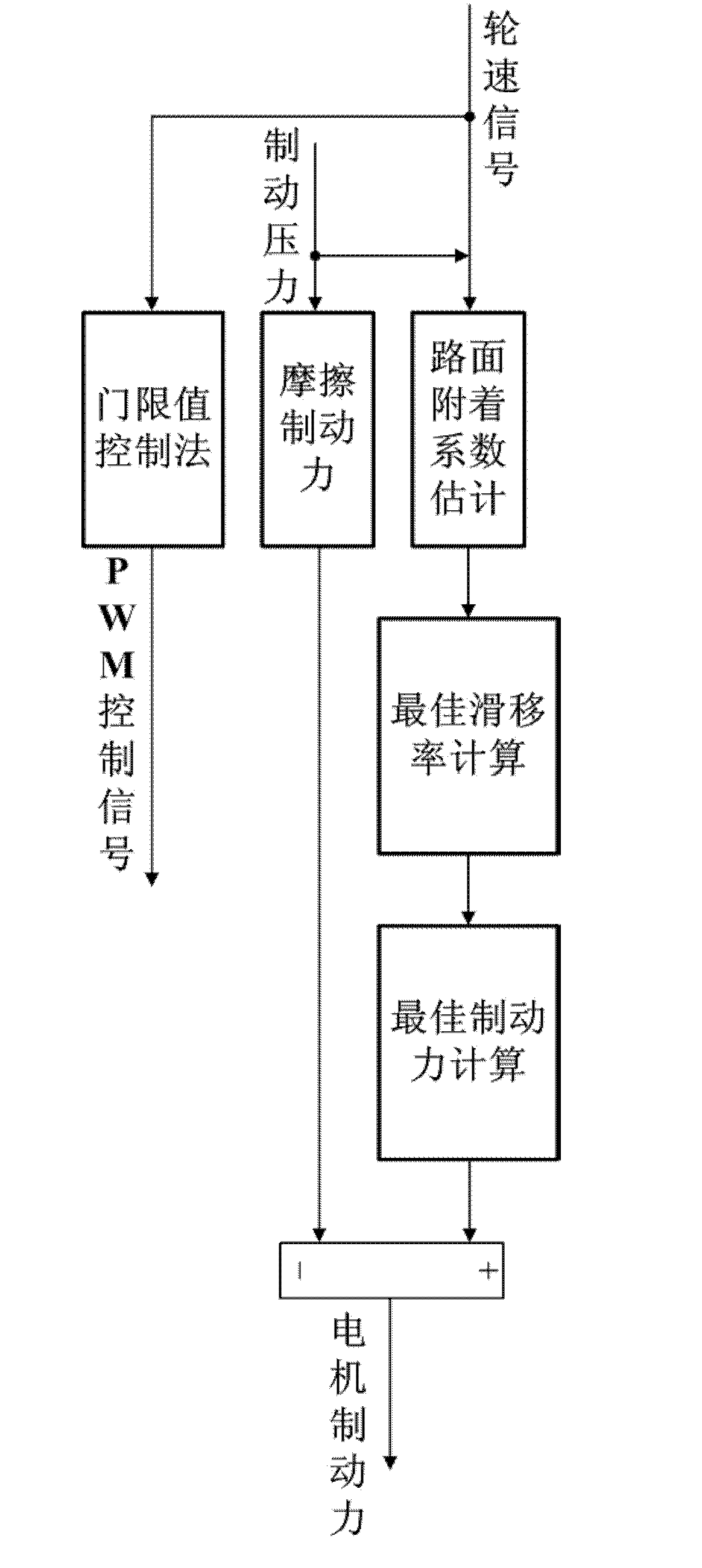
Figure 3
Abstract
Description
technical field
[0001] The invention relates to a braking force regulation control method, in particular to a motor braking force regulation control method. Background technique
[0002] Pure electric vehicles, hybrid electric vehicles and fuel cell electric vehicles often use braking energy feedback systems. During the braking process, the driving motor is controlled to work in the power generation state, and the kinetic energy of the vehicle is converted into electrical energy and stored in the battery. The brake energy regenerative system can significantly improve the fuel economy of the vehicle. On pure electric, hybrid and fuel cell electric vehicles equipped with braking energy feedback systems, friction braking systems are generally installed, and the friction braking systems are directly controlled by the driver. Therefore, it is necessary to coordinate the distribution of motor braking force and friction braking force in real time according to the driver's braking ...
Examples
Embodiment Construction
[0032] The present invention will be further described below in conjunction with the accompanying drawings.
[0033] Such as figure 1 As shown, the present invention mainly includes a brake controller 1 , a wheel speed sensor 2 , a brake pressure sensor 3 , a friction brake 4 and a drive motor 5 .
[0034] Such as figure 2 , image 3 As shown, the wheel of the car has two degrees of freedom, which are the vehicle speed V and the angular velocity ω of the wheel. f x is the longitudinal adhesion between the tire and the road surface, R is the effective rolling radius of the wheel, T b is the total braking torque, I t is the moment of inertia of the wheel. At the initial moment of each control cycle h, the motor braking force is calculated according to the data measured by the sensor in the previous cycle and the data received by CAN, and used in the next cycle. During the period h, the braking force is regarded as a certain value, and the specific calculation method is a...