[0003] The present invention provides a brush that can enter the bucket from the mouth of the small bucket and can expand the brush in the bucket under the condition of pressure and power, so that the brush can be placed on the wall, bottom, shoulder and various parts of the outside of the bucket. It can quickly and quickly rotate, spray water, and clean. It can complete the cleaning operation of a bucket within 10 seconds. It is a new type of cleaning brush inside and outside the bucket that cleans thoroughly without dead ends. The cleaning of buckets in the factory has always remained in the original cleaning method, which is to tie a rag to one end of an iron rod or wooden stick and put it into the bucket to manually remove the dirt in the bucket little by little. Some small ones are even visible to the
naked eye. The dirt cannot be removed at all. A few years ago, some manufacturers produced a kind of washing
machine, which is to tie some
nylon wool on the iron rod and use the motor to drive it to rotate in the
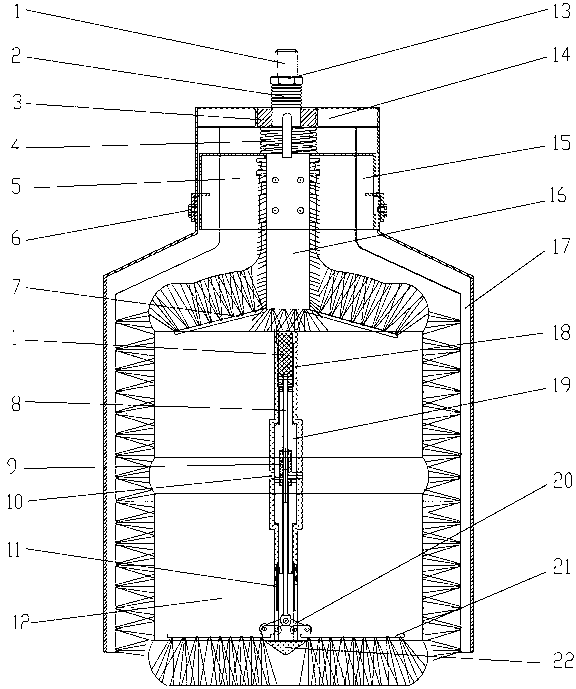
barrel. It cannot achieve the decontamination effect at all. The technical solution is: a new type of cleaning brush inside and outside the bucket, which is characterized in that: put the brush rod inside the bucket from the mouth of the bucket into the bucket, and the mouth of the bucket will be placed on the pressure seat of the mouth of the bucket, because there is a mouth of the bucket above the pressure seat of the mouth of the bucket Pressure bearing, and
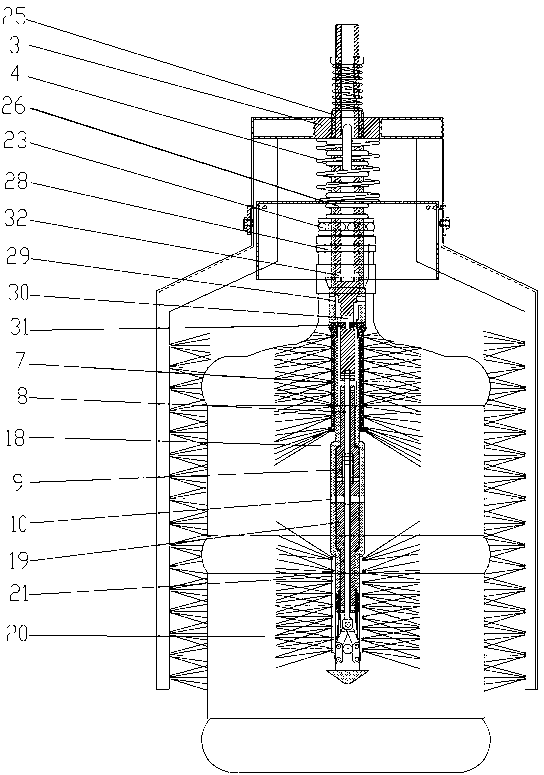
thrust bearing The pressure spring supports the outer brush holder of the bucket fixed with the sliding sleeve of the inner brush holder, see figure 2 , push down the inner brush shaft installed in the inner brush shaft sliding sleeve and slide downward, the water outlet hole set under the inner brush shaft goes down to communicate with the flushing hole in the bucket under the inner brush shaft sliding sleeve At the same time, the cleaning water in the central
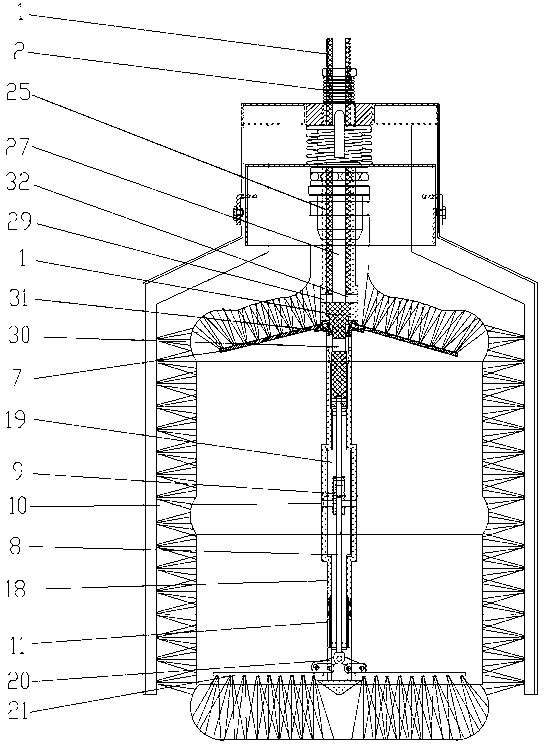
water pipe is sprayed into the bucket from the flushing hole in the bucket. When the inner brush shaft slides downward, the inner bucket shoulder brush guide groove set at the lower end of the inner brush shaft is pushed and fixed by the pin shaft. The brush guide angles on the inner barrel shoulder brushes on both sides of the lower end of the inner brush shaft sliding sleeve make the brush guide angles break away from the brush guide grooves, let the inner barrel shoulder brushes
tilt up, and make the bristles press against the inner shoulders of the bucket and align with the center The bucket bottom brush push-pull piece connected with the thrust rod pushes the bucket bottom brush to the bottom of the bucket, see image 3 , the pole push-pull piece connected with the middle end of the central push-pull piece pushes away the scissor-shaped strut connected with it, and pushes the brush seat on the inner wall of the bucket to the inner wall of the bucket. At this time, the return spring of the inner brush shaft has been pressed together, The brushes are fully opened, and the pressure spring of the brush seat on the outer shoulder of the bucket presses the brush on the outer shoulder of the bucket to the part that needs to be cleaned on the outer shoulder of the bucket. At this time, quickly turn the inner brush shaft to quickly clean the inside and outside of the bucket in a few seconds. Clean, when the cleaning is completed, the inner brush shaft stops rotating, and the return spring of the inner brush shaft springs up, pushing the inner brush shaft and the central push-pull rod connected with it to slide upward, so that the connected support rod push-pull piece, the bottom of the bucket The brush push-pull piece pulls the scissor-shaped support rod, and the brush seat on the inner wall of the bucket and the brush at the bottom of the bucket shrink to the brush rod inside the bucket. At this time, the inner brush shaft is pulled up to lift the inner and outer brushes of the bucket smoothly, and the next step is carried out. bucket cleaning



 Login to View More
  Login to View More