
Glutamyltranspeptidase for synthesizing gamma-polyglutamic acid and coding gene thereof
A technology of glutamyl transpeptidase and polyglutamic acid, which is applied in the fields of genetic engineering and enzyme engineering, can solve the problems such as the lack of glutamyl transpeptidase, and achieve the effect of good application value
- Summary
- Abstract
- Description
- Claims
- Application Information
AI Technical Summary
Problems solved by technology
Method used
Image

Examples
Embodiment 1
[0035] Example 1 Obtaining of glutamyl transpeptidase gene and verification of the function of synthesizing γ-polyglutamic acid
[0036] 1. Acquisition of glutamyl transpeptidase gene
[0037] A mangrove metagenomic library was constructed from coastal mangrove silt samples in Zhanjiang City, Guangdong Province. A medium containing 100 μg / ml ampicillin, 0.1% γ-glutamyl-p-nitroaniline, 1% glucose and 0.5% amino acid complex was used as the selection medium to screen glutamyl transpeptidase-positive clones from the library. Copy the cells in the library onto a solid selective medium plate with a replica inoculation needle, culture at 37°C for 3 days, and screen for positive clones with yellow hydrolysis circles around the colonies.
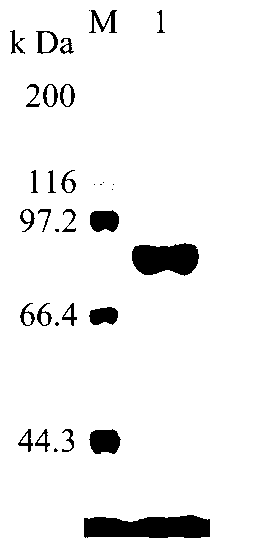
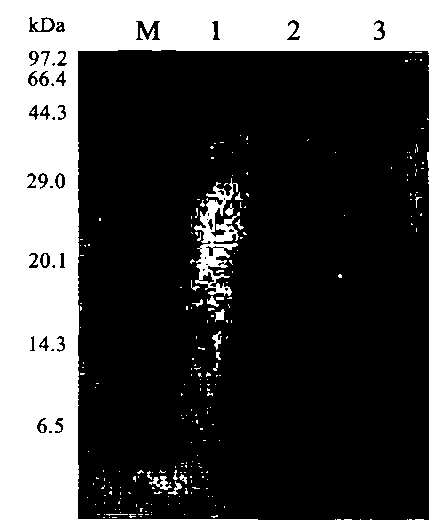
[0038] In order to screen out clones that synthesize γ-polyglutamic acid, pick the clones that produce yellow hydrolysis circles on the selection medium, and inoculate them into 10ml containing 100μg / ml ampicillin and 0.5mM isopropylthio-β-D -Gala...
Embodiment 2
[0049] Example 2 Study on conditions for the synthesis of γ-polyglutamic acid by recombinant glutamyl transpeptidase GGT_015
[0050] 1. Effect of pH value on the ability to synthesize γ-polyglutamic acid
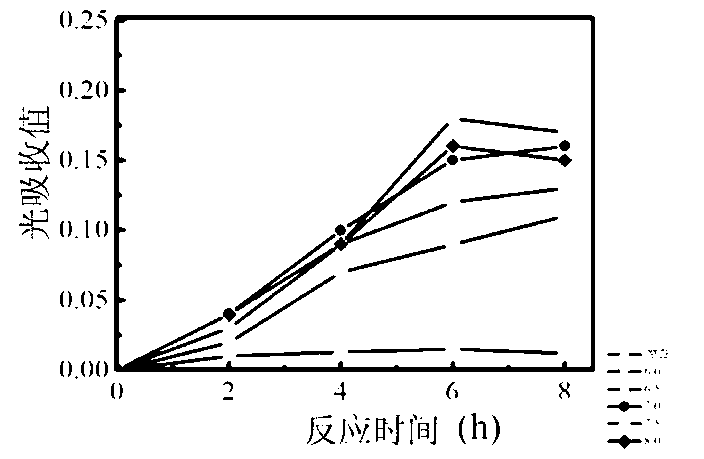
[0051] Take 10 μl of purified enzyme solution, add 1ml of 20% glutamine, and react in water bath at 30°C for 2h, 4h, 6h, and 8h respectively in buffer solutions with pH 6.0, 6.5, 7.0, 7.5, and 8.0, and add 1ml 15% acetic acid solution was used to terminate the reaction, and the light absorption value was measured at 214nm wavelength. The greater the absorption value, the greater the amount of synthesized γ-polyglutamic acid. At the same time, the inactivated enzyme solution was used as a control. The result is as image 3 The results showed that the optimal pH value of GGT_015 for synthesizing γ-polyglutamic acid was 7.5; below or above this pH value, the synthesis ability of GGT_015 would be relatively reduced.
[0052] 2. Effect of temperature on the ability to synthes...
PUM
| Property | Measurement | Unit |
|---|---|---|
| Molecular weight | aaaaa | aaaaa |
Abstract
Description
Claims
Application Information
 Login to View More