Process for producing fatty alcohols from fatty acids

A technology for fatty alcohols and fatty acids, applied in the field of preparing fatty alcohols, can solve problems such as loss of feed efficiency, and achieve the effects of maximum loss and minimal loss

A technology for fatty alcohols and fatty acids, applied in the field of preparing fatty alcohols, can solve problems such as loss of feed efficiency, and achieve the effects of maximum loss and minimal loss

CN103282335AActive Publication Date: 2013-09-04JOHNSON MATTHEY DAVY TECH LTD

Image

Smart Image Click on the blue labels to locate them in the text.
Viewing Examples
Smart Image
  • Process for producing fatty alcohols from fatty acids
  • Process for producing fatty alcohols from fatty acids
  • Process for producing fatty alcohols from fatty acids

Examples

Experimental program
Comparison scheme
Effect test

Embodiment 1

[0068] A standard 300ml autoclave was assembled with a bottom drain point and a sample bomb to allow addition of liquid at operating temperature and pressure. The static catalyst basket was also shaped to allow the solid catalyst titanium dioxide (TiS) supported on silica, referred to as Catalyst-1, to be held within the liquid contents of the autoclave.

[0069] 2g of Catalyst-1 was added to the basket and 200ml of 1-dodecanol (157.9g ex Aldrich) was added to the container. The autoclave was heated to 215°C for over 1 hour and 2 g of methyl laurate (ex Aldrich) was added through the sample reservoir which had been pressurized with nitrogen. Excess nitrogen pressure was then vented, and the autoclave was sealed. Then, after the first small purge was collected, the contents were sampled over time through the bottom drain valve.

Embodiment 2 to 6

[0071] Then, the test was repeated using the same catalyst loading. Example 2 was the same as Example 1 to check for total inactivation. Examples 3 and 4 used double the methyl laurate concentration, Example 5 had the agitation rate reduced to check for weight transfer limitations, and Examples 4, 5 and 6 had 4 wt% added to the initial tank contents Methanol. Practice 6 can be performed under pressure (52 psig).

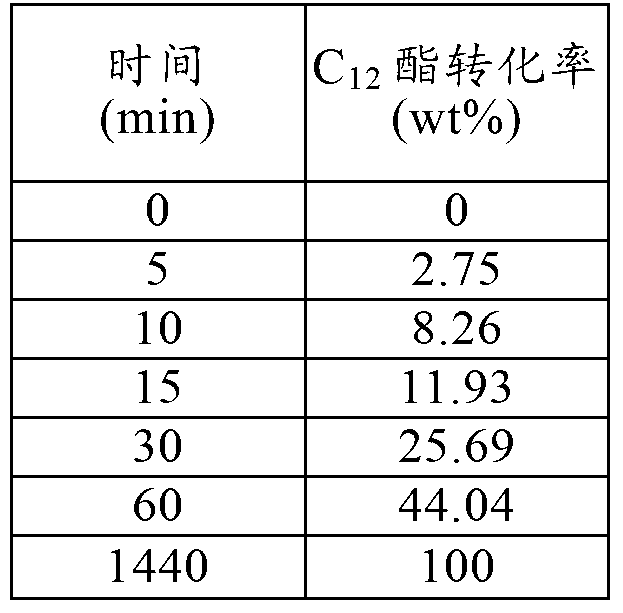
[0072] Tables 1-6 show the progression of the reaction over time.

[0073] Table 1 - Example 1

[0074]

Embodiment 2

[0076]

the structure of the environmentally friendly knitted fabric provided by the present invention; figure 2 Flow chart of the yarn wrapping machine for environmentally friendly knitted fabrics and storage devices; image 3 Is the parameter map of the yarn covering machine
Login to View More

PUM

No PUM Login to View More

Abstract

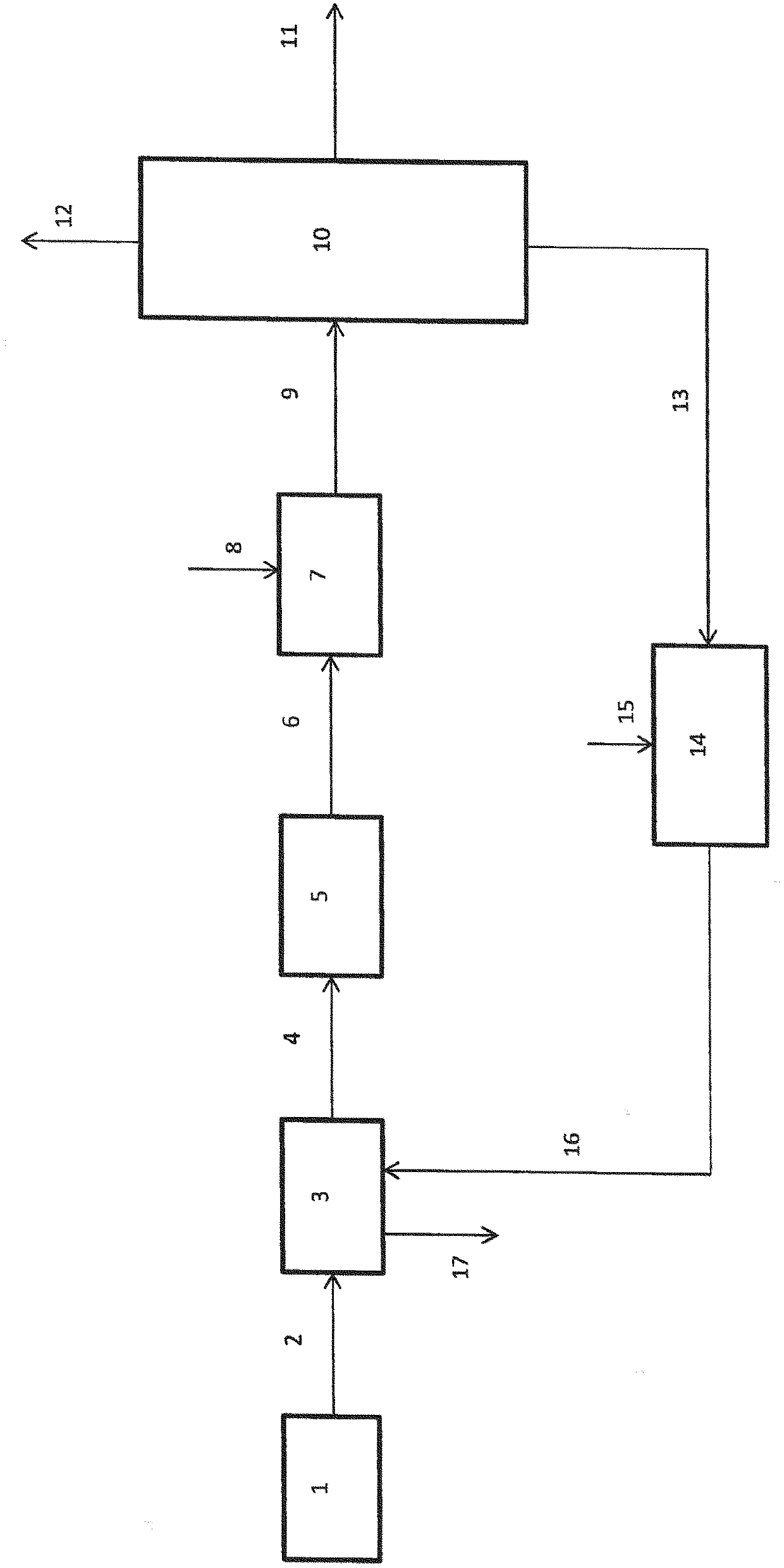
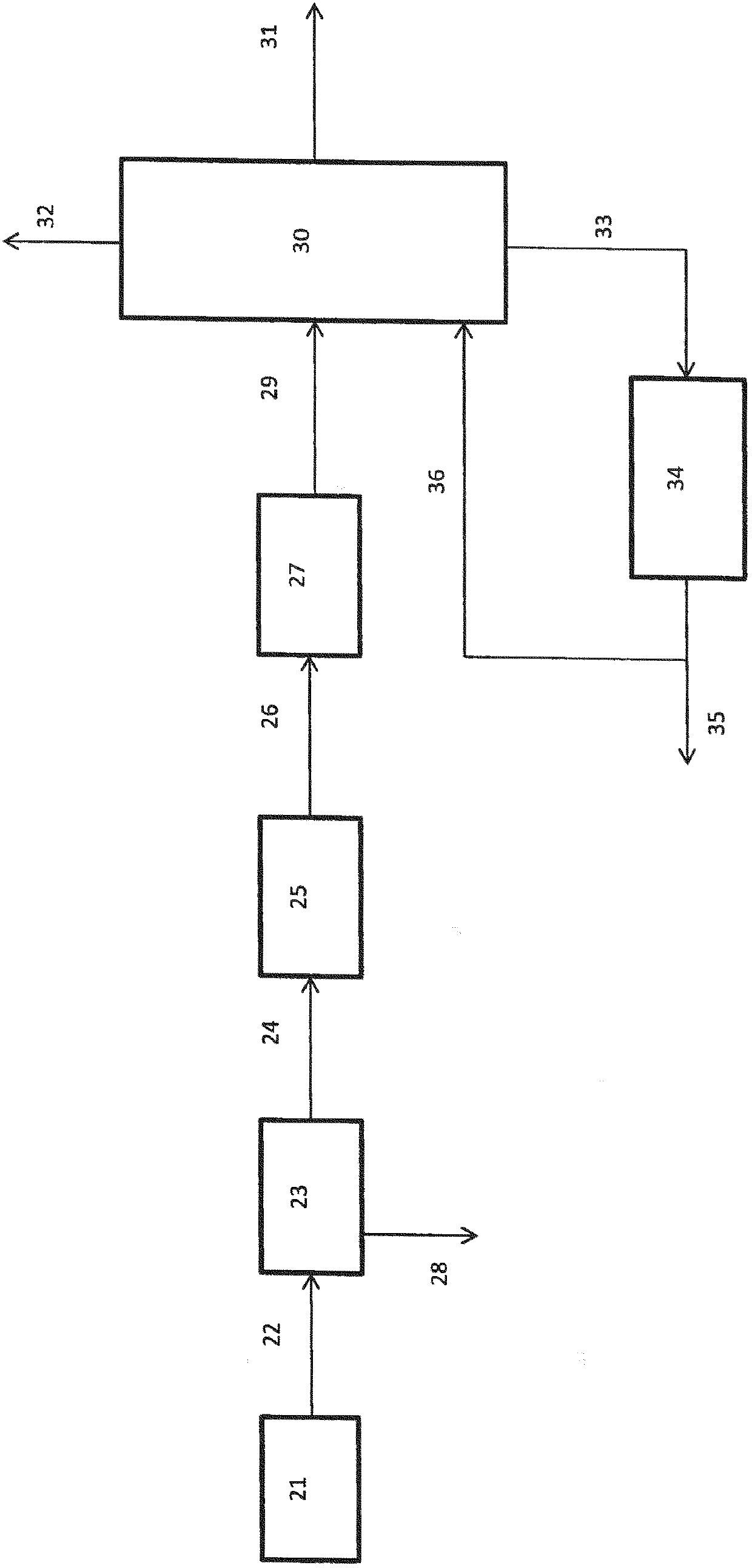
A process for the production of fatty alcohol or alcohols comprising: subjecting a fatty acid or fatty acid mixture to esterification with a lower alkanol in an esterification reactor maintained under esterification conditions to form a stream comprising the corresponding lower alkyl ester or esters; vaporising the stream from step (a); subjecting the vaporised stream of step (b) to hydrogenation in a first hydrogenation zone operated under hydrogenation conditions to form a stream comprising fatty alcohol or alcohols and an amount of unconverted lower alkyl ester or esters; subjecting the stream from step (c) to transesterification in a wax ester reactor maintained under transesterification conditions in the presence of a solid transesterification catalyst thereby to convert at least a portion of the lower alkyl fatty acid ester by ester interchange with a corresponding amount of fatty alcohol or alcohols to lower alkanol and to a wax ester or esters derived from a fatty alcohol and a fatty acid; separating fatty alcohol or fatty alcohols and wax ester or wax esters of step (d) by distillation to yield a fatty alcohol or alcohols product and a stream comprising wax ester or esters; passing said stream comprising wax ester or esters to a second hydrogenation zone operating under conditions to effect hydrogenation in the liquid phase to revert the wax ester or esters to fatty alcohol or alcohols; and returning the fatty alcohol or alcohols to the separation step (e).

Description

the structure of the environmentally friendly knitted fabric provided by the present invention; figure 2 Flow chart of the yarn wrapping machine for environmentally friendly knitted fabrics and storage devices; image 3 Is the parameter map of the yarn covering machine
Login to View More

Claims

the structure of the environmentally friendly knitted fabric provided by the present invention; figure 2 Flow chart of the yarn wrapping machine for environmentally friendly knitted fabrics and storage devices; image 3 Is the parameter map of the yarn covering machine
Login to View More

Application Information

Patent Timeline
04 Sep 2013
Publication
CN103282335A