
High-frequency ultrasonic superficial organ imaging method capable of lowering random noise
A technology of random noise and imaging method, applied in ultrasonic/sonic/infrasonic diagnosis, sonic diagnosis, infrasonic diagnosis, etc., can solve problems such as application limitations
Patent Information
- Authority / Receiving Office
- CN · China
- Patent Type
- Applications(China)
- Current Assignee / Owner
- Publication Date
- 2013-09-18
- Estimated Expiration
- Not applicable · inactive patent
Smart Images
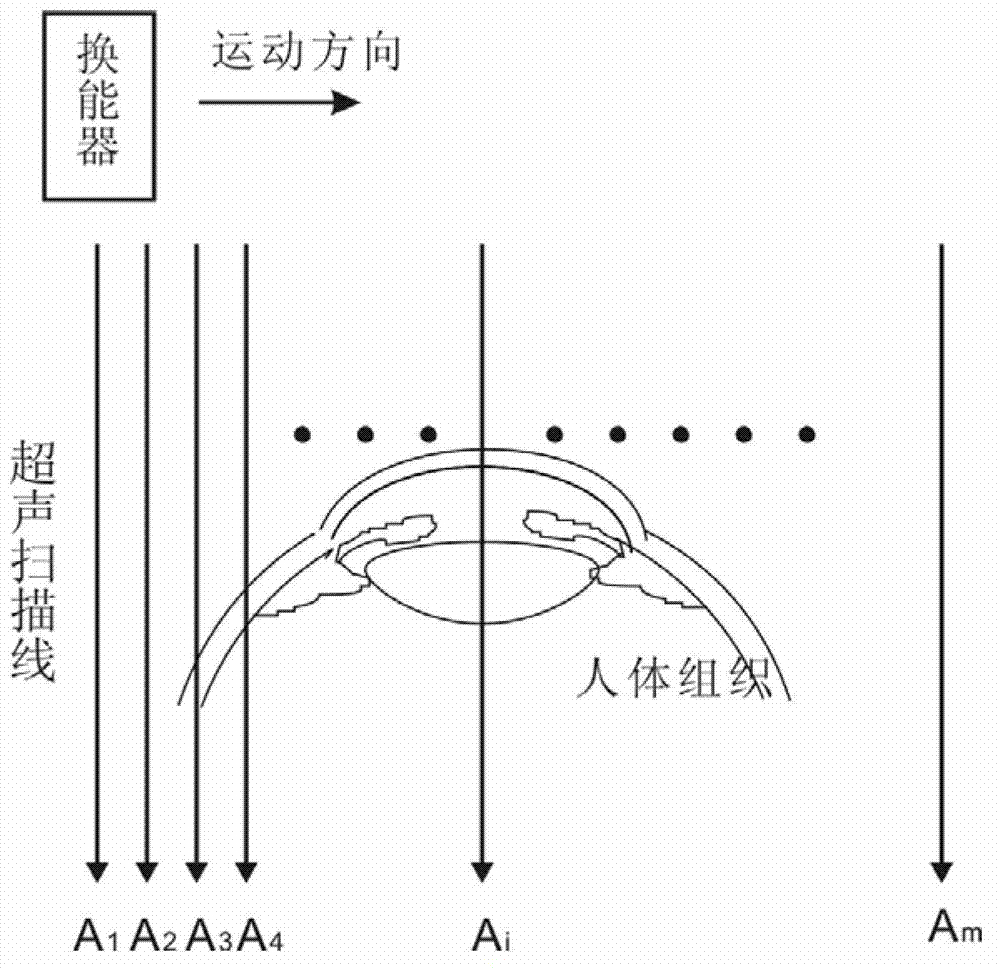
Figure 1 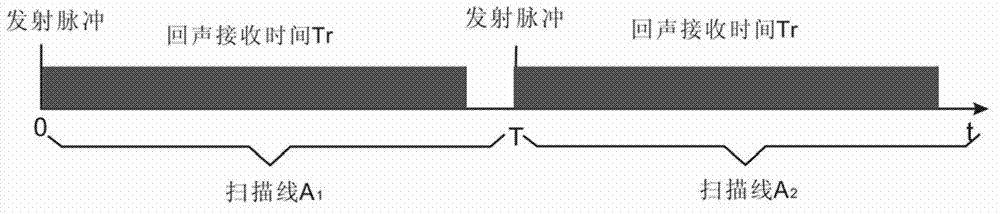
Figure 2 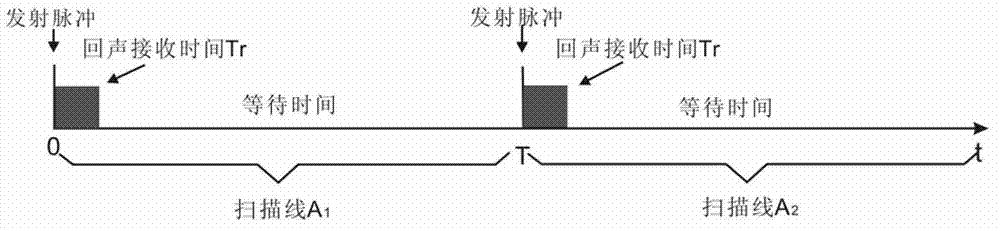
Figure 3
Abstract
Description
technical field
[0001] The invention relates to an ultrasonic imaging method, in particular to a high-frequency ultrasonic superficial organ imaging method capable of reducing random noise. Background technique
[0002] The principle of ultrasonic imaging is that the ultrasonic transducer transmits ultrasonic pulses to the human tissue, and then receives the echo reflected by the human tissue, so as to obtain the one-dimensional information of the human tissue on the ultrasonic propagation channel, translate or rotate the ultrasonic emission direction, and at the same time Continuously emitting ultrasound and receiving echoes, the tissue information of the plane area scanned by the sound beam will be obtained (see figure 1 ), and reconstruct these information to obtain a two-dimensional section image of human tissue, which is commonly referred to as a B-ultrasound image.
[0003] The echo information is very weak, so it needs to be amplified many times before it can be obse...
Examples
Embodiment
[0025] The number of scanning lines is m=500, the dwell time of each scanning line is T=200μs, the number of ultrasonic pulses transmitted at equal intervals within the dwell time T is N=4, the echo receiving time is Tr=23μs, and the time for acquiring an image is 100ms. Figure 6It is a schematic circuit diagram of line average method processing in the embodiment, including echo information receiving channel, buffer selection counter, 1-4 selection switch, buffer 1-4, adder, line memory and address pointer counter. The mutual position or connection relationship between them is: the echo information receiving channel outputs 8-bit echo information that has been transformed into a digital signal, and its output is connected to the data input terminals of the buffer 1 ~ buffer 4, and the buffer selection counter controls 1-4 The selector switch selects and sends the input clock CKin to the buffers 1 to 4 sequentially during the 4 transmission cycles within the time T=200, and the...