
Digitized correcting method for assembly deformation of aircraft panels based on six-shaft numerical control positioner
A numerical control positioner and aircraft panel technology, which is applied in the field of digital correction and aircraft panel assembly deformation, to achieve high-precision attitude adjustment and docking, improve assembly quality, and reduce assembly stress.
Patent Information
- Authority / Receiving Office
- CN · China
- Patent Type
- Applications(China)
- Current Assignee / Owner
- Publication Date
- 2014-07-30
Smart Images
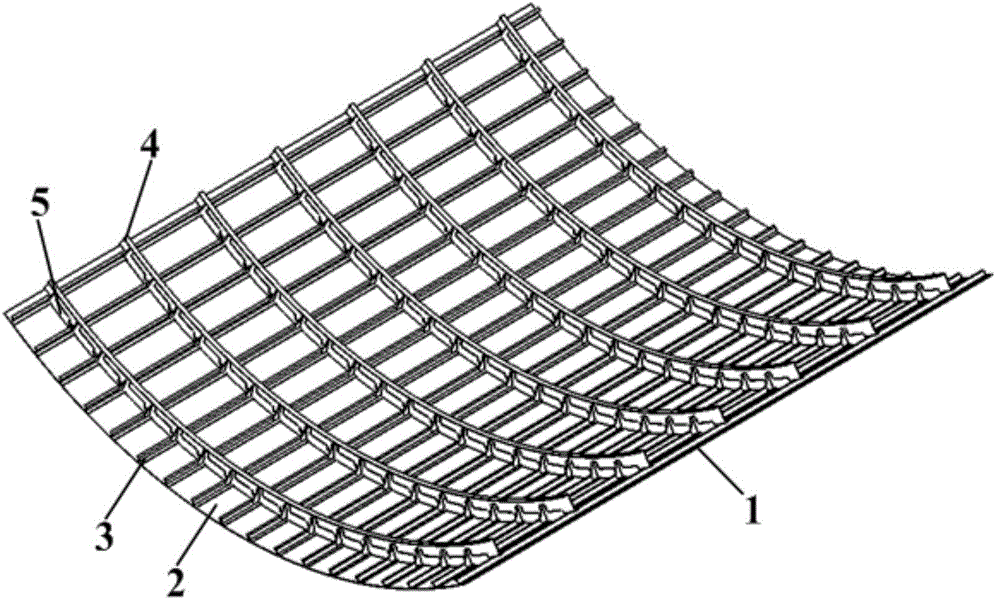
Figure 1 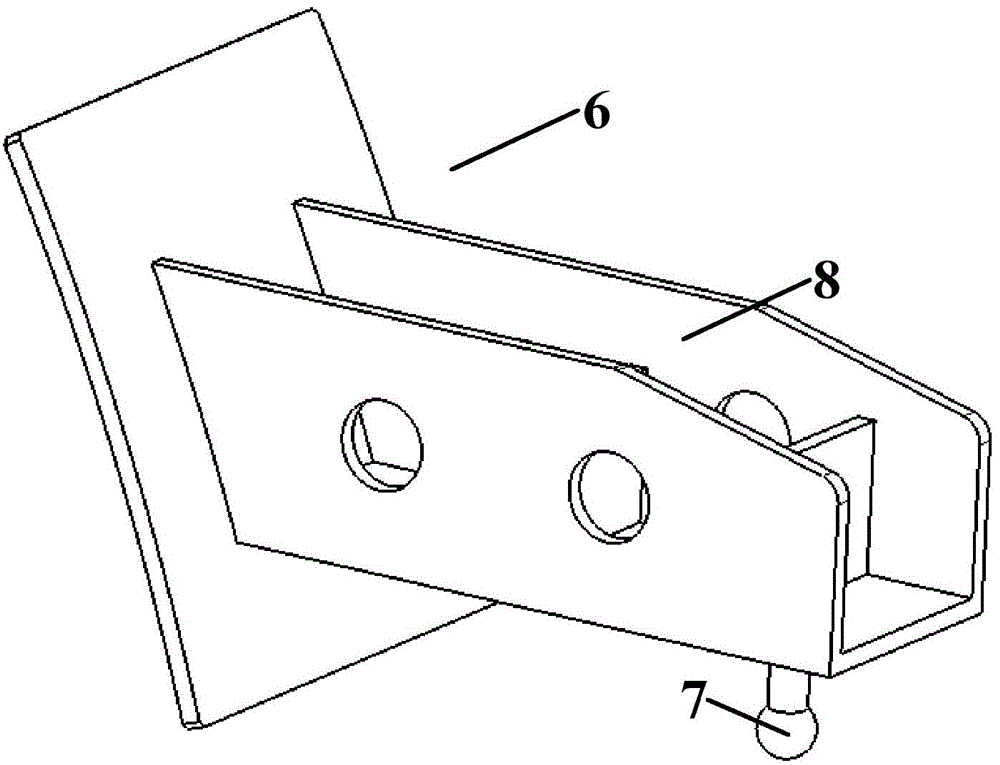
Figure 2 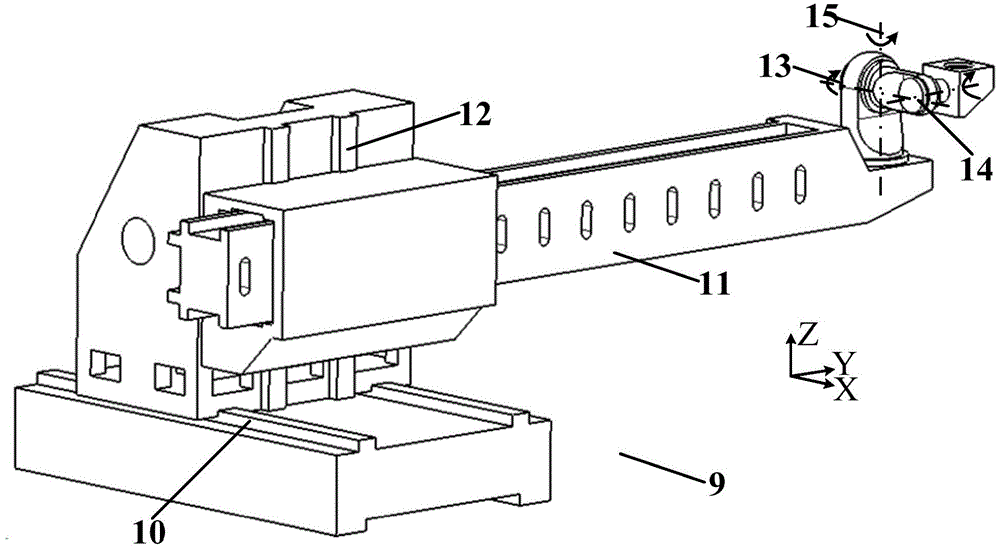
Figure 3
Abstract
Description
technical field
[0001] The invention relates to the technical field of aircraft assembly, in particular to a method for digitally correcting assembly deformation of aircraft wall panels based on a six-axis numerical control positioner. Background technique
[0002] As an extremely important part of the aircraft manufacturing process, aircraft assembly determines the final quality, manufacturing cost and delivery cycle of the aircraft to a large extent, and is the key and core technology in the entire aircraft manufacturing process. Large-scale aircraft are generally assembled by butt joints of multiple fuselage sections, and each fuselage section is assembled and spliced by several wall panels. As one of the important components of modern large aircraft, the wall panel is not only an important part of the aerodynamic shape of the aircraft, but also the main load-bearing components of the fuselage and wings. Panel assembly is to position thin-walled parts such as skins, lo...
Examples
Embodiment Construction
[0080] The present invention will be described in detail below in conjunction with the accompanying drawings and specific embodiments.
[0081] like figure 1 As shown, a large aircraft panel 1 is mainly composed of a skin 2, a stringer 3, a bulkhead 4, and a corner piece 5.
[0082] like figure 2 As shown in the figure, the process joint 6 of a large aircraft panel is mainly composed of a process ball joint 7 and a joint body 8 .
[0083] like image 3 As shown, the six-axis numerical control positioner 9 includes an X-direction movement axis 10, a Y-direction movement axis 11, a Z-direction movement axis 12, an X-direction rotation axis 13, a Y-direction rotation axis 14, and a Z-direction rotation axis 15, and each axis moves independently , and the manipulation control is realized by the control system computer 17. Among them, the coordinate system formed by the X-direction movement axis 10, the Y-direction movement axis 11, and the Z-direction movement axis 12 is as f...