
Subspace fusion-based protein-vitamin binding location point predicting method
A technology of binding sites and prediction methods, which is applied in the fields of instruments, calculations, electrical digital data processing, etc., and can solve problems such as large gaps and poor interpretability
Patent Information
- Authority / Receiving Office
- CN · China
- Current Assignee / Owner
- Publication Date
- 2014-07-30
- Estimated Expiration
- Not applicable · inactive patent
Smart Images
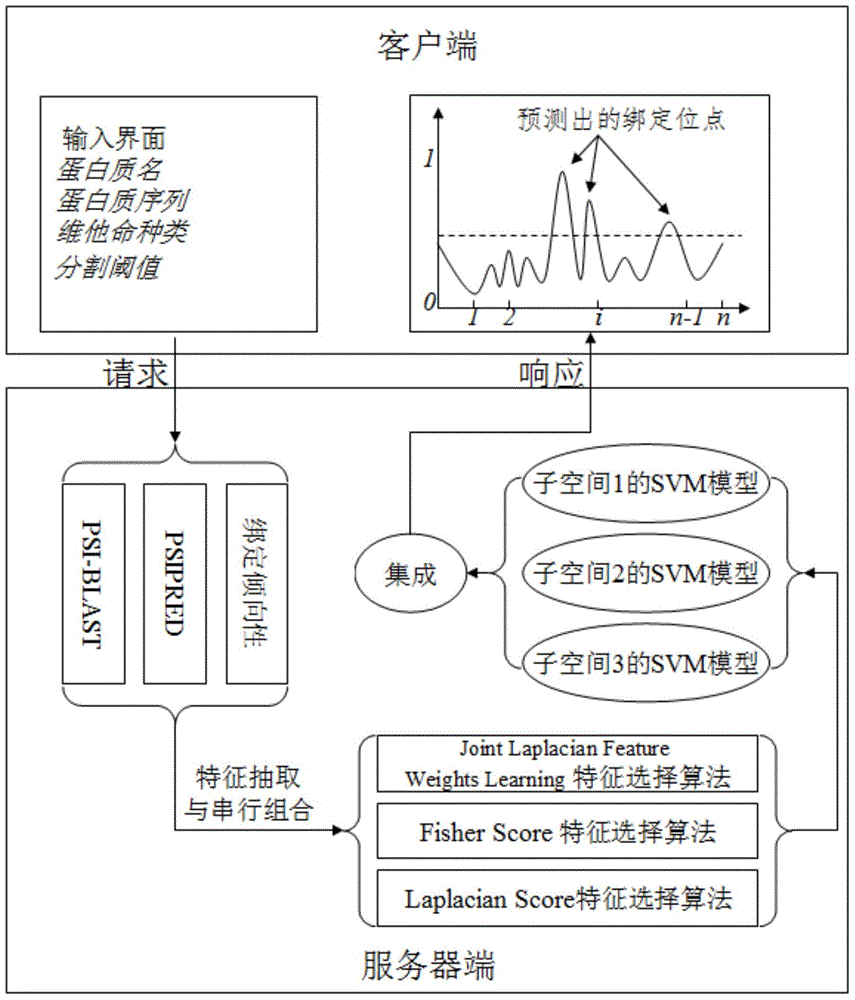
Figure 1 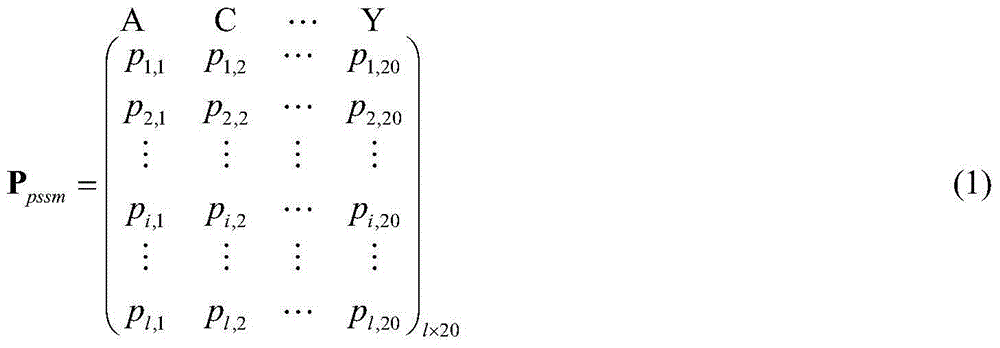
Figure 2 
Figure 3
Abstract
Description
technical field
[0001] The invention relates to the field of bioinformatics protein-vitamin interaction, in particular to a method for predicting protein-vitamin binding sites based on subspace fusion. Background technique
[0002] The interaction between proteins and vitamins plays a vital role in metabolism and is ubiquitous and indispensable in life activities. Determining the binding sites between proteins and vitamins through biological experiments takes a lot of time and money, and is inefficient. With the rapid development of sequencing technology and the continuous advancement of human structural genome, proteomics has accumulated a large number of protein sequences that have not been labeled with vitamin binding sites. Therefore, there is an urgent need to develop a fast and accurate intelligent prediction method for protein-vitamin binding sites directly from the protein sequence by applying the relevant knowledge of bioinformatics, and it is of great significance...
Examples
Embodiment Construction
[0085] In order to better understand the technical content of the present invention, specific embodiments are given together with the attached drawings for description as follows.
[0086] Such as figure 1 As shown, according to a preferred embodiment of the present invention, the protein-vitamin binding site prediction method based on subspace fusion, first, use PSI-BLAST and PSIPRED to obtain the PSSM matrix (ie evolutionary information matrix) and secondary structure probability matrix, and the binding propensity matrix of the protein generated from the protein-vitamin binding site propensity table; secondly, from the PSSM matrix, the secondary structure probability matrix, and the protein-vitamin binding site Point propensity table to construct the feature vector of each amino acid residue; then, use the three feature selection algorithms of Joint Laplacian Feature Weights Learning (Algorithm 1), Fisher Score (Algorithm 2) and Laplacian Score (Algorithm 3) to construct fea...