
Anti-human Fc epsilon RI alpha subunit monoclonal antibody and application thereof
A technology for cloning antibodies and single subunits, applied in the field of hybridoma cell lines, can solve the problems of poor immune effect and low specificity of anti-human FcεRⅠα subunit monoclonal antibodies, and achieve high clinical application value and high basic research. Value, effect of cell body size uniformity
- Summary
- Abstract
- Description
- Claims
- Application Information
AI Technical Summary
Problems solved by technology
Method used
Image

Examples
Embodiment 1
[0044] Example 1 Preparation of monoclonal antibody against human FcεR I α subunit and hybridoma cell line B5B4 secreting the antibody
[0045] 1. Animal immunization
[0046] Immunize 6-week-old Balb / c female mice weighing 18-20 g with human FcεR Ⅰ α subunit recombinant protein (purchased from Hunan Slake Jingda Experimental Animal Co., Ltd.): take 0.5ml human FcεR Ⅰ α subunit recombinant protein (the recombinant Protein concentration (0.1 μg / ml) was mixed with an equal volume of Freund's complete adjuvant and fully emulsified, and 0.5 ml of each mouse was subcutaneously injected into the back and abdomen at multiple points, with an interval of 3 weeks, and 0.5 ml of human FcεR Ⅰ α subunit recombinant protein ( The concentration of the recombinant protein was 0.1 μg / ml) and an equal volume of Freund's incomplete adjuvant was mixed and fully emulsified, and the second intraperitoneal injection of 0.5 ml was performed for each mouse. The third immunization was performed after ...
Embodiment 2
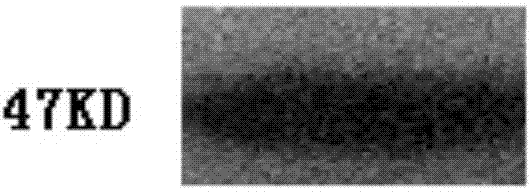
[0054] Example 2 Identification of anti-human FcεR Ⅰ α subunit monoclonal antibody secreted by hybridoma cell line B5B4
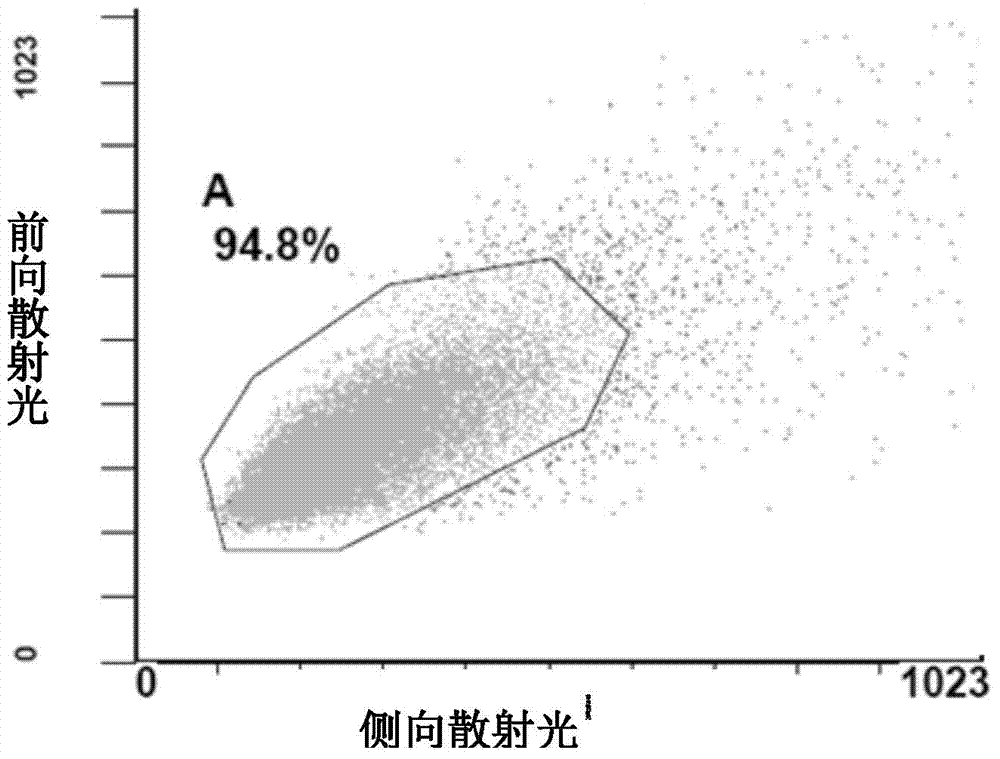
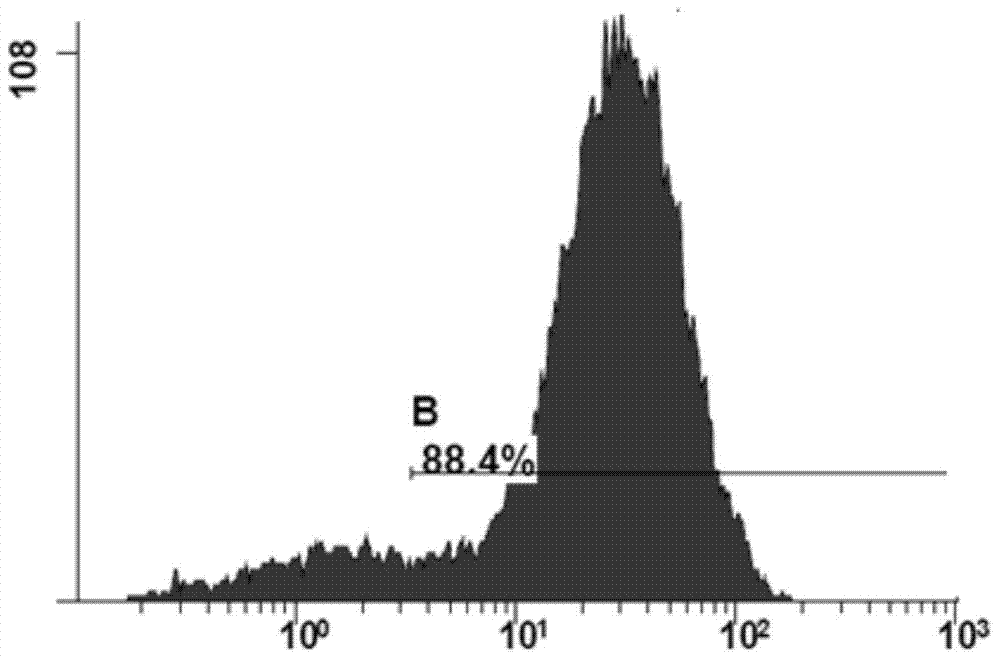
[0055] 1. Screen positive clones of hybridoma cell lines by flow cytometry
[0056] Take CHO3D10 cells in the logarithmic growth phase (Chinese hamster ovary cells, donated by the Laboratory Department of Changzheng Hospital), wash with phosphate buffer saline (PBS), centrifuge at 1000 rpm / min for 5 min; discard the supernatant, and replace with 1% bovine serum white Protein-phosphate buffered saline (BSA-PBS, said percentage is mass percentage) adjusted cell concentration to be 2×10 5 cells / ml; add 100 μl of purified anti-human FcεR Ⅰ α subunit monoclonal antibody (prepared in Example 1) to 1 ml of CHO3D10 cells, incubate at 4°C for 45 min, wash twice with PBS, centrifuge at 1000 rpm / min for 5 min , discard the supernatant, add 100 μl working concentration of goat anti-mouse IgG (H+L)-PE fluorescent antibody, incubate at 4°C for 45 min, wash twice with PB...
Embodiment 3
[0064] Example 3 Application of anti-human FcεR Ⅰ α subunit monoclonal antibody MAb-B5B4
[0065]Tonsil tissue slices derived from human tissues were baked in an oven at 58°C for 1 h, and immediately placed in xylene I for 15 min and xylene II for 15 min after taking out the tissue slices from the oven; Soak in water ethanol, 95% ethanol, and 75% ethanol solution for one minute, and then wash twice with distilled water; microwave heat repair for 15 min in citric acid repair solution with pH6.0, and then cool to room temperature; slice the tissue After washing with PBS three times, shake off and dry the liquid around the tissue on the tissue section, place it flat in a wet box, add 50 μl of 3% peroxidase blocking agent hydrogen peroxide on the tissue, and react in the dark for 20 min After washing with PBS three times, shake off and dry the liquid around the tissue on the section, and add 50 μl of blocking solution (5% BSA-PBS, the percentage is mass percentage) dropwise at roo...
PUM
| Property | Measurement | Unit |
|---|---|---|
| Concentration | aaaaa | aaaaa |
Abstract
Description
Claims
Application Information
 Login to View More