
Oil-filled heater
A technology for heaters and heaters, which can be used in household heating, space heating and ventilation details, and sustainable buildings. The effect of increasing flow strength
- Summary
- Abstract
- Description
- Claims
- Application Information
AI Technical Summary
Problems solved by technology
Method used
Image

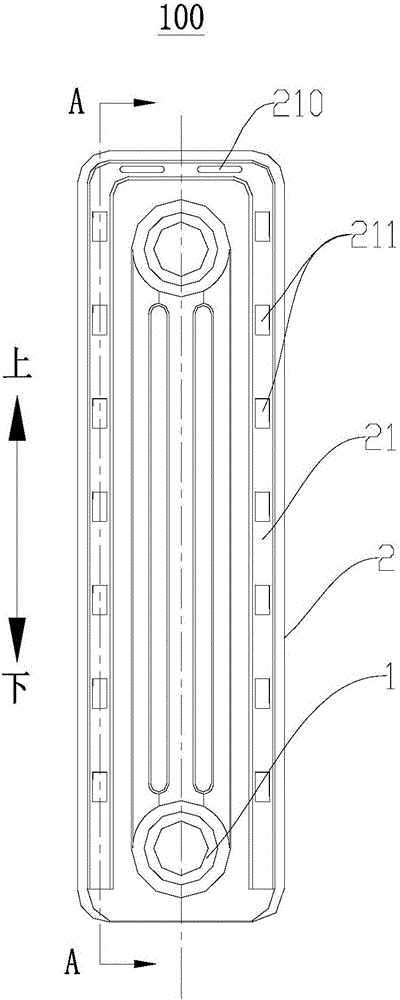
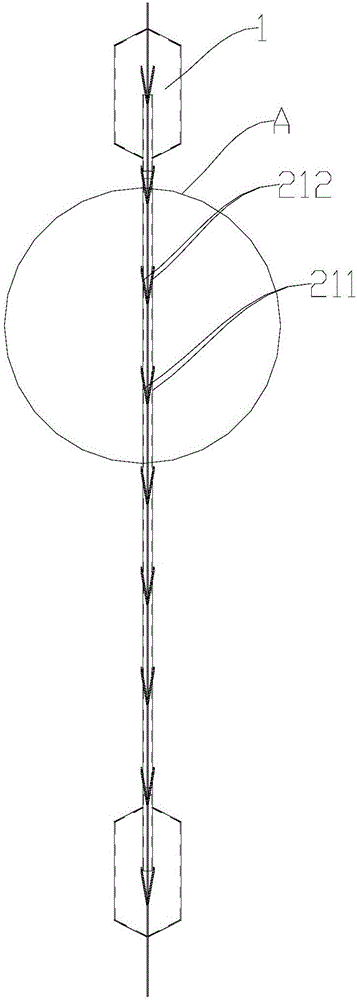
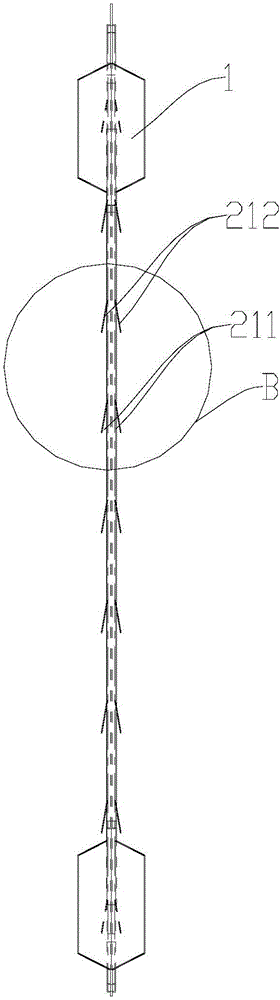
Examples
Embodiment Construction
[0028] Embodiments of the invention are described in detail below, examples of which are illustrated in the accompanying drawings. The embodiments described below by referring to the figures are exemplary and are intended to explain the present invention and should not be construed as limiting the present invention.
[0029] In describing the present invention, it is to be understood that the terms "length", "upper", "lower", "vertical", "horizontal", "top", "inner", "outer" etc. indicate an orientation or The positional relationship is based on the orientation or positional relationship shown in the drawings, which is only for the convenience of describing the present invention and simplifying the description, rather than indicating or implying that the referred device or element must have a specific orientation, be constructed and operated in a specific orientation, Therefore, it should not be construed as limiting the invention.
[0030] In addition, the terms "first" and ...
PUM
 Login to View More
 Abstract
Description
Claims
Application Information
 Login to View More