Unlock instant, AI-driven research and patent intelligence for your innovation.
Preparation method of ultra-light anti-adhesion release film
What is Al technical title?
Al technical title is built by PatSnap Al team. It summarizes the technical point description of the patent document.
A release film and anti-adhesion technology, which is applied in papermaking, coating, paper coating, etc., can solve the problems of being unable to meet customers' requirements for ultra-light release film, failing to meet ultra-light requirements, and film surface sticking, etc. Achieve pressure balance, improve drying efficiency, and smooth the film surface
Active Publication Date: 2019-07-19
江阴华美光电科技有限公司
View PDF4 Cites 0 Cited by
Summary
Abstract
Description
Claims
Application Information

AI Technical Summary
This helps you quickly interpret patents by identifying the three key elements:
Problems solved by technology
Method used
Benefits of technology
Problems solved by technology
The main problem of ordinary PET release film is that the peeling force is above 10g, which cannot meet the ultra-light requirement. If the peeling force is below 5g, the film will stick to the surface, which cannot meet the customer's requirements for ultra-light release film. membrane requirements
Several major technical problems that need to be solved for ultra-light anti-adhesion release film are: 1. Stability of peeling force: range of release force; Obvious rainbow pattern; 3. Problems such as stickiness of the film surface
Method used
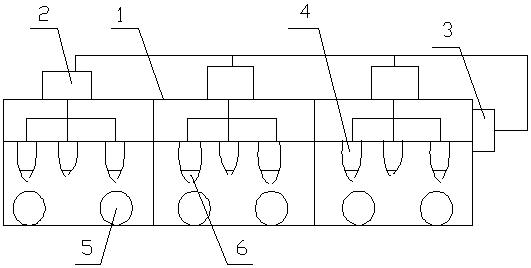
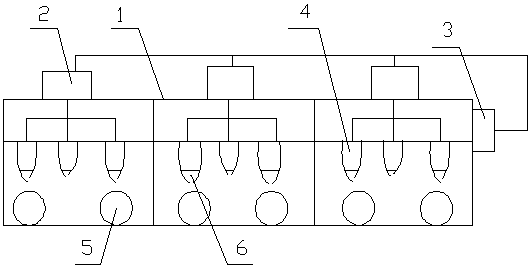
the structure of the environmentally friendly knitted fabric provided by the present invention; figure 2 Flow chart of the yarn wrapping machine for environmentally friendly knitted fabrics and storage devices; image 3 Is the parameter map of the yarn covering machine
View more
Image
Smart Image Click on the blue labels to locate them in the text.
Viewing Examples
Smart Image
Click on the blue label to locate the original text in one second.
Reading with bidirectional positioning of images and text.
Smart Image
Examples
Experimental program
Comparison scheme
Effect test
Embodiment 1
[0033] Step 1. The first coating process
[0034] 1. Coating configuration: Mix 3 parts of D120 solvent oil, 3 parts of D30 solvent oil, 4 parts of butanone and 1 part of isopropanol as solvent, add 1 part of 7458 silicone oil main agent, 0.1 part of 7672 crosslinking agent, 297 anchoring agent 0.02 parts and 0.05 parts of 4000 catalysts, stirred at 1200 rpm for 30 minutes, filtered through a 200-mesh filter, and used within 3 hours;
[0035] 2. Original film treatment: the corona value is greater than 50 during corona treatment, and the gap between any two points is guaranteed not to exceed 5; thereby enhancing the adhesion of the film surface; dust removal treatment uses a double-sided dust removal device to effectively reduce the original film Floating dust on the surface greatly improves the cleanliness of the product;
[0036] 3. Precise coating: apply the configured coating on the surface of the original film through the coating machine, the coating method is reverse co...
Embodiment 2
[0048] Step 1, the first coating process
[0049] 1. Coating configuration: Mix 4 parts of D120 solvent oil, 4 parts of D30 solvent oil, 5 parts of butanone and 1.5 parts of isopropanol as solvent, add 1.2 parts of 7458 silicone oil main agent, 0.2 parts of 7672 crosslinking agent, 297 anchoring agent 0.03 parts and 0.06 parts of 4000 catalysts, stirred at 1300 rpm for 40 minutes, filtered through a 230-mesh filter, and used within 3.5 hours;
[0050] 2. Original film treatment: the corona value is greater than 50 during corona treatment, and the gap between any two points is guaranteed not to exceed 5; thereby enhancing the adhesion of the film surface; dust removal treatment uses a double-sided dust removal device to effectively reduce the original film Floating dust on the surface greatly improves the cleanliness of the product;
[0051] 3. Precise coating: apply the configured coating on the surface of the original film through the coating machine, the coating method is r...
the structure of the environmentally friendly knitted fabric provided by the present invention; figure 2 Flow chart of the yarn wrapping machine for environmentally friendly knitted fabrics and storage devices; image 3 Is the parameter map of the yarn covering machine
Login to View More
PUM
Property
Measurement
Unit
transmittivity
aaaaa
aaaaa
haze
aaaaa
aaaaa
Login to View More
Abstract
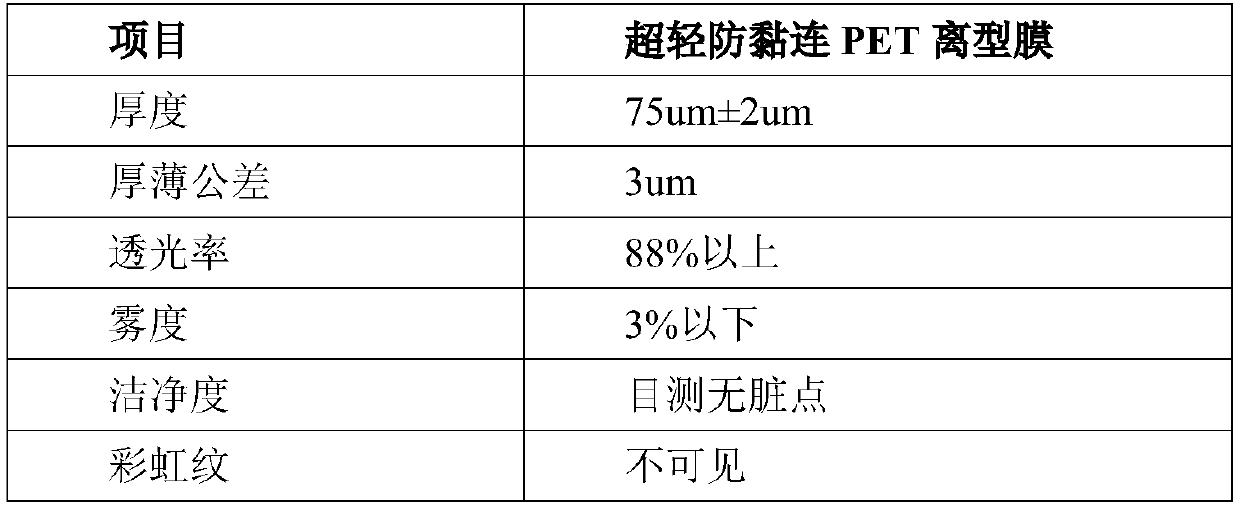
The present invention discloses an ultra-light anti-adhesion release film preparation method, which comprises: 1, mixing 3-4 parts of D120 solvent oil, 3-4 parts of D30 solvent oil, 4-5 parts of butanone, and 1-1.5 parts of isopropanol to obtain a mixture as a solvent, adding 1-1.2 parts of a 7458 silicone oil main agent, 0.1-0.2 part of a 7672 cross-linking agent, 0.02-0.03 part of a 297 anchoring agent, and 0.05-0.06 part of a 4000 catalyst, stirring for 30-40 min at a speed of 1200-1300 rotation / min, filtering with a 200-230 mesh filtration screen, using within 3-3.5 h, carrying out raw film treatment, precisely coating, carrying out drying curing, and carrying out material receiving winding; 2, mixing 2-2.5 parts of D120 solvent oil, 2-2.5 parts of D30 solvent oil, 2.5-3 parts of butanone and 0.8-1.2 parts of isopropanol to obtain a mixture as a solvent, adding 0.8-1 part of a 9106 silicone oil main agent, 0.1-0.2 part of a 7672 cross-linking agent, 0.02-0.03 part of a 297 anchoring agent, and 0.06 part of a 4000 catalyst, stirring for 30-40 min at a speed of 1200-1300 rotation / min, filtering with a 200-230 mesh filtration screen, using within 3-3.5 h, carrying out raw film treatment, precisely coating, carrying out drying curing, and carrying out material receiving winding; and 3, carrying out post-curing treatment. According to the present invention, the produced release film has the light transmittance of more than 88%, has the mist degree of less than 3, and has the peel force stability (normal temperature) of 3-5 g.
Description
technical field [0001] The invention relates to the technical field of film coating, in particular to a preparation method of an ultra-light anti-adhesion release film. Background technique [0002] Release paper, also known as release paper and anti-adhesive paper, is mainly used to stick the adhesive layer on the surface of the tape to protect the surface of the tape. Existing release paper is generally coated with a film layer (the material used mainly contains polyethylene) on the surface of the bottom paper layer of the release paper, and then coated with a layer of release agent coating on the surface of the film layer. (The material used is mainly silicone oil) to form a release film to obtain a release paper. The main problem of ordinary PET release film is that the peeling force is above 10g, which cannot meet the ultra-light requirement. If the peeling force is below 5g, the film will stick to the surface, which cannot meet the customer's requirements for ultra-li...
Claims
the structure of the environmentally friendly knitted fabric provided by the present invention; figure 2 Flow chart of the yarn wrapping machine for environmentally friendly knitted fabrics and storage devices; image 3 Is the parameter map of the yarn covering machine
Login to View More
Application Information
Patent Timeline
Application Date:The date an application was filed.
Publication Date:The date a patent or application was officially published.
First Publication Date:The earliest publication date of a patent with the same application number.
Issue Date:Publication date of the patent grant document.
PCT Entry Date:The Entry date of PCT National Phase.
Estimated Expiry Date:The statutory expiry date of a patent right according to the Patent Law, and it is the longest term of protection that the patent right can achieve without the termination of the patent right due to other reasons(Term extension factor has been taken into account ).
Invalid Date:Actual expiry date is based on effective date or publication date of legal transaction data of invalid patent.