Combination of JNK inhibitor and TGF beta inhibitor
A technology of β inhibitors and inhibitors, applied in the field of combined use of NK inhibitors and TGFβ inhibitors, can solve the problems of dependence, failure to meet the clinical needs of patients with multiple target organ metastasis risks, and patient harm
- Summary
- Abstract
- Description
- Claims
- Application Information
AI Technical Summary
Problems solved by technology
Method used
Image

Examples
Embodiment 1
[0321] Expression patterns of DKK1 in breast cancer samples
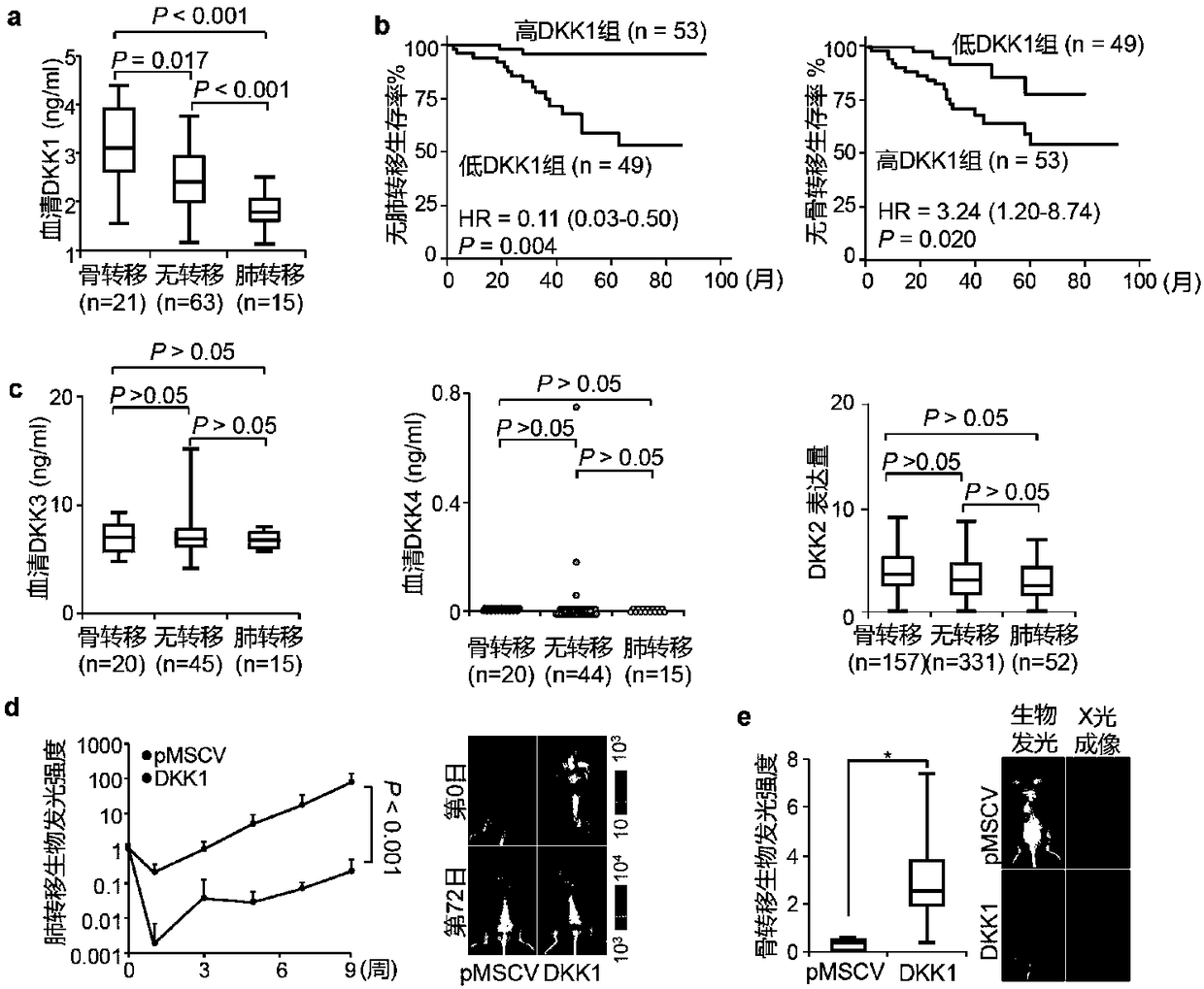
[0322] Through the enzyme-linked immunosorbent assay (ELISA) of the patient's serum, it was found that the serum DKK1 protein level of breast cancer patients in the bone metastasis group was significantly higher than that of the control group without metastasis, while the DKK1 protein level of patients in the lung metastasis group was significantly lower than that of the control group ( figure 1 a). Moreover, the lung metastasis-free survival rate of patients in the high serum DKK1 group was significantly higher than that in the low DKK1 group, and the opposite was true in the bone metastasis-free survival rate ( figure 1 b). Previous studies have almost never reported biomarkers similar to DKK1 with opposite expression patterns in different tissue-specific metastases, indicating that DKK1 has the potential to become a new class of biomarkers that simultaneously predict bone and lung metastases in breast cancer. P...
Embodiment 2
[0326] Functional study of DKK1 in group-specific metastasis of breast cancer
[0327] To test whether DKK1 is functional in breast cancer tissue-specific metastasis, DKK1 was overexpressed in the luciferase-labeled MDA-MB-231 breast cancer cell line (obtained from Joan Massague's lab), and the cells were passed through tail Intravenous and left atrium injection into immunodeficient mice (purchased from Shanghai Slack Experimental Animal Co., Ltd.), through the injection of luciferase substrate, the light signal corresponding to the transfer load can be observed. Consistent with clinical relevance, light signaling from tumor cells revealed that overexpressed DKK1 significantly suppressed breast cancer lung metastasis and significantly enhanced bone metastasis ( figure 1 c, d, e).
Embodiment 3
[0329] Mechanism of action of DKK1
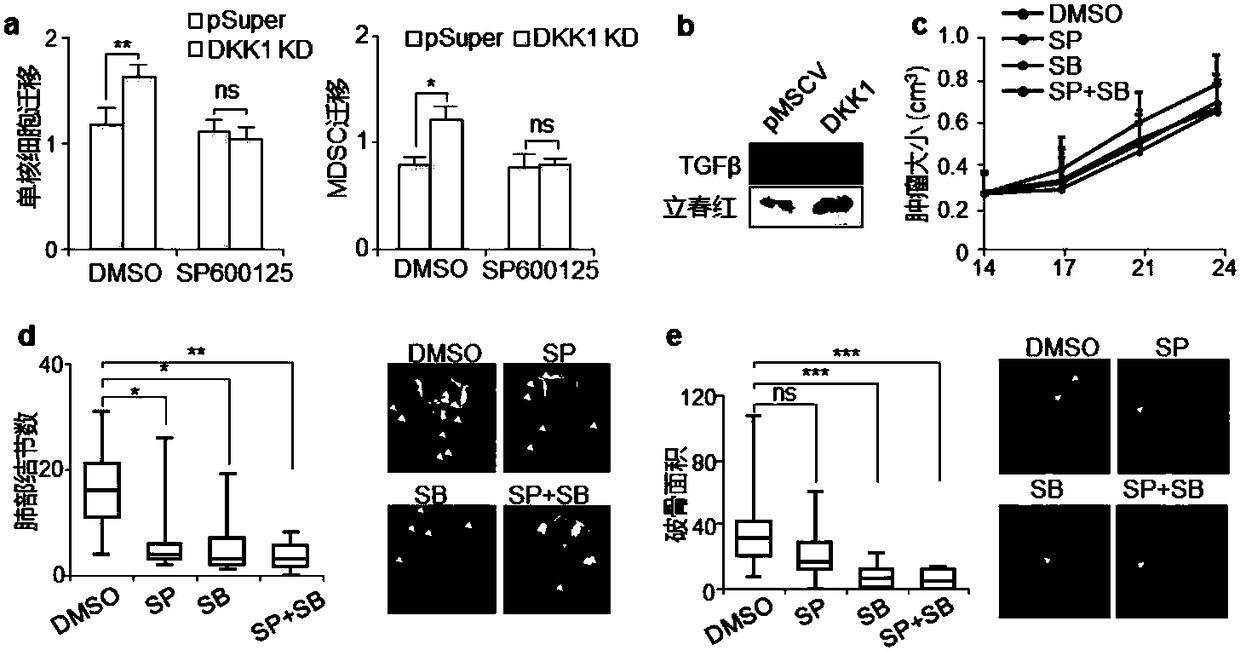
[0330] DKK1 is an inhibitory protein of the canonical WNT signaling pathway. The study of the present invention found that DKK1 regulates the recruitment and important cytokines of microenvironmental cells (macrophages and myeloid-derived immunosuppressive cells, MDSC) in lung metastases through non-canonical WNT signaling pathways—JNK and NF-κB pathways. TGFβ secretion affects the growth of lung metastases. DKK1 can inhibit the phosphorylation level of the transcriptional regulator JUN downstream of the JNK pathway, thereby reducing its transcriptional activity, resulting in a decrease in the expression of downstream genes, and inhibiting the ability of tumor cells to produce factors that attract macrophages / MDSCs ( figure 2 a); at the same time, DKK1 can also inhibit the phosphorylation level of RELA, an important transcriptional regulator of the NF-κB pathway, thereby reducing the secretion of downstream TGFβ ( figure 2 b), jointly i...
PUM
 Login to View More
 Abstract
Description
Claims
Application Information
 Login to View More
 - R&D
- Intellectual Property
- Life Sciences
- Materials
- Tech Scout
- Unparalleled Data Quality
- Higher Quality Content
- 60% Fewer Hallucinations
Browse by: Latest US Patents, China's latest patents, Technical Efficacy Thesaurus, Application Domain, Technology Topic, Popular Technical Reports.
© 2025 PatSnap. All rights reserved.Legal|Privacy policy|Modern Slavery Act Transparency Statement|Sitemap|About US| Contact US: help@patsnap.com