Inhibition method for starting impulse current in three-phase active rectifying circuit
A technology for starting inrush current and rectifying circuits, which is applied to electrical components, output power conversion devices, etc., can solve problems such as inrush current, and achieve the effects of less resources, avoiding limited boost, and simple algorithms
- Summary
- Abstract
- Description
- Claims
- Application Information
AI Technical Summary
Problems solved by technology
Method used
Image

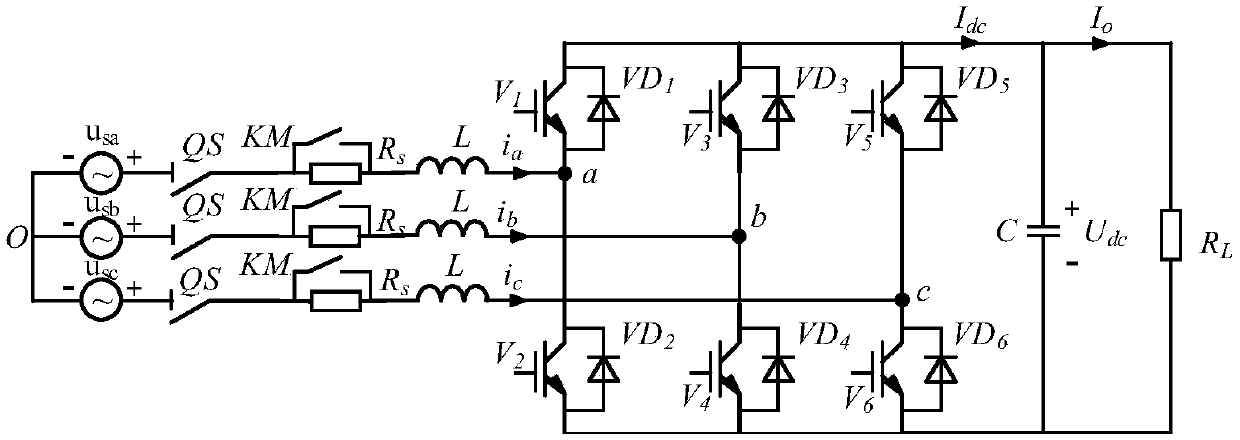
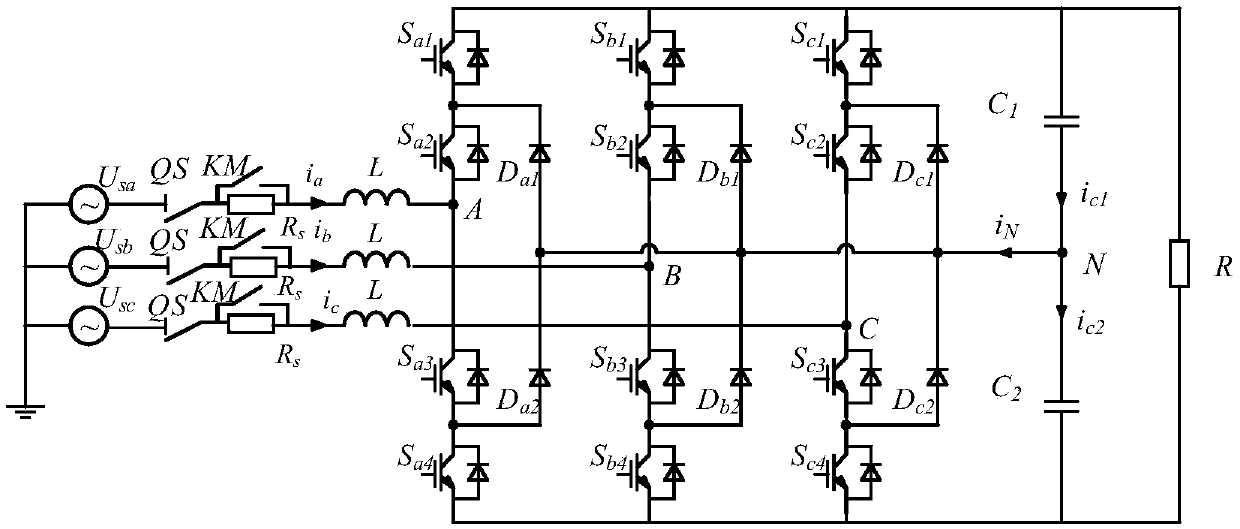
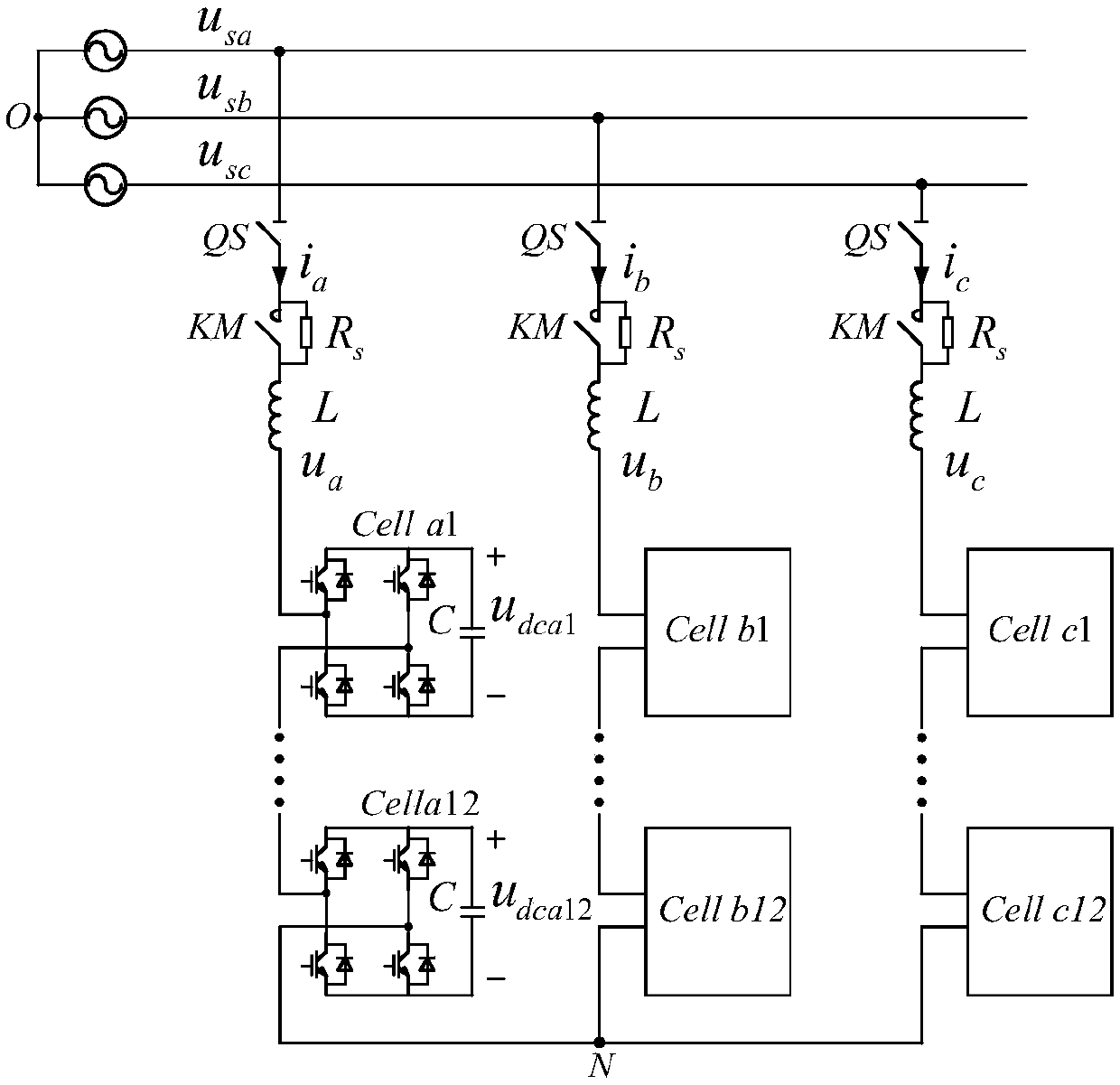
Examples
Embodiment Construction
[0034] The specific implementation manners of the present invention will be further described in detail below in conjunction with the accompanying drawings and embodiments. The following examples are used to illustrate the present invention, but are not intended to limit the scope of the present invention.
[0035] A method for suppressing the start-up inrush current of a three-phase active rectifier circuit, the specific method is as follows: each phase of the three-phase active rectifier circuit is connected in series with a current-limiting resistor and an isolating switch to connect to the power grid, and the current-limiting resistor is connected in parallel with a contactor. The closed circuit breaker is used to bypass the current limiting resistor. When the three-phase active rectifier circuit is started, the capacitor voltage on the DC side should reach the set value, which is greater than the peak value of the single-phase grid voltage, otherwise an inrush current will...
PUM
 Login to View More
 Abstract
Description
Claims
Application Information
 Login to View More
 - R&D
- Intellectual Property
- Life Sciences
- Materials
- Tech Scout
- Unparalleled Data Quality
- Higher Quality Content
- 60% Fewer Hallucinations
Browse by: Latest US Patents, China's latest patents, Technical Efficacy Thesaurus, Application Domain, Technology Topic, Popular Technical Reports.
© 2025 PatSnap. All rights reserved.Legal|Privacy policy|Modern Slavery Act Transparency Statement|Sitemap|About US| Contact US: help@patsnap.com