
Explosion-proof film for glass backboards
A glass backplane, explosion-proof film technology, applied in the direction of film/flake adhesives, coatings, adhesive additives, etc. The effect of market competitiveness
- Summary
- Abstract
- Description
- Claims
- Application Information
AI Technical Summary
Problems solved by technology
Method used
Image

Examples
Embodiment 1
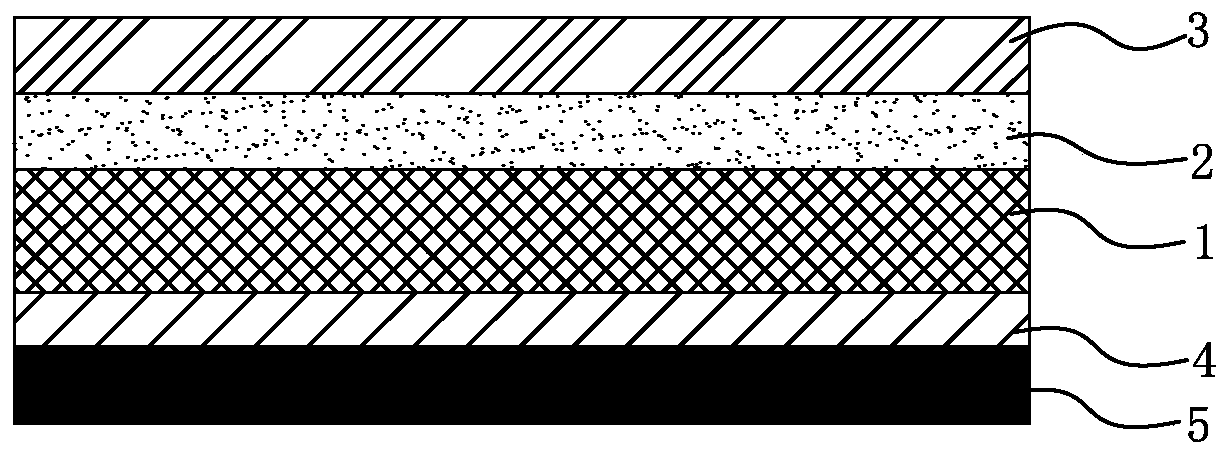
[0029] The substrate layer 1 adopts a TPU optical substrate film with a thickness of 100 microns.
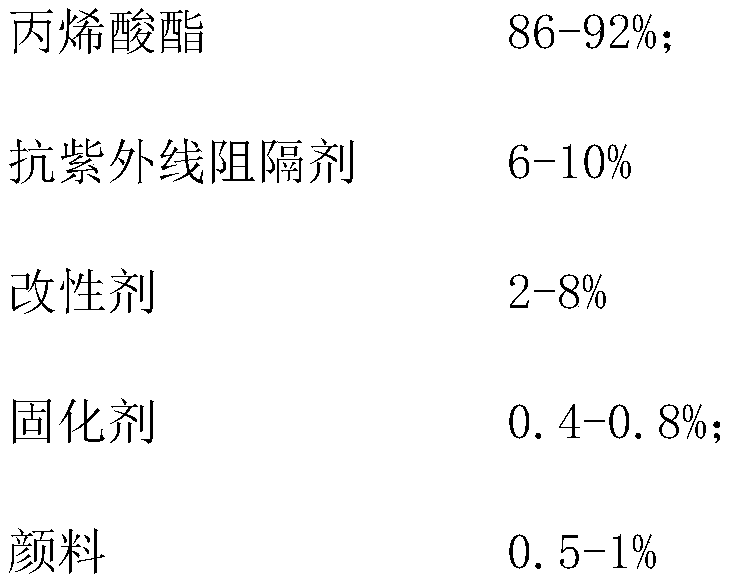
[0030] The components in the optical adhesive layer 2 and the weight ratio of each component are:
[0031]
[0032] The acrylate is epoxy methacrylate, the modifier is methacrylic acid, and the curing agent is isocyanate.
[0033] The release film 3 is a PET release film with a thickness of 100 microns. The electroplating layer is coated with aluminum powder, and the protective layer is a black ink layer.
[0034] When engraving with a laser engraving machine, a laser with a wavelength of 300nm–400nm is used, and 75% of the laser can be blocked by an anti-ultraviolet blocker, thereby greatly reducing the intensity of the laser, and at the same time ensuring that the laser passing through the optical adhesive layer 2 The engraving of the electroplating layer 4 can be completed.
[0035] The products described are as follows:
[0036] The total thickness of the whole produc...
PUM
 Login to View More
 Abstract
Description
Claims
Application Information
 Login to View More