Steel beam-concrete composite floor slab combined assembly system

A technology of superimposing floor slabs and combined assembly, which is applied in the direction of slabs, building components, buildings, etc., which can solve the problem that the design calculation is not calculated according to the method of composite structure, the strength of steel is not fully exerted, and it does not meet the damage of strong columns and weak beams, etc. problems, to avoid excessive concrete, light weight, and shorten the construction period.

CN111411724AInactive Publication Date: 2020-07-14BEIJING UNIV OF TECH
13 Cites 4 Cited by

Patent Information

Authority / Receiving Office
CN · China
Patent Type
Applications(China)
Current Assignee / Owner
Publication Date
2020-07-14
Estimated Expiration
Not applicable · inactive patent

Smart Images

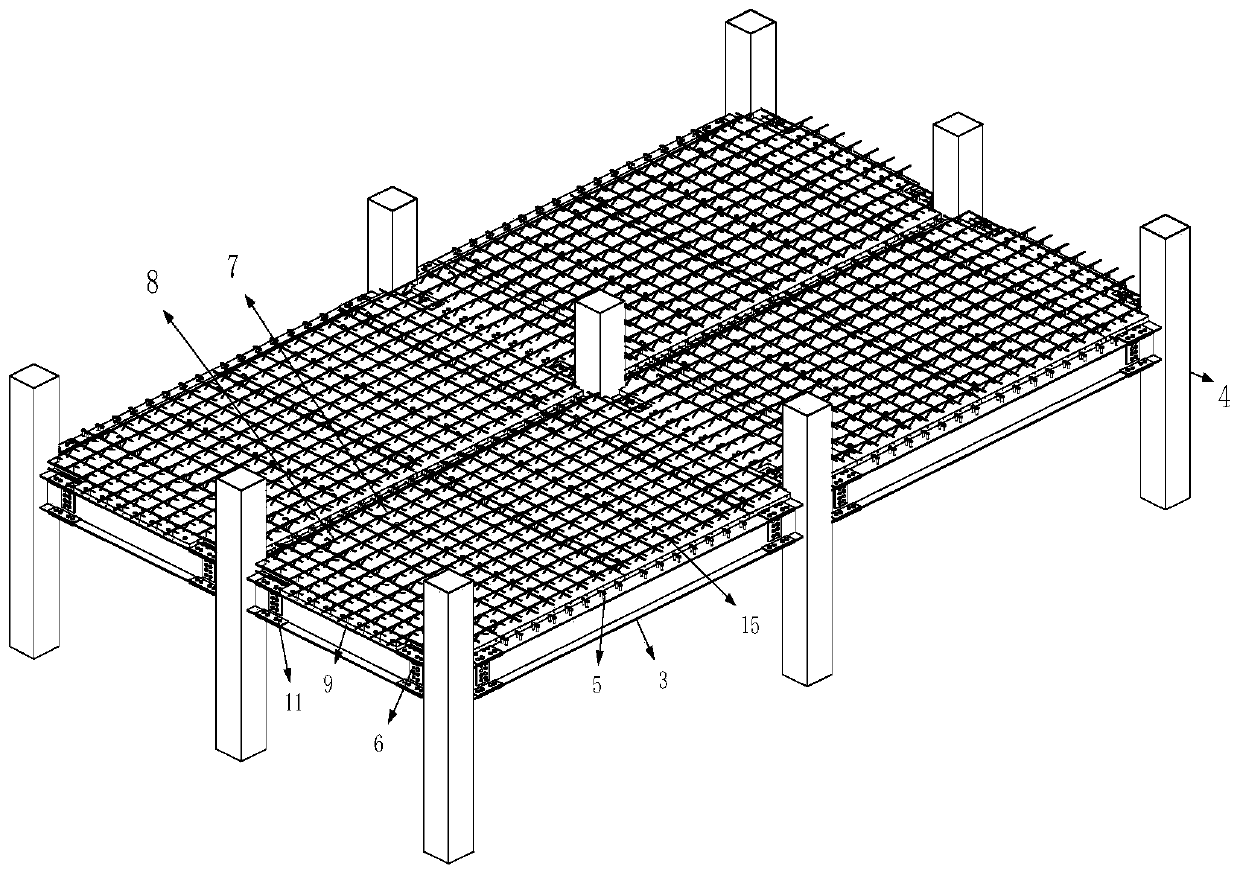
  • Figure 1
    Figure 1
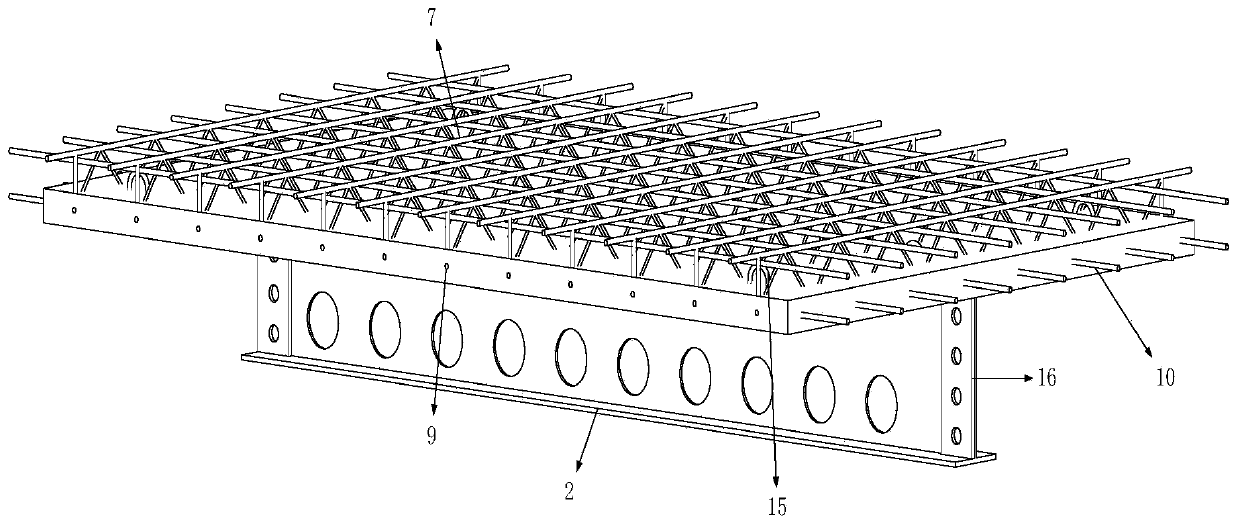
  • Figure 2
    Figure 2
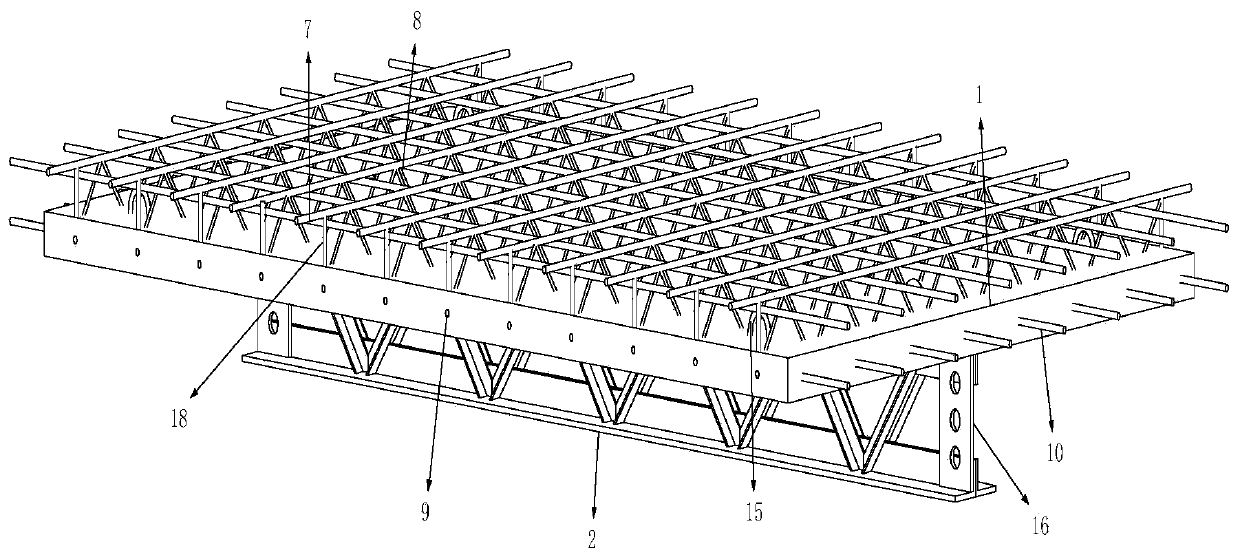
  • Figure 3
    Figure 3
Patent Text Reader

Abstract

The invention discloses a steel beam-concrete composite floor slab combined assembly system. The steel beam-concrete composite floor slab combined assembly system comprises truss floors, a secondary beam and a primary beam, wherein the multiple truss floors are built onto a main framework formed by the primary beam; a first fixed connector which is connected to the truss floors is arranged on theprimary beam; the secondary beam is fixedly arranged below the truss floors; a second fixed connector which is connected to the truss floors is arranged on the secondary beam; the two ends of the secondary beam are provided with connecting plates; and the secondary beam is connected to the primary beam through the connecting plates. According to the steel beam-concrete composite floor slab combined assembly system disclosed by the invention, the truss floors, the secondary beam and the primary beam are prefabricated together at a plant, so that the initial deflection problem, caused by wet concrete if the concrete is poured on a site, of floors and the beams is avoided, and therefore, the purpose of increasing floor strength and rigidity is achieved; and meanwhile, the assembly system alsocan greatly shorten the construction period, and improves construction efficiency.
Need to check novelty before this filing date? Find Prior Art

Description

technical field

[0001] The invention belongs to the technical field of assembled prefabricated floor slab structures, in particular to a steel beam-concrete composite floor slab assembly system. Background technique

[0002] The traditional building construction method is the pouring-in-site construction mode, that is, the operation mode from erecting scaffolding, setting up formwork, binding steel bars to pouring concrete on site. On-site pouring construction produces a lot of dust, noise, sewage, etc. during the construction process, and the construction speed is slow, the construction intensity is high, and it is greatly affected by seasonal climate. Therefore, in recent years, my country has been continuously promoting the application of prefabricated buildings. The prefabricated building is based on the prefabricated production of component factories and on-site assembly installation. It is characterized by standardized design, factory production, assembly construction...

Examples

Embodiment Construction

[0054] In order to make the purpose, technical solutions and advantages of the embodiments of the present invention clearer, the technical solutions in the embodiments of the present invention will be clearly and completely described below in conjunction with the drawings in the embodiments of the present invention. Obviously, the described embodiments It is a part of embodiments of the present invention, but not all embodiments. Based on the embodiments of the present invention, all other embodiments obtained by persons of ordinary skill in the art without making creative efforts belong to the protection scope of the present invention.

[0055] In the description of the present invention, it should be noted that the terms "center", "upper", "lower", "left", "right", "vertical", "horizontal", "inner", "outer" etc. The indicated orientation or positional relationship is based on the orientation or positional relationship shown in the drawings, and is only for the convenience of...