
Belt-type under-actuated three-joint mechanical finger structure and operation method thereof
A mechanical finger and three-joint technology, applied in the mechanical field, can solve the problems of complex control, many driving components, reducing the flexibility and controllability of the manipulator, and achieve the effect of accurate transmission ratio, compact structure design and increased torque
- Summary
- Abstract
- Description
- Claims
- Application Information
AI Technical Summary
Problems solved by technology
Method used
Image

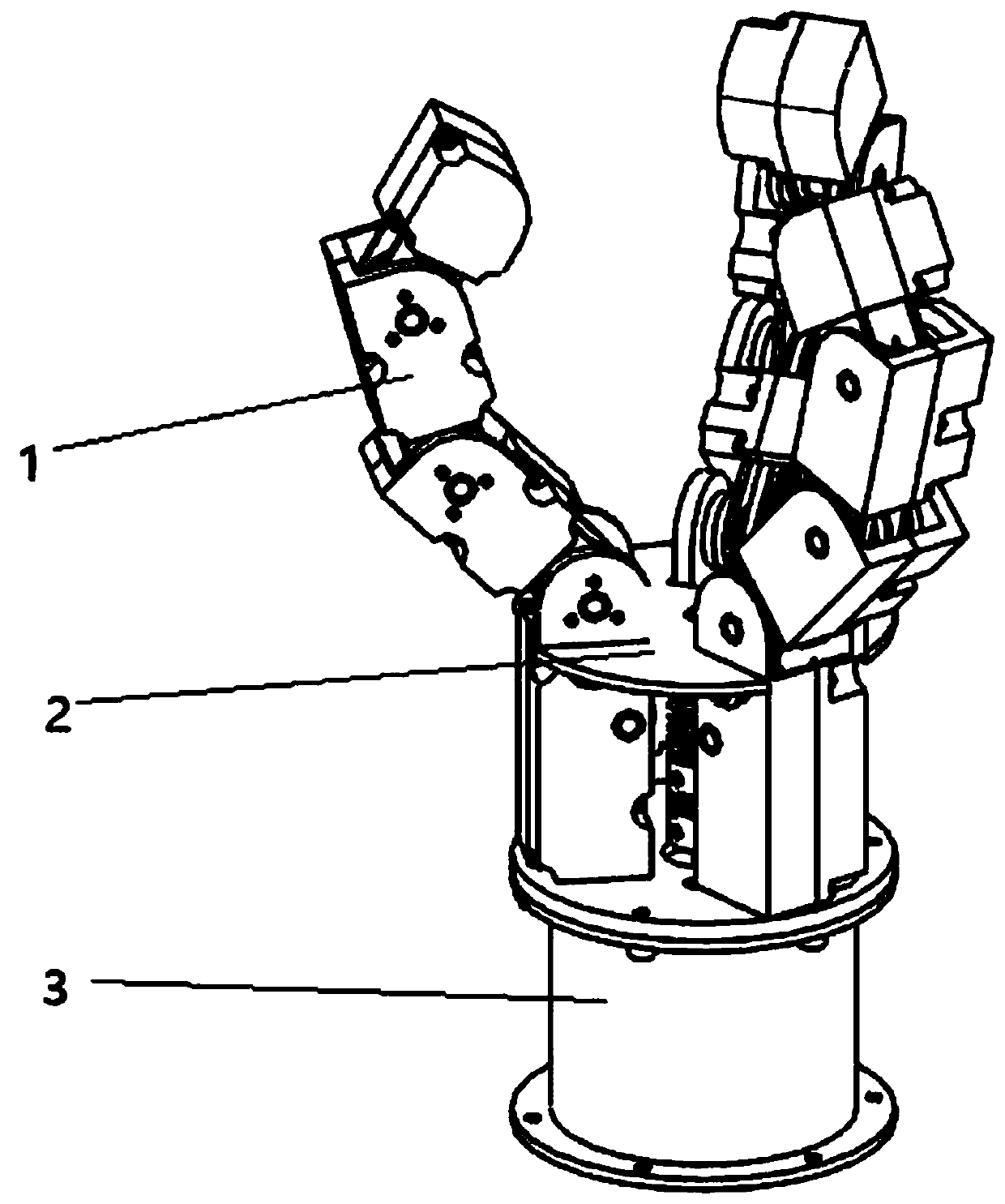
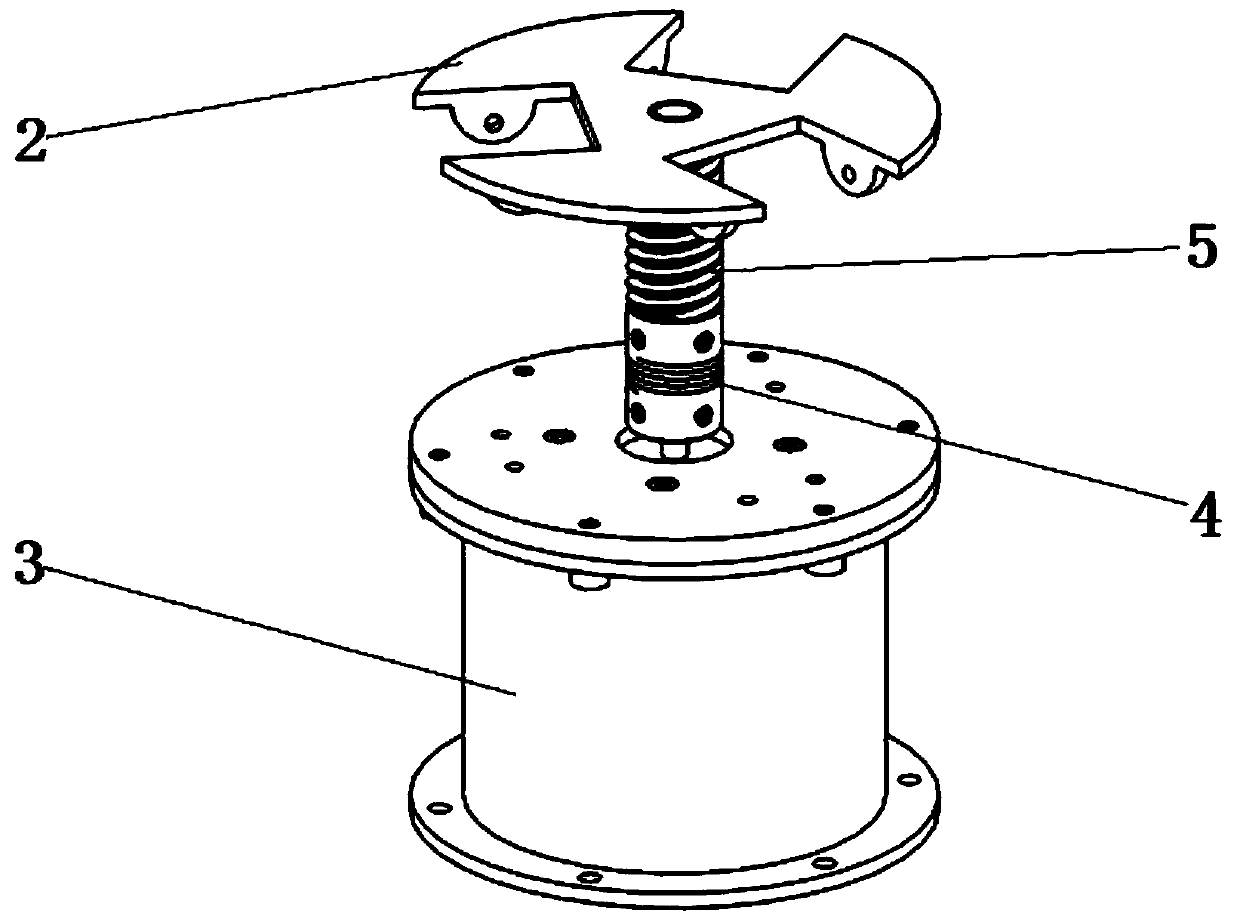
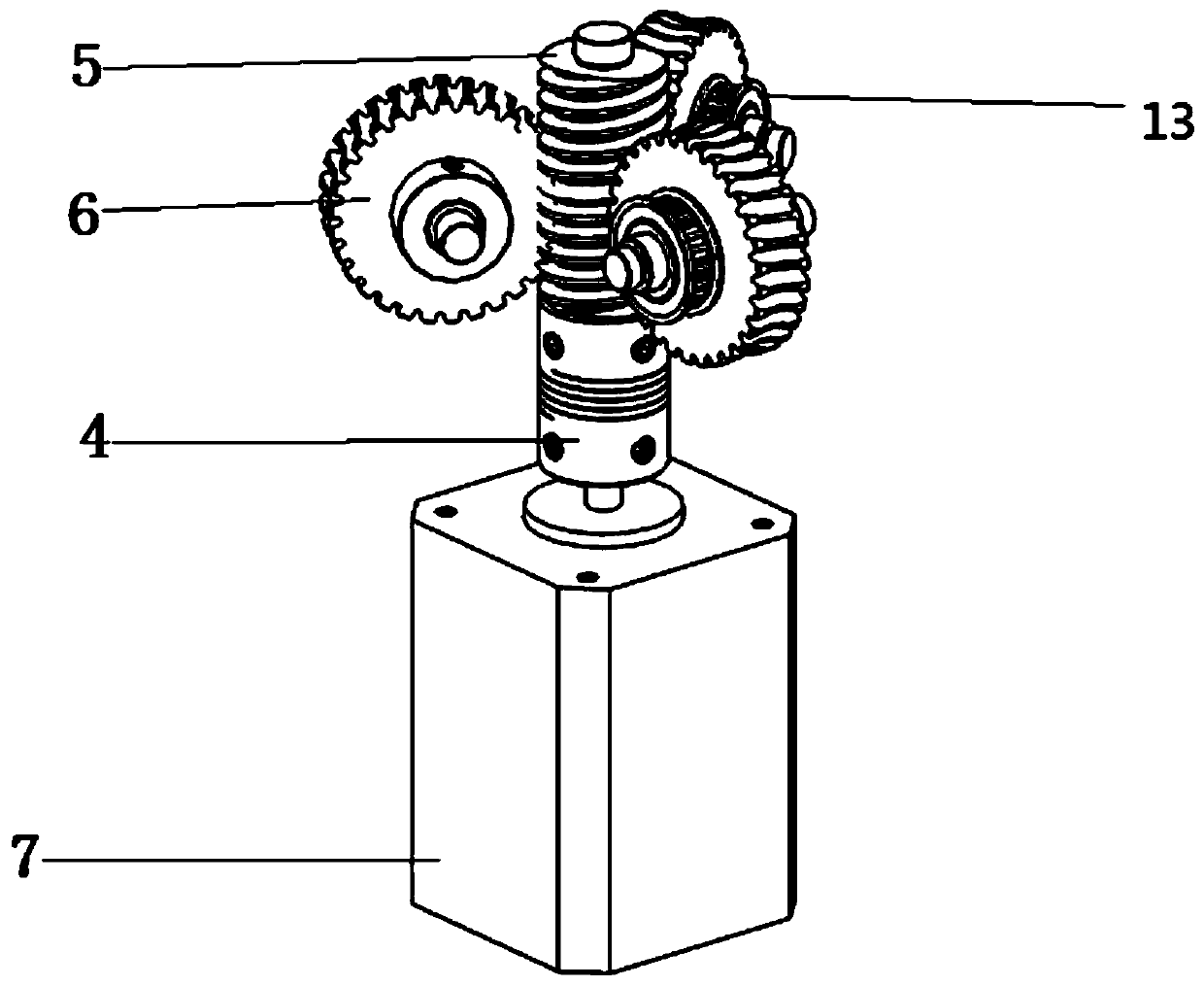
Examples
Embodiment Construction
[0041] In describing the present invention, it should be understood that the terms "center", "longitudinal", "transverse", "upper", "lower", "front", "rear", "left", "right", " The orientation or positional relationship indicated by "vertical", "horizontal", "top", "bottom", "inner", "outer", "side", "end", "side" etc. is based on the Orientation or positional relationship is only for the convenience of describing the present invention and simplifying the description, and does not indicate or imply that the referred device or element must have a specific orientation, be constructed and operated in a specific orientation, and thus should not be construed as a limitation of the present invention. In addition, the terms "first" and "second" are used for descriptive purposes only, and cannot be interpreted as indicating or implying relative importance or implicitly specifying the quantity of indicated technical features. Thus, a feature defined as "first" and "second" may explicit...
PUM
 Login to View More
 Abstract
Description
Claims
Application Information
 Login to View More