

Context aggregation residual single image rain removal method based on convolutional neural network
A convolutional neural network and a single image technology, applied in the field of image processing, can solve problems that affect the performance of computer vision systems, image visual effects and image quality, and achieve good image rain removal effects, rich details, and simple implementation Effect
- Summary
- Abstract
- Description
- Claims
- Application Information
AI Technical Summary
Problems solved by technology
Method used
Image

Examples
Embodiment 1
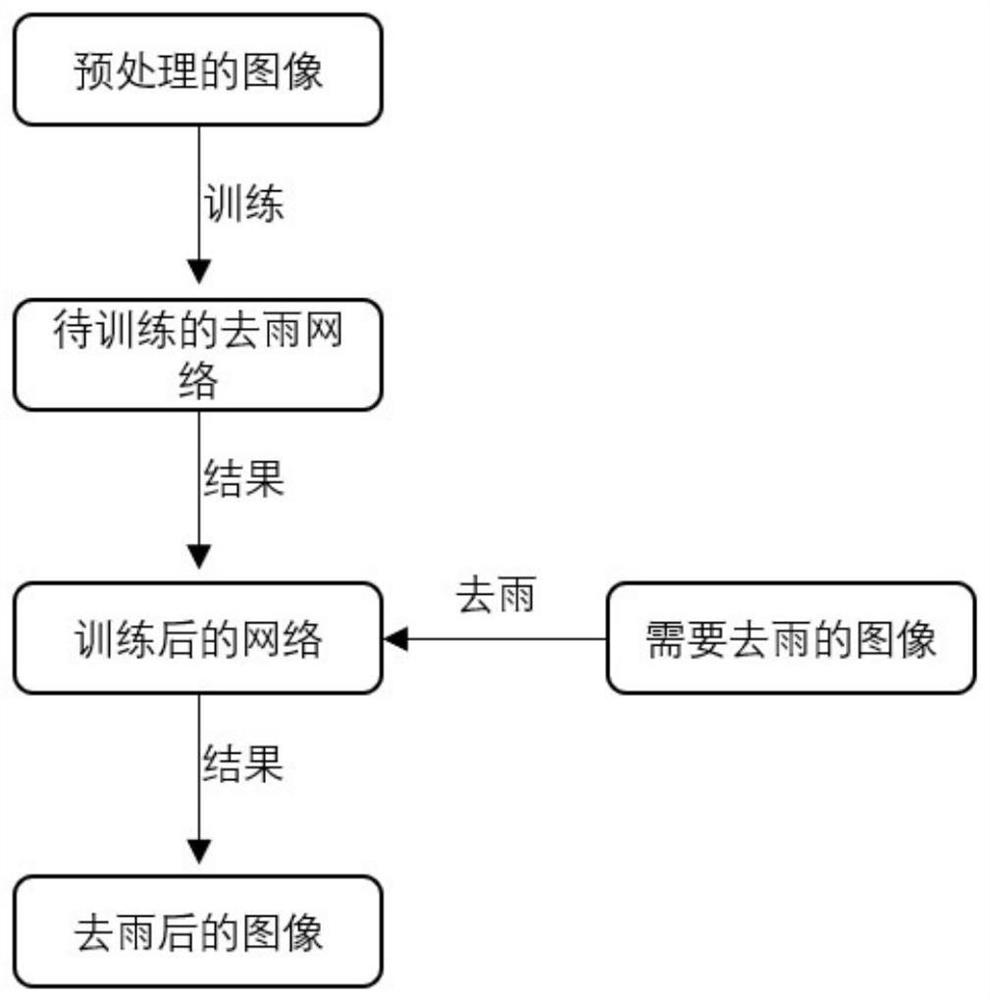
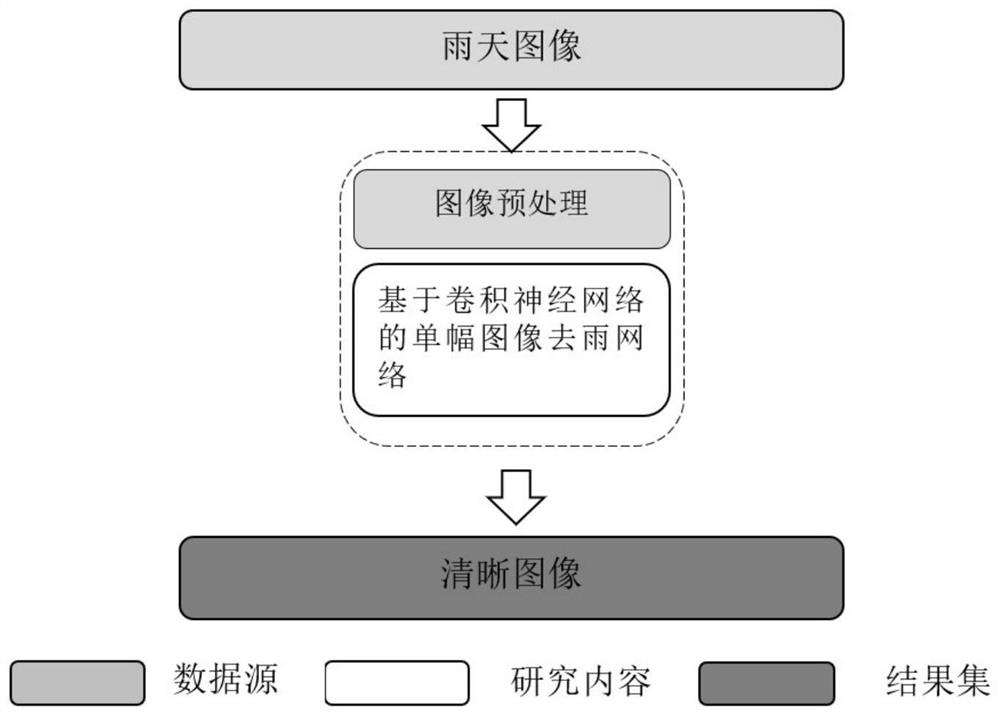
[0092] Such as figure 1 and figure 2As shown, the present invention is based on the convolutional neural network context aggregation residual single image deraining method comprising the following steps:
[0093] Step 1: Preprocess the input image, normalize the pixel value of the image to [0,1], and crop it to 256x256x3.
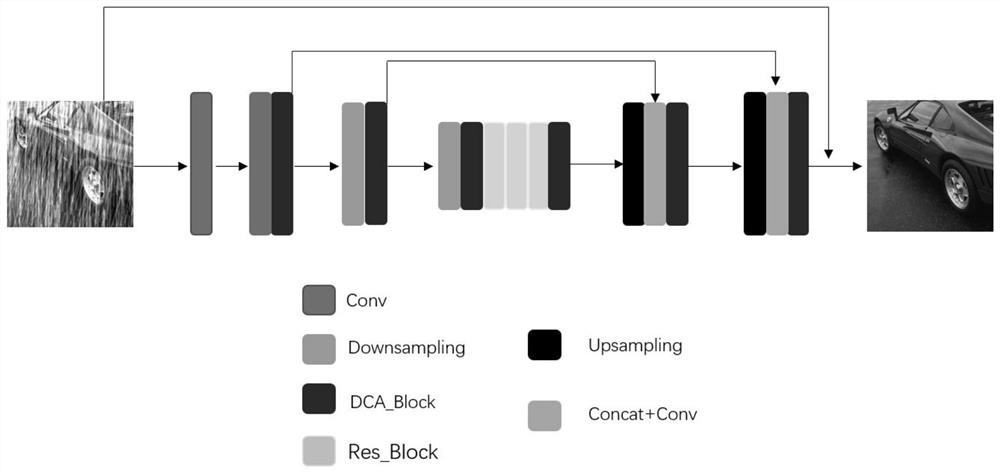
[0094] Step 2: Construct a convolutional neural network model;
[0095] The principle of constructing a convolutional layer: use convolution operation, instance normalization and activation function ReLU to combine into a convolutional layer,
[0096] F=ReLU(Instance_norm(Conv(x))) (5);
[0097] Context aggregation module DCA_Block: In the writing of the experimental code, the DCA_Block module is encapsulated into a function, so that this function can be called directly when this module is needed when the network is written later. The context aggregation module uses convolution with different expansion rates to obtain different feature maps; the contex...
PUM
 Login to View More
 Abstract
Description
Claims
Application Information
 Login to View More