
Space mechanical arm suspension microgravity simulation device
A space manipulator and microgravity simulation technology, applied in the field of simulation experiments, can solve problems such as the degree of freedom of the manipulator, range limitation, torque deviation at joints, and the influence of spacecraft attitude, achieving difficult control, high motion accuracy, and improved Follow the effects of dynamic features in real time
- Summary
- Abstract
- Description
- Claims
- Application Information
AI Technical Summary
Problems solved by technology
Method used
Image

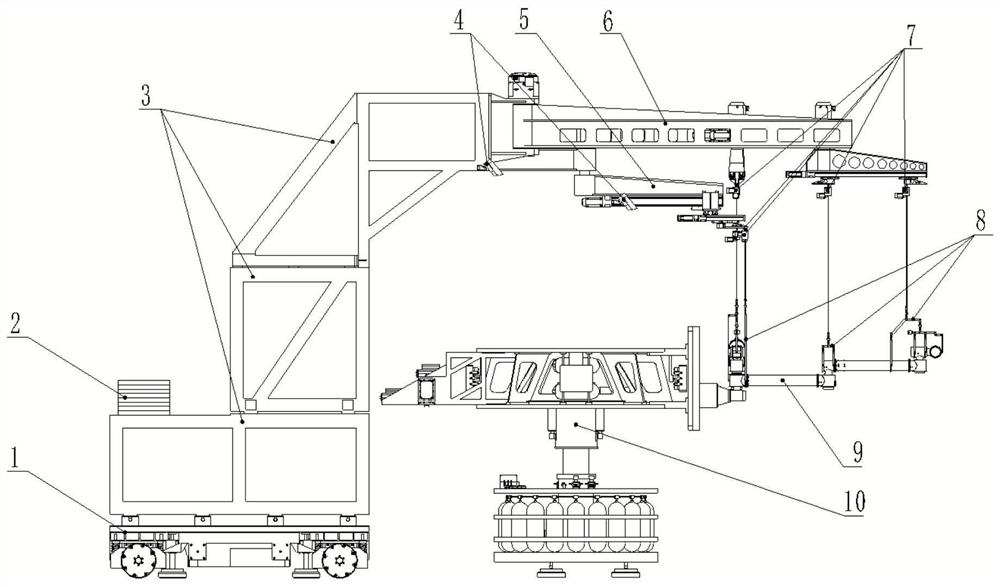
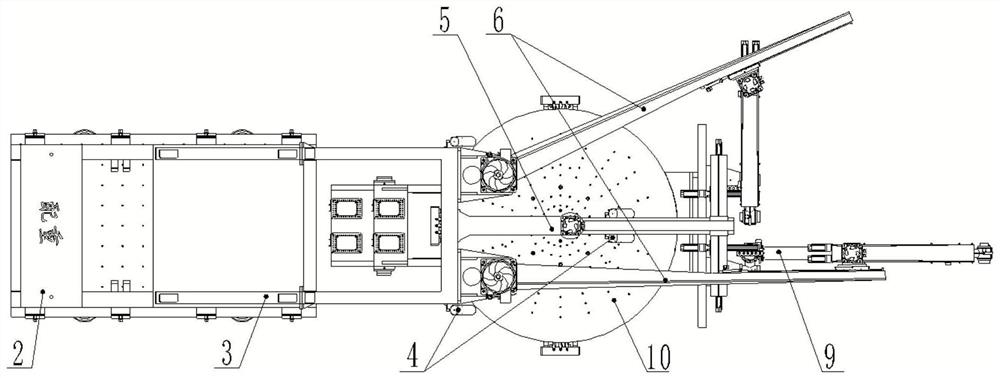
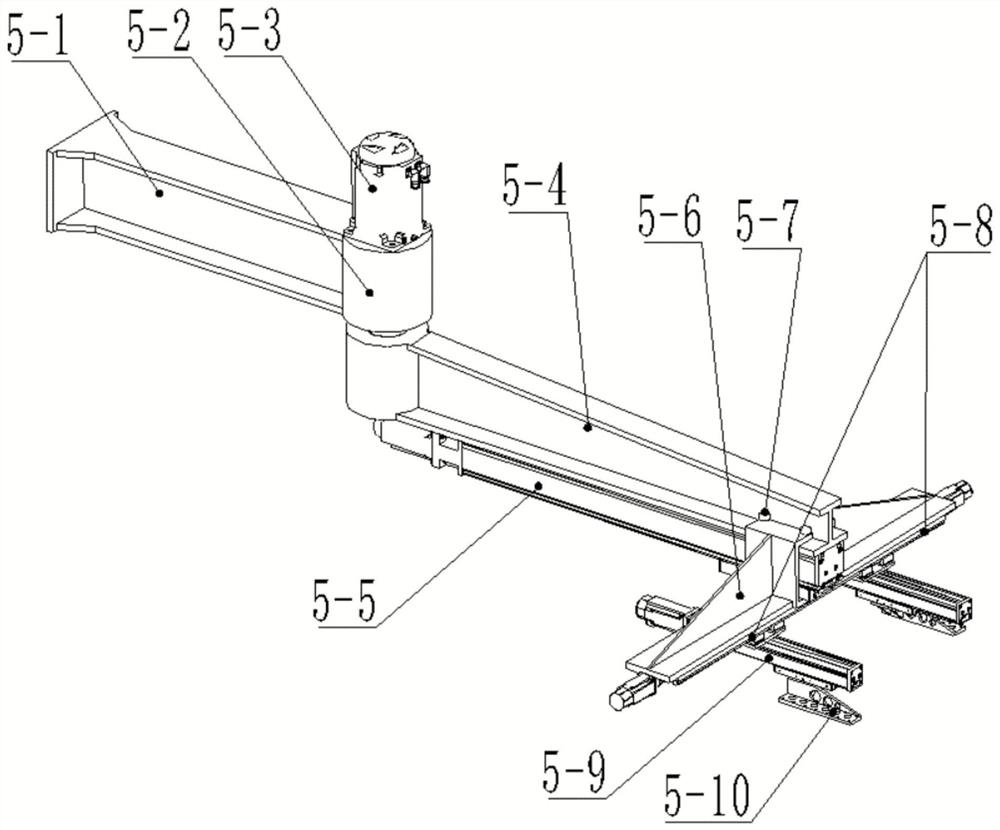
Examples
Embodiment Construction
[0052] It should be noted that, in the case of no conflict, the embodiments of the present invention and the features in the embodiments can be combined with each other.
[0053] In describing the present invention, it should be understood that the terms "center", "longitudinal", "transverse", "upper", "lower", "front", "rear", "left", "right", " The orientations or positional relationships indicated by "vertical", "horizontal", "top", "bottom", "inner", "outer", etc. are relative orientations or positional relationships, which are only for the convenience of describing the present invention and simplifying the description, and It is not to indicate or imply that the device or element referred to must have a particular orientation, be constructed in a particular orientation, or operate in a particular orientation, and thus should not be construed as limiting the invention. In addition, the terms "first", "second", etc. are used for descriptive purposes only, and should not be ...
PUM
 Login to View More
 Abstract
Description
Claims
Application Information
 Login to View More