Simplified array sensor for traditional Chinese medicine (TCM) pulses and full-array pulse information acquisition algorithm thereof

A technology of array sensors and sensor arrays, which is applied in the fields of sensors, medical science, and diagnostic signal processing, and can solve the problems of untrue, inaccurate, and incomplete measurement positions, measurement ranges, and measurement results, achieving high accuracy and improving Good accuracy and real-time effect

CN114052676APending Publication Date: 2022-02-18NANKAI UNIV
0 Cites 0 Cited by

Patent Information

Authority / Receiving Office
CN · China
Patent Type
Applications(China)
Current Assignee / Owner
Publication Date
2022-02-18

Smart Images

  • Figure 1
    Figure 1
  • Figure 2
    Figure 2
  • Figure 3
    Figure 3
Patent Text Reader

Abstract

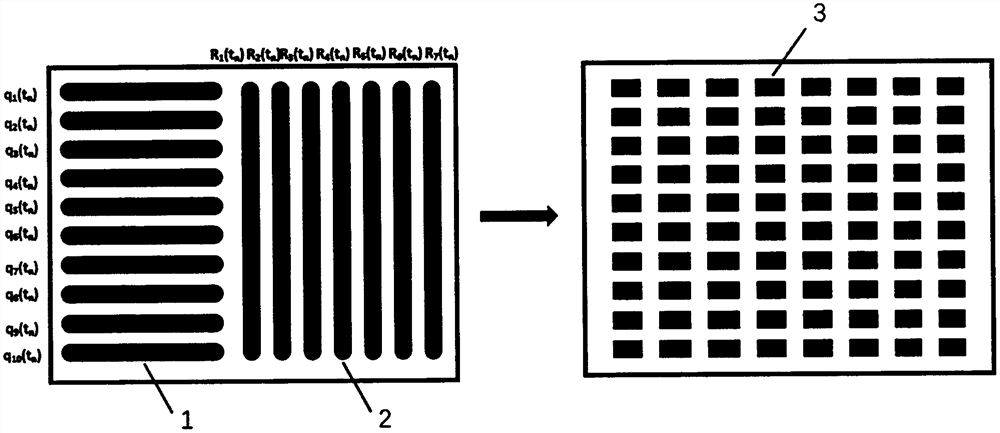
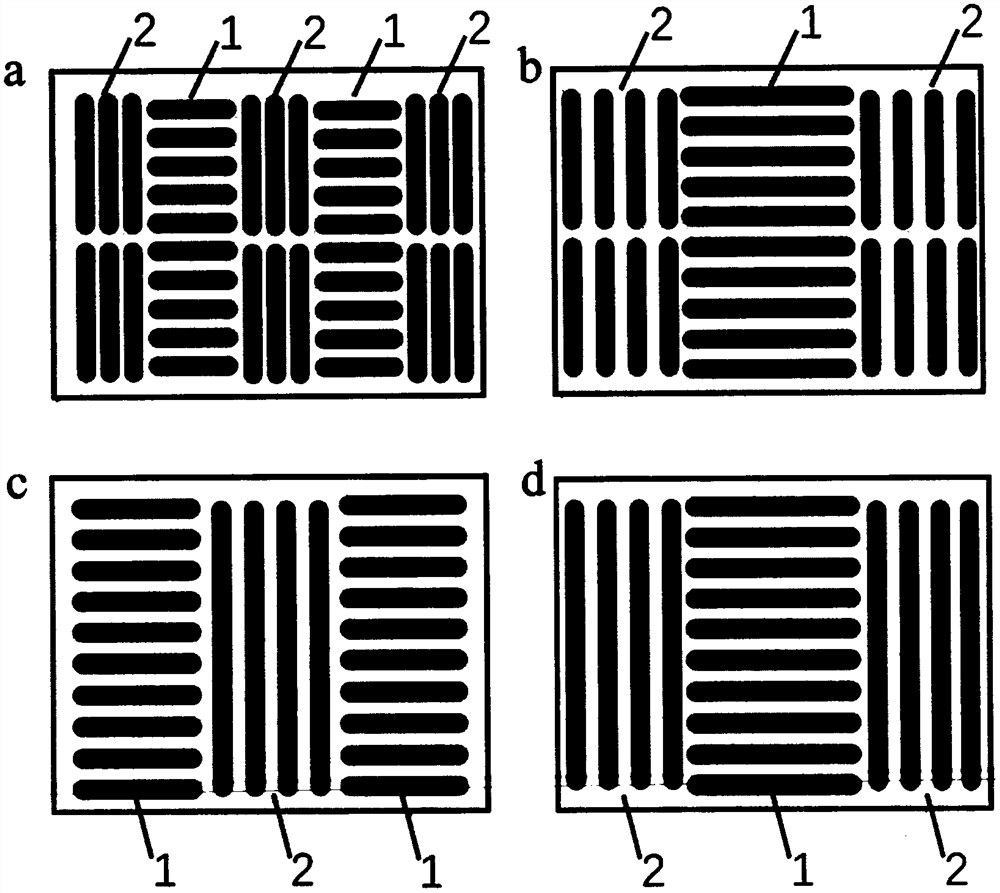
The invention provides a simplified array sensor for TCM pulses and a full-array pulse information acquisition algorithm thereof. The simplified array sensor is composed of a group of longitudinal sensing units (arranged in the direction of the radial artery) and a group of transverse sensing units (arranged perpendicular to the direction of the radial artery). The longitudinal sensing units and the transverse sensing units are used for obtaining longitudinal and transverse pulse beating intensity values and change rules respectively; and then, according to the pulse intensity numerical value sensed by each sensing unit at each moment and the change rule of the pulse intensity numerical values along the longitudinal direction and the transverse direction, the pulse intensity numerical value of each unit of the whole array at the moment is calculated and obtained. In this way, the purpose of obtaining high-spatial-resolution pulse information can be achieved by adopting few sensing units. According to the pulse array sensor, contradiction between spatial resolution and sensing sensitivity of other pulse array sensors is solved. A pulse acquisition scheme which is low in cost, low in process limitation, high in accuracy, good in real-time performance, high in spatial resolution and complete in acquired information is provided in the invention.
Need to check novelty before this filing date? Find Prior Art

Description

technical field

[0001] The invention belongs to the field of new-generation information technology and pulse signal processing, and relates to an array type pulse sensor and a pulse two-dimensional dynamic image reconstruction method thereof. Background technique

[0002] In today's society, with the continuous advancement of science and technology, the medical level and demand continue to improve, and the integration of scientific and technological elements in traditional Chinese medicine has attracted widespread attention. Traditional Chinese medicine analyzes the pulse information through "pulse diagnosis", and then realizes the diagnosis of the health of the human body and the disease of the patient. Since the diagnosis method of traditional Chinese medicine is non-invasive, and has the advantages of low risk, low cost and high stability, it has become a hot spot that people can use modern technology to automatically diagnose the pulse of traditional Chinese medicine. ...

Examples

Embodiment Construction

[0036] The following will clearly and completely describe the technical solutions in the embodiments of the present invention with reference to the accompanying drawings in the embodiments of the present invention. Obviously, the described embodiments are only some, not all, embodiments of the present invention. Without departing from the principles of the present invention, changes, modifications, substitutions and deformations to the embodiments of the present invention all belong to the protection scope of the present invention. An embodiment of the present invention provides a simplified array sensor for pulse of traditional Chinese medicine and an algorithm for acquiring pulse information of a full array thereof.

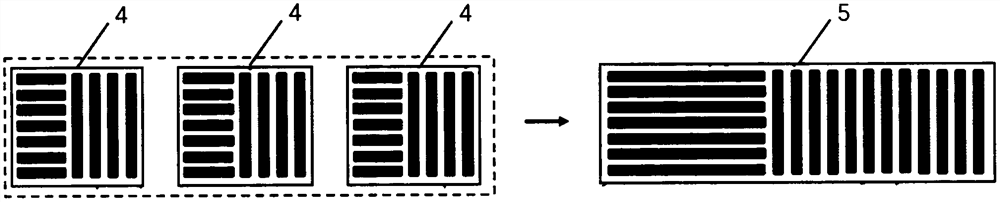
[0037] The streamlined array sensor is composed of a group of longitudinal sensing units (arranged along the direction of the radial artery) and a group of transverse sensing units (arranged perpendicular to the direction of the radial artery), which respectivel...