
Synchronous device for double clutch speed variator
A dual-clutch transmission and synchronizing device technology, applied in the direction of transmission, control, transmission control, etc., can solve the problems of no setting, troublesome, expensive, etc., and achieve the effects of economy and wear, reduce wear and prolong life.
- Summary
- Abstract
- Description
- Claims
- Application Information
AI Technical Summary
Problems solved by technology
Method used
Image

Examples
Embodiment Construction
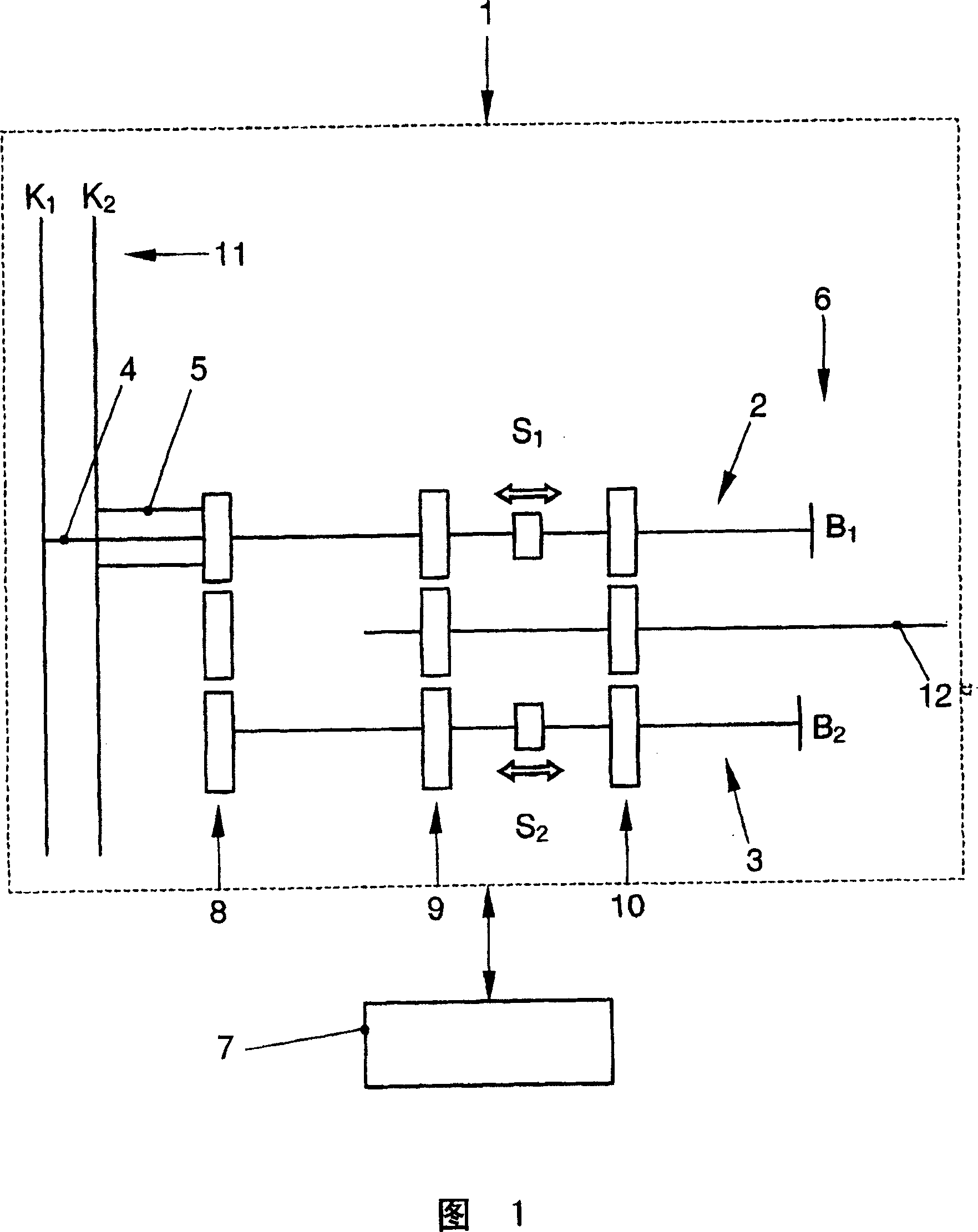
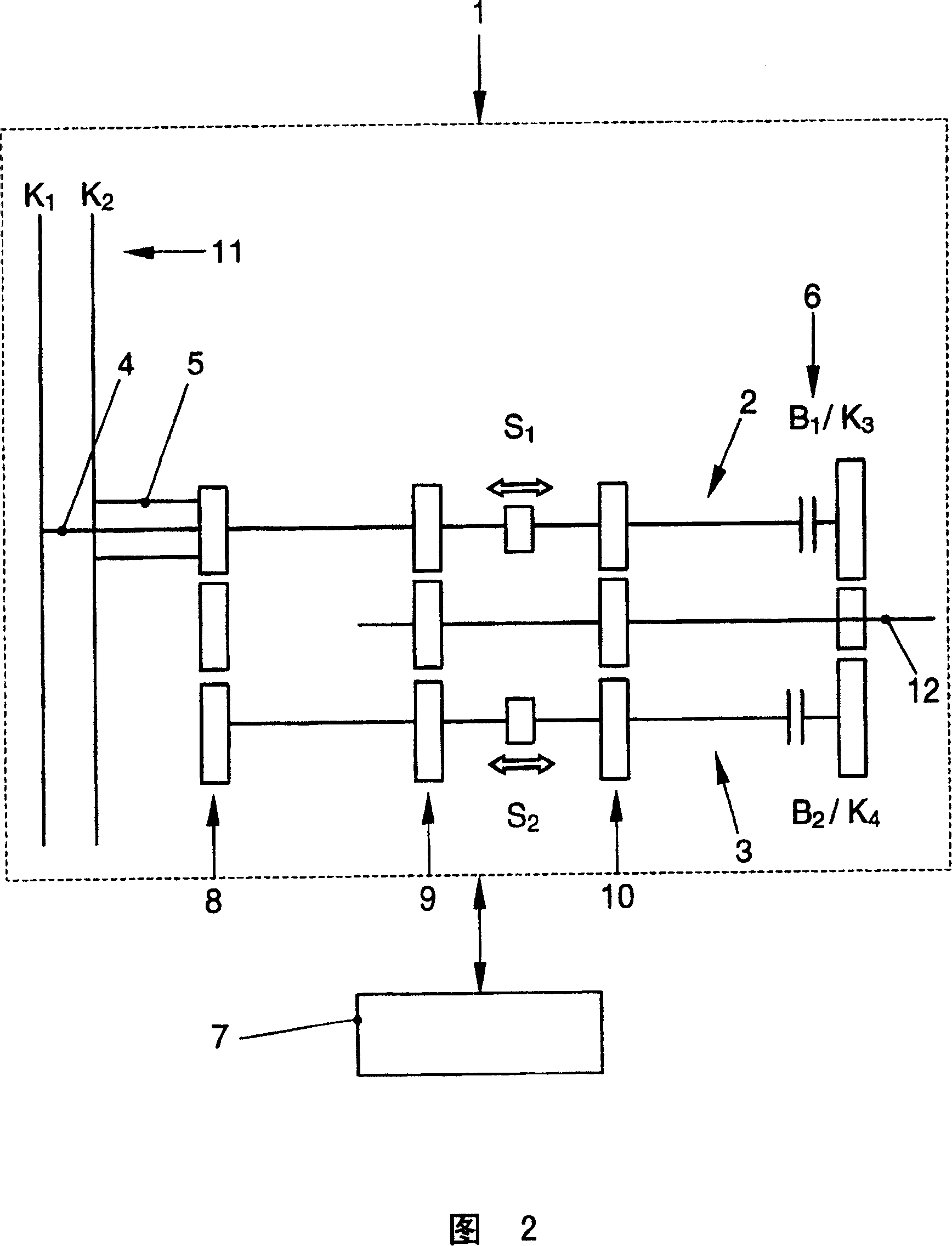
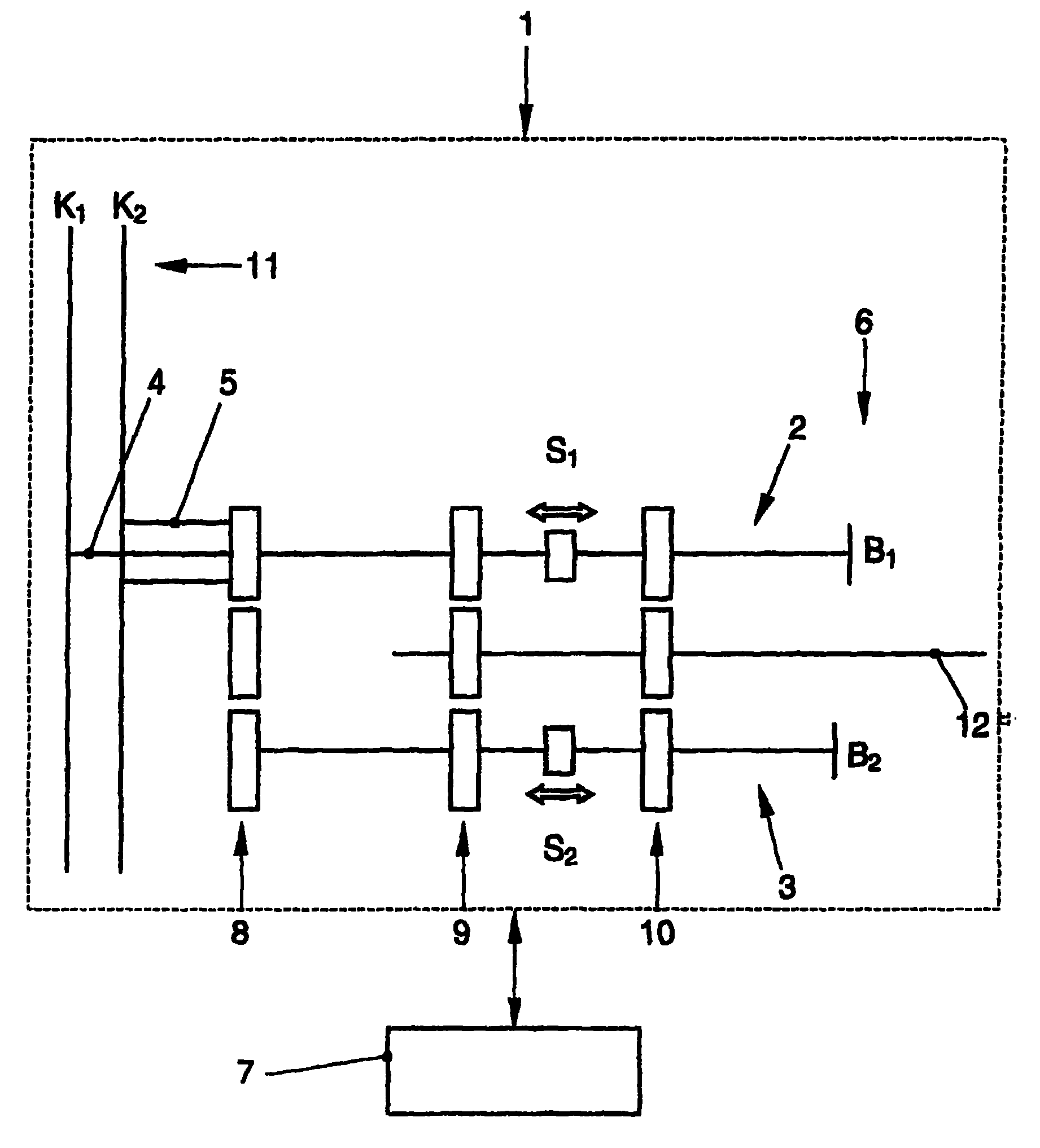
[0028] The synchronizing device 1 of the dual-clutch transmission mainly includes a braking mechanism 6 and two transmission output shaft brakes B1 and B2.
[0029]The dual clutch transmission 1 essentially comprises two subtransmissions 2 and 3 and a dual clutch 11 formed from two input clutches K1 and K2. The subtransmissions 2 and 3 are each connectable via their corresponding input clutches K1 or K2 to a drive motor (not shown) in order to transmit the drive torque via the individual gears, that is to say with a certain transmission ratio, to the transmission output shaft 12 . One sub-transmission 2 or 3 assumes odd-numbered gears, and the other sub-transmission 3 or 2 correspondingly assumes even-numbered gears. The dual-clutch transmission 1 has two coaxially arranged transmission input shafts 4 , 5 , wherein the sub-transmission 2 is assigned to the inner shaft 4 and the sub-transmission 3 is assigned to the outer shaft 5 . Here, the subtransmission 3 is engaged with ...
PUM
 Login to View More
 Abstract
Description
Claims
Application Information
 Login to View More