Method for removing and recovering reaction monomer

A vinylidene chloride, unreacted technology, applied in the field of vinylidene chloride-based resin slurry, can solve problems such as difficulty, temperature and separation tank temperature drop, poor thermal stability, etc.

CN1422873AInactive Publication Date: 2003-06-11KUREHA KAGAKU KOGYO KK
0 Cites 5 Cited by

Patent Information

Authority / Receiving Office
CN · China
Current Assignee / Owner
Publication Date
2003-06-11
Estimated Expiration
Not applicable · inactive patent

Smart Images

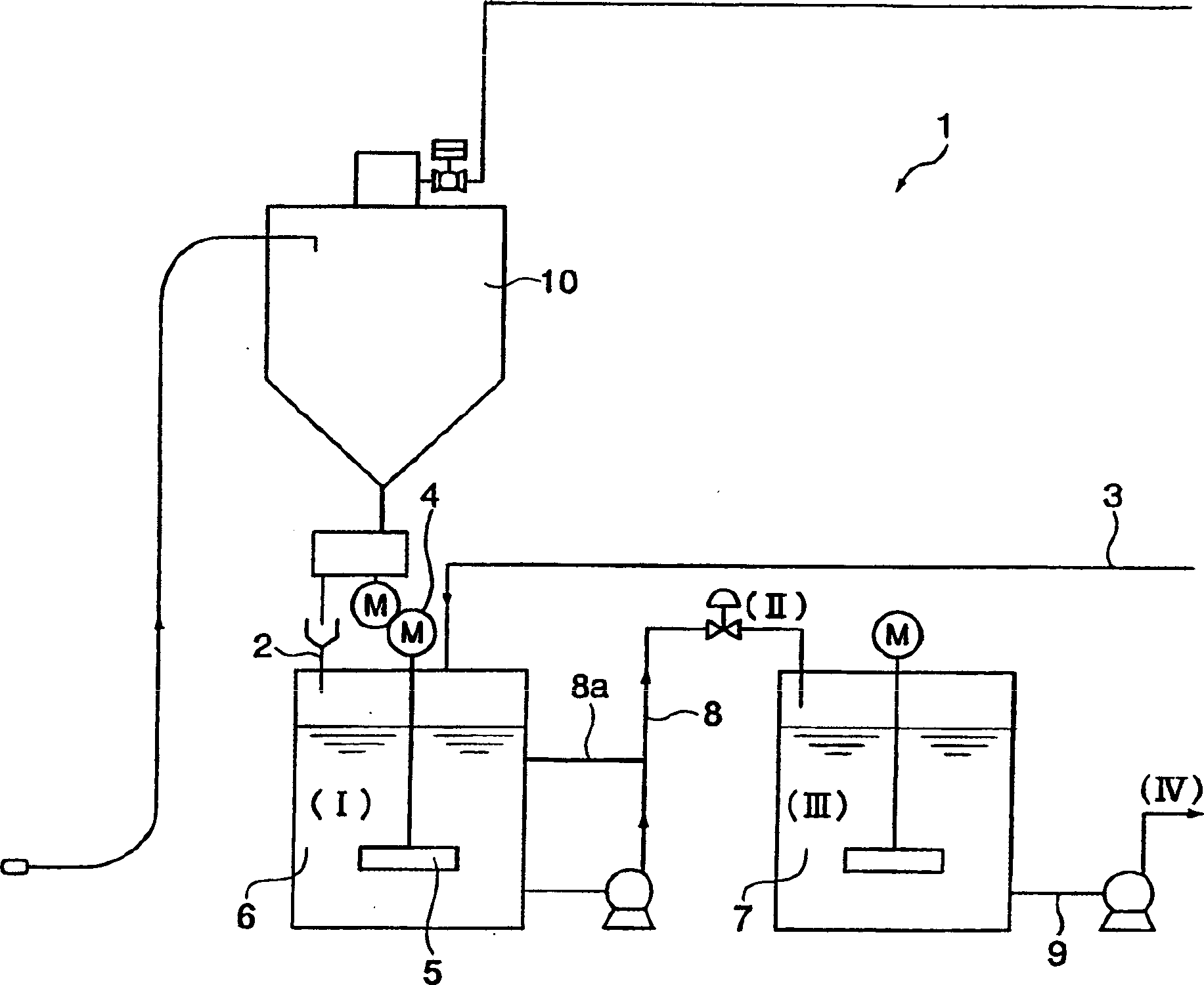
  • Figure 1
    Figure 1
Patent Text Reader

Abstract

This method for removing the unreacted monomers from the vinylidene chloride resin slurry comprises keeping an aqueous medium in the vinylidene chloride resin slurry containing the unreacted monomers and obtained by polymerization in the aqueous medium in a boiling state at <=80 deg.C temperature under a reduced pressure and vaporizing the unreacted monomers. The method for recovering the unreacted monomers from the vinylidene chloride resin slurry comprises cooling the removed unreacted monomer component, separating water, then further cooling the unreacted monomer component, liquefying the gaseous unreacted monomers and recovering the unreacted monomers.
Need to check novelty before this filing date? Find Prior Art

Description

technical field

[0001] The present invention relates to removing unreacted vinylidene chloride-based resins while preventing quality deterioration such as coloring of vinylidene chloride-based resins from a vinylidene chloride-based resin slurry (slurry) containing unreacted monomers obtained by polymerization in an aqueous medium. A method of monomer, and a method of recovering unreacted monomer. Background technique

[0002] In the past, as a method of separating and removing residual monomers from vinyl chloride-based resin slurries, it was proposed in JP-A-51-135990 to polymerize vinyl chloride or a monomer mixture mainly composed of vinyl chloride in an aqueous medium. , in the process of transferring the obtained vinyl chloride resin slurry to the separation tank with a pipeline, the slurry is rapidly heated to a temperature of 80-150°C by blowing water vapor into the slurry or performing external heating while blowing water vapor , and the...

Examples

Embodiment 1

[0085] polymerization

[0086] In a stainless steel polymerization vessel with an internal volume of 150 liters, 60 kg of deionized water in which 50 g of methylcellulose was dissolved was added as a suspending agent, and 41 kg of vinylidene chloride monomer and 9 kg of vinyl chloride monomer were thrown into it under stirring. and 100 g of isopropyl peroxydicarbonate as a polymerization initiator. While stirring the mixture, the temperature was raised to 45°C to start polymerization. Then, the polymerization was continued for 30 hours while continuously raising the temperature to 55° C. to obtain a polymer slurry containing unreacted monomers.

[0087] mixing of steam

[0088] Next, install a steam mixer on the way from the bottom of the polymerization vessel to the unreacted monomer removal vessel to mix the steam and increase the temperature of the slurry to 80-90°C.

[0089] stress reliever

[0090] Then, the slurry was transferred to an unreacted monomer removal...