
Torque balancing roll forming machine
a roll forming machine and torque balancing technology, applied in the direction of rolling speed control device, metal rolling arrangement, manufacturing tools, etc., can solve the problems of uneven load, rapid tooling wear, roll scuffing of materials, etc., to reduce the output speed, increase torque output, and significant flexibility in tooling
- Summary
- Abstract
- Description
- Claims
- Application Information
AI Technical Summary
Benefits of technology
Problems solved by technology
Method used
Image

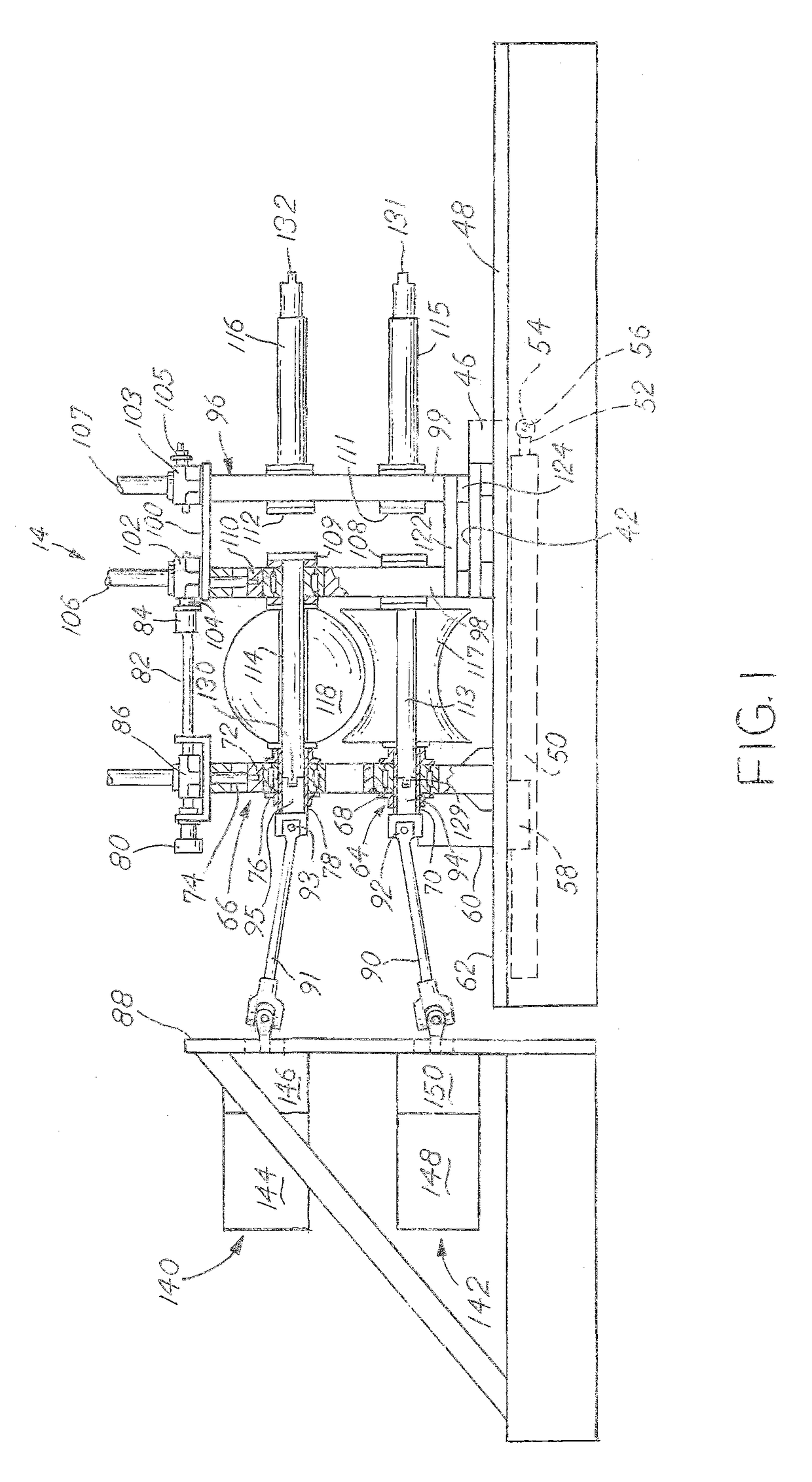
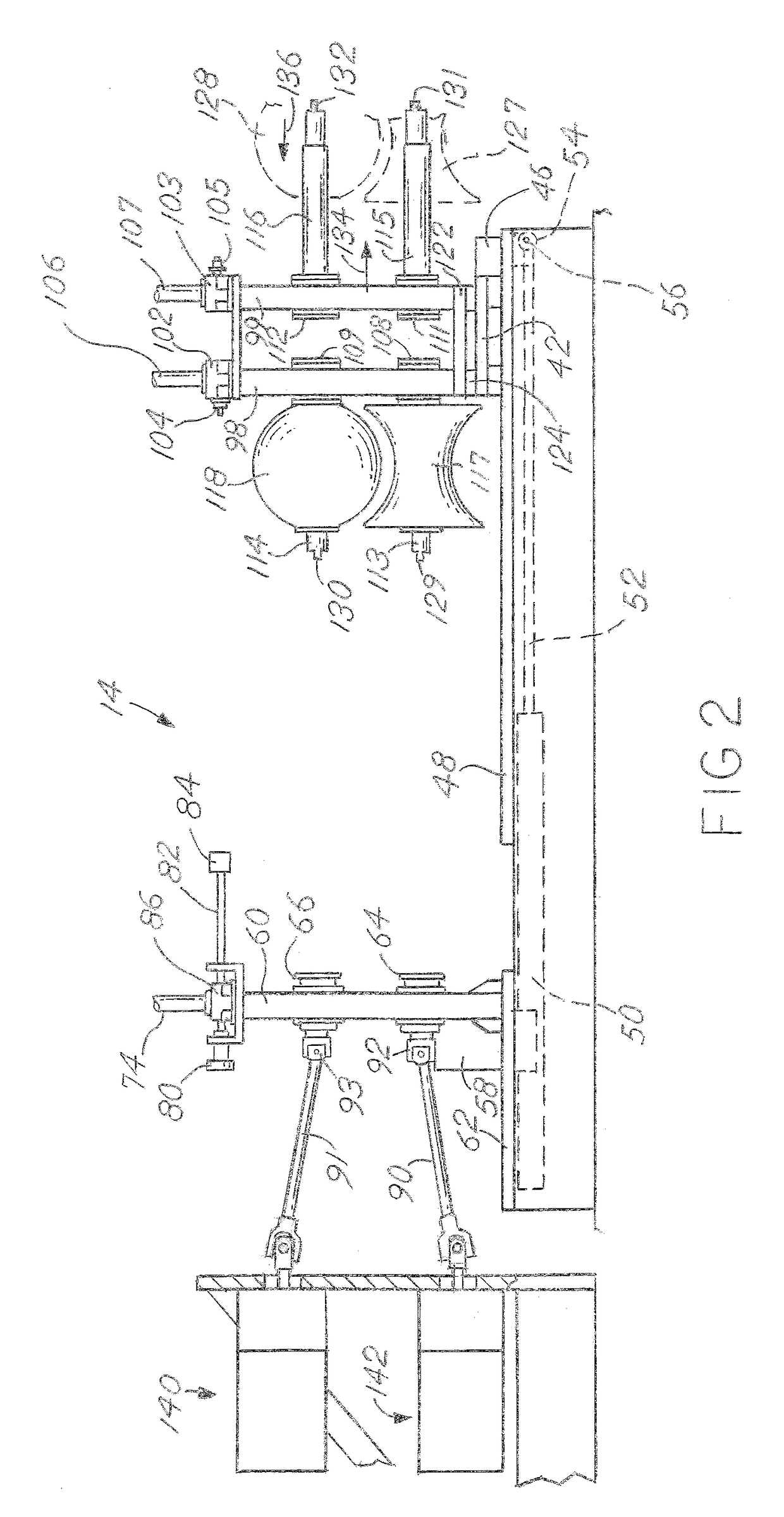
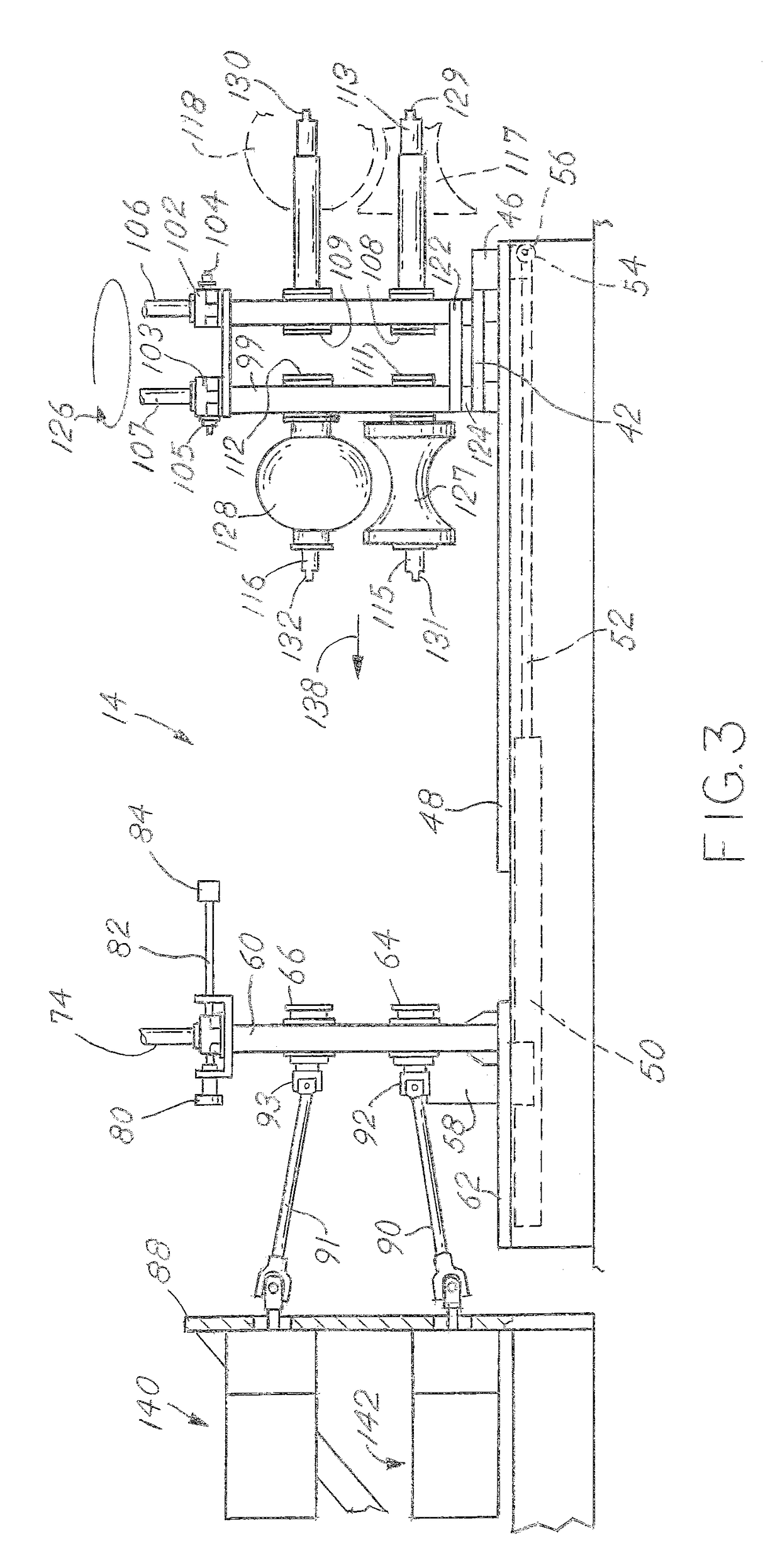
Examples
Embodiment Construction
[0010]As is known in the art, a roll forming machine takes a flat strip of material and shapes it into a continuous cross-sectional desired shape, such as tubing. Frequently, the roll forming machine is a portion of a production line where the flat strip is provided to the machine from another machine, such as an uncoiler or slitter. After the machine makes the tubing, the tubing may be finished by other processes, such as cutting, end finishing, and stacking. This specification is primarily dedicated to the machine portion of the production line.
[0011]Referring first to the drawings of FIGS. 4 and 5, reference numeral 10 generally designates a roll forming line, commonly used in making cylindrical tubes from sheet metal products. As shown in FIG. 4, a typical line 10 includes numerous machines which form the various sections of the line. These include forming section 12, which includes mill stands 13, 14, 15, 16 and 17; a cluster section 18 which includes mill stands 19, 20 and 21;...
PUM
| Property | Measurement | Unit |
|---|---|---|
| rotational torque | aaaaa | aaaaa |
| torque | aaaaa | aaaaa |
| shape | aaaaa | aaaaa |
Abstract
Description
Claims
Application Information
 Login to View More