
Method and apparatus for controlling an electric pump of a hydraulic braking circuit
a hydraulic braking circuit and electric pump technology, applied in the direction of electric variable regulation, process and machine control, instruments, etc., can solve the problems of increasing the power that can be drawn by the motor, increasing the cost of the motor, and not being desirable for a large motor. to achieve the effect of rapid pressure increas
- Summary
- Abstract
- Description
- Claims
- Application Information
AI Technical Summary
Benefits of technology
Problems solved by technology
Method used
Image

Examples
Embodiment Construction
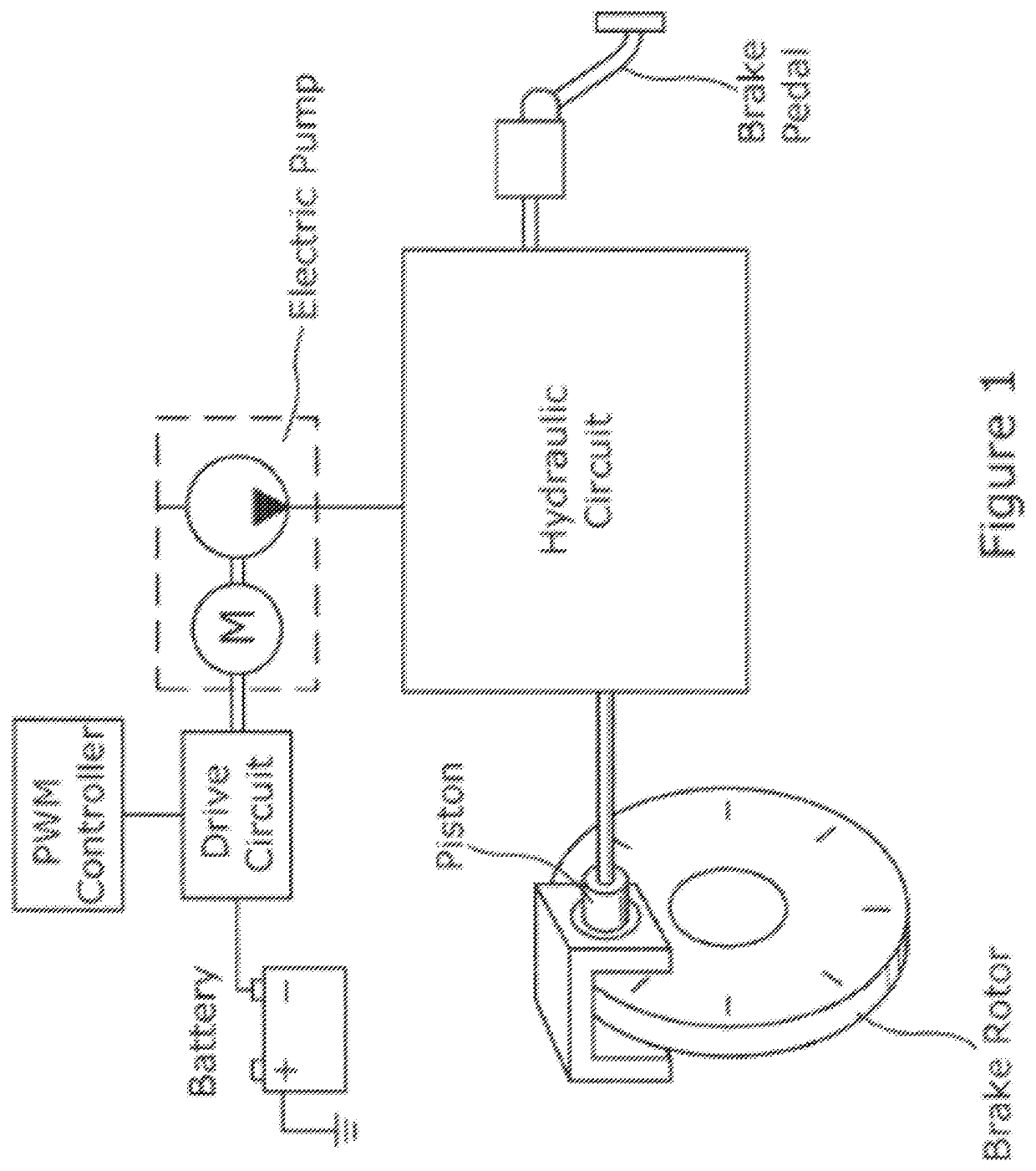
[0060]As shown in FIG. 1, a vehicle (not shown) includes a hydraulic braking circuit that supplied hydraulic fluid to a piston of one brake. The piston presses a pad against a rotor, the pressure applied being determined by the pressure of the fluid. In normal running the pad is held clear of the rotor and the rotor turns freely with the associated wheel of the vehicle. During braking the pressure is increased, which causes the friction force between the pad and rotor to increase. This generates heat, and the conversion of the rotational energy of the disk to heat is the main mechanism by which the brakes slow the wheel of the vehicle.
[0061]The pressure of the fluid is controlled by a driver pressing a brake pedal, which operates a master cylinder. In addition, a pump is provided in the circuit. The pump includes an electric motor and at least one piston, the piston moves as power is supplied to the motor, and this movement of the piston pressurises the fluid in the circuit. The pum...
PUM
 Login to View More
 Abstract
Description
Claims
Application Information
 Login to View More