
Installation for charging electric cars
a technology for charging electric cars and electric cars, applied in electrochemical generators, battery/fuel cell control arrangements, transportation and packaging, etc., can solve the problems of generating a considerable amount of waste heat, low loss, and short charging time, and achieve the effect of reducing the space requiremen
- Summary
- Abstract
- Description
- Claims
- Application Information
AI Technical Summary
Benefits of technology
Problems solved by technology
Method used
Image

Examples
Embodiment Construction
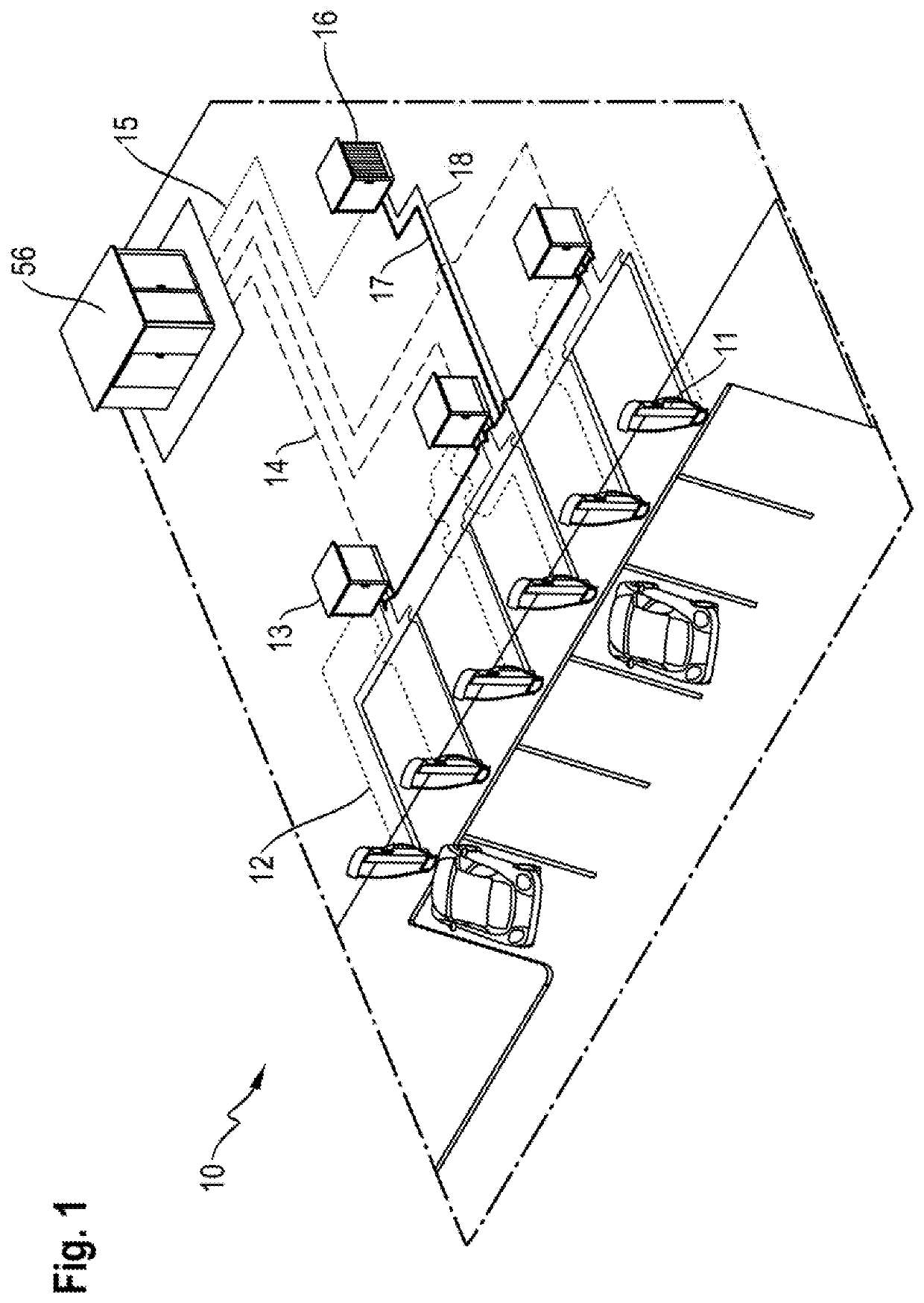
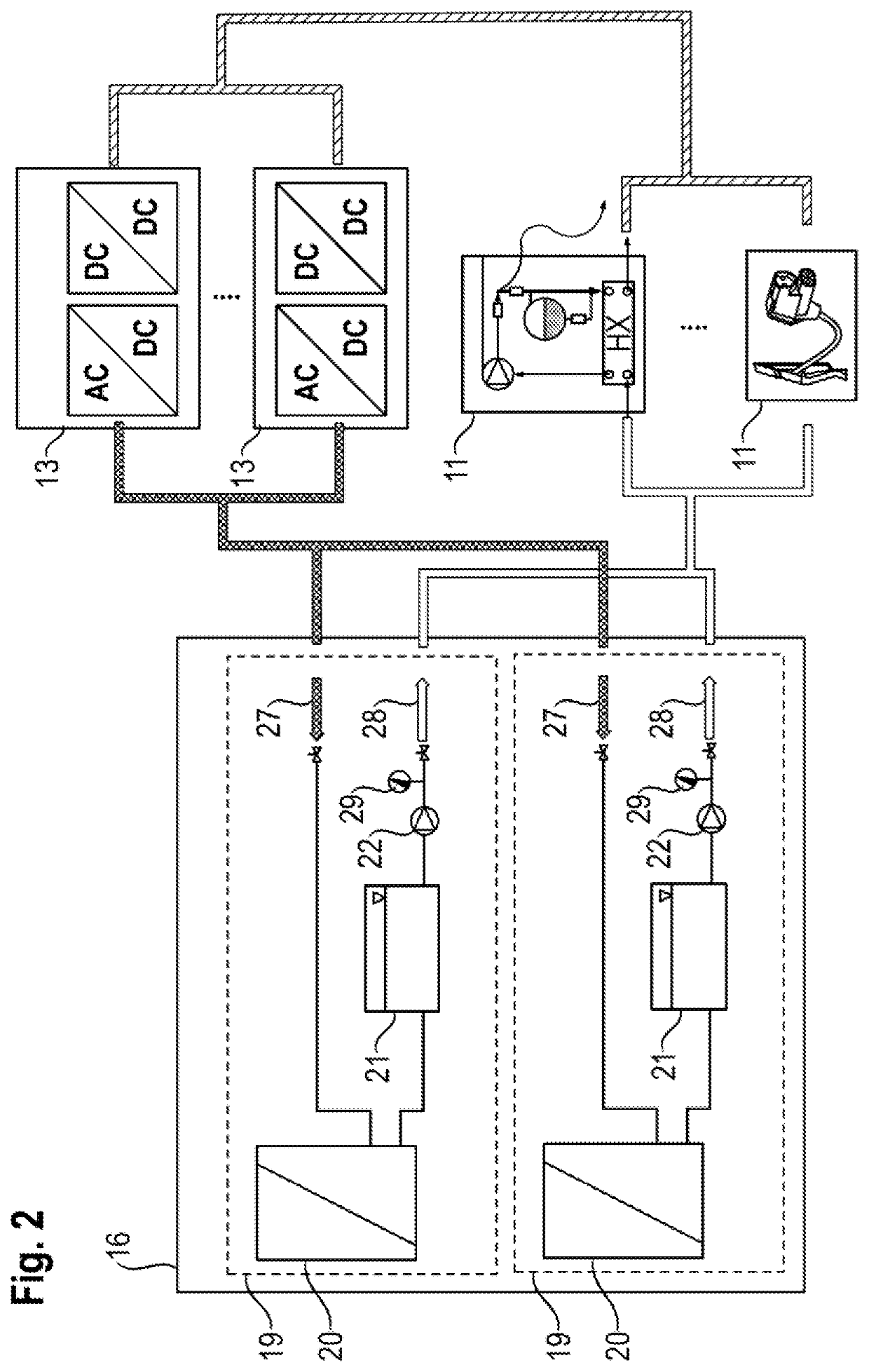
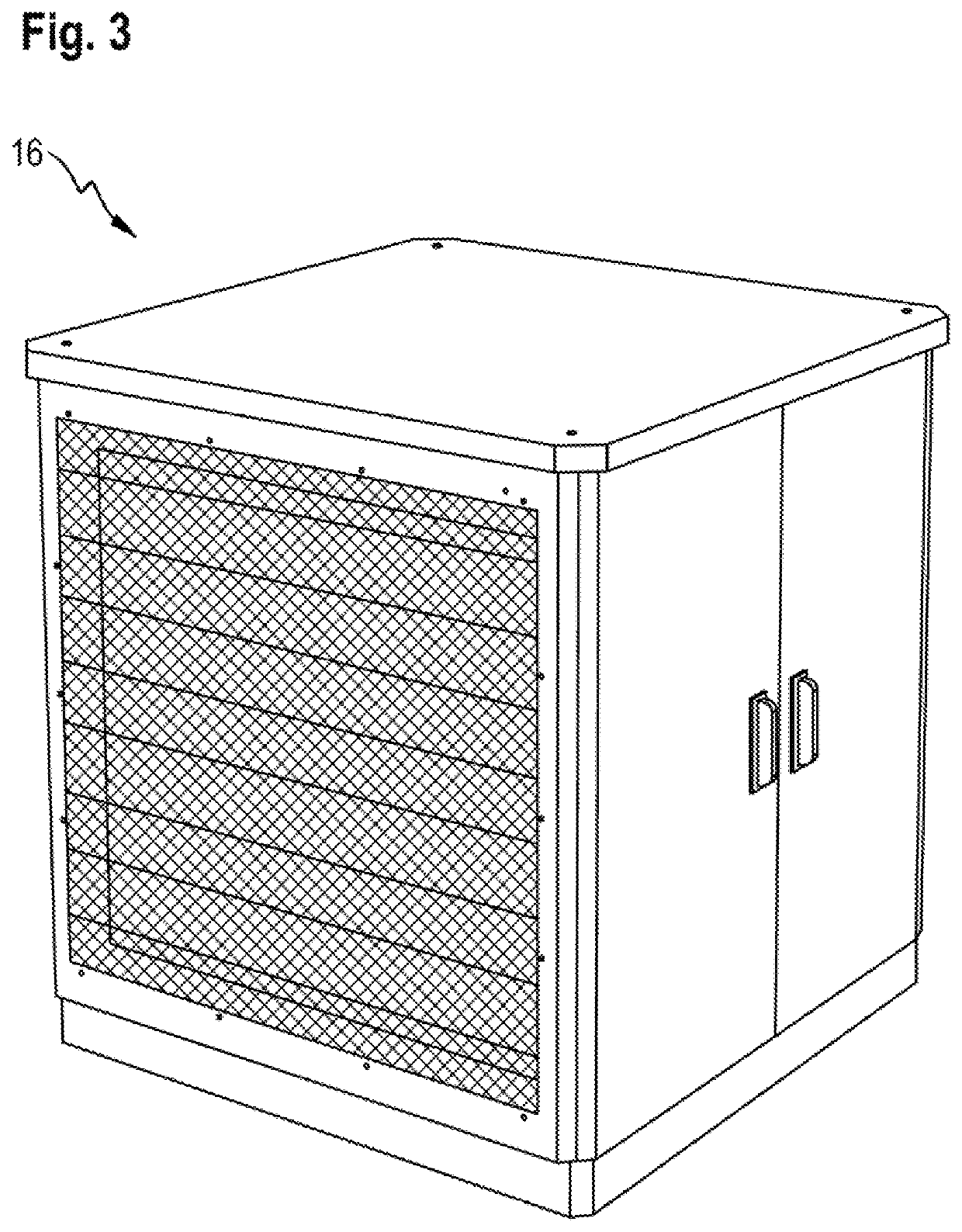
[0027]FIG. 1 illustrates the structure of an installation (10) according to aspects of the invention comprising charging columns (11), direct-current lines (12), rectifiers (13), three-phase alternating-current lines (14), a single-phase alternating-current line (15) and also a central cooling arrangement (16). The direct-current lines (12), which are designed for 800 V for example, in this case connect the charging columns (11) to the rectifiers (13) which, for their part—for example with a voltage of 480 V—are fed from a medium-voltage transformer (56) via the three-phase alternating-current lines (14) by switch panel. In addition, said medium-voltage transformer is, in turn, connected to the cooling arrangement (16) via a conventional single-phase alternating-current line (15) and supplies said cooling arrangement with a conventional domestic low voltage. In this case, the installation (10) comprises, in fluidic terms, a common primary cooling circuit (47) which connects the char...
PUM
| Property | Measurement | Unit |
|---|---|---|
| voltage | aaaaa | aaaaa |
| voltage | aaaaa | aaaaa |
| DC voltage | aaaaa | aaaaa |
Abstract
Description
Claims
Application Information
 Login to View More