
Vascular channel manufacture by deflagration
a technology of vascular channel and manufacture, which is applied in the field of vascular channel manufacture by deflagration, can solve the problems of difficult consistent removal of previously used sacrificial materials, difficult deposition of vaporization and melting removal methods, and difficult deposition of sacrificial materials, etc., and achieves the effects of rapid deflagration process, difficult and slow manufacturing of vascular channel in composite materials, and removal of sacrificial materials
- Summary
- Abstract
- Description
- Claims
- Application Information
AI Technical Summary
Benefits of technology
Problems solved by technology
Method used
Image

Examples
Embodiment Construction
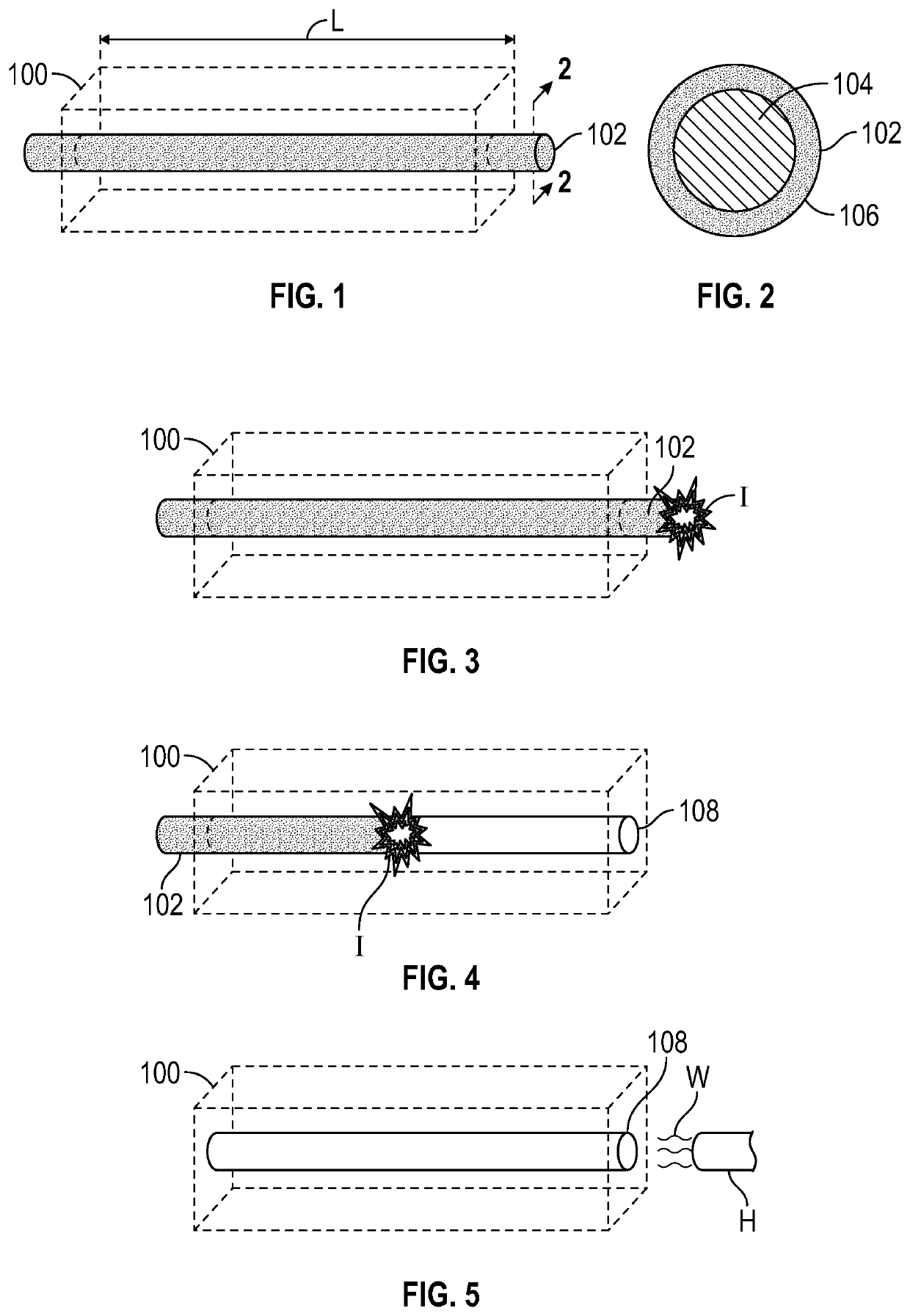
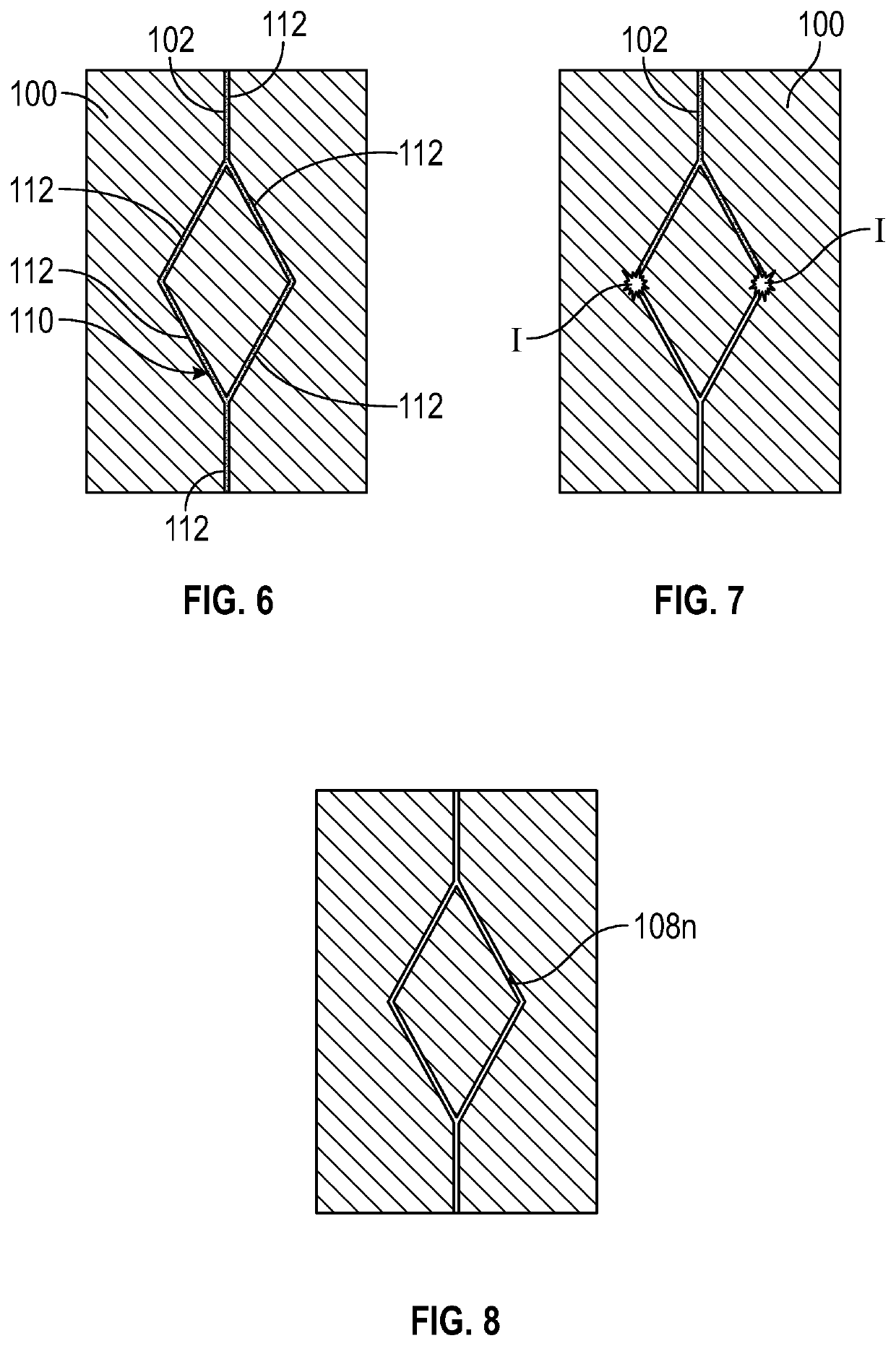
[0025]With reference to FIG. 1, the present disclosure describes a method of forming channels within a substrate 100 using deflagration of a sacrificial material. The substrate 100 may be wholly or partly made of a polymer or a polymer composite. In this method, a sacrificial component 102 is molded directly into the substrate 100 as shown in FIG. 1. For example, the sacrificial component 102 is molded directly to the substrate 100 such that the sacrificial component 102 is at least partially disposed inside the substrate 100. For instance, after molding, a majority of the sacrificial component 102 may be entirely disposed inside the substrate 100 to facilitate the formation of thru-holes. However, at least part of the sacrificial component 102 should be disposed outside of the substrate 100 to allow it to be ignited as discussed below.
[0026]With specific reference to FIG. 2, the sacrificial component 102 includes a combustible core 104 and a protective shell 106 surrounding the com...
PUM
| Property | Measurement | Unit |
|---|---|---|
| temperature | aaaaa | aaaaa |
| flash point | aaaaa | aaaaa |
| density | aaaaa | aaaaa |
Abstract
Description
Claims
Application Information
 Login to View More