If this type of
ridge section R remains, since the quality of discharge decreases due to chips becoming caught on this
ridge section, an additional step is required to remove this
ridge section R, thereby resulting in a considerable decrease in drill production efficiency.
Consequently, drilling end 1' is unable to be guided in a stable manner with respect to force from direction X in FIGS. 27A and 27B, resulting in the occurrence of runout in drilling end 1' and causing problems such as increased
surface roughness of the inner wall surface of the formed machined hole K or chipping
cutting edge 3 due to contact with the wall surface of machined hole K (and breaking drilling end 1' in cases of particularly excessive runout).
As a result, chips are easily clogged in chip discharge groove 2, and when this clogging becomes prominent, it may lead to breakage of drilling end 1'.
However, in the case of a drill such as this for drilling deep holes in which the total length of bit section I' is long, since the distance over which chips generated by cutting edge 3 are discharged through chip discharge groove 2 also becomes longer, chips easily become clogged in chip discharge groove 2.
Moreover, since drill rigidity and strength also tend to decrease as the total length of bit section 1' increases, the drill is increasingly susceptible to breakage due to clogging of chips in chip discharge groove 2.
However, since back tapers are attached over the entire length of drilling end 1', when large back tapers are attached in order to impart adequate clearance to the outer
peripheral surface of drilling end 1', the outer
diameter of drilling end 1' becomes smaller than necessary at its rear end section, thereby causing the problem of decreased rigidity of drilling end 1'.
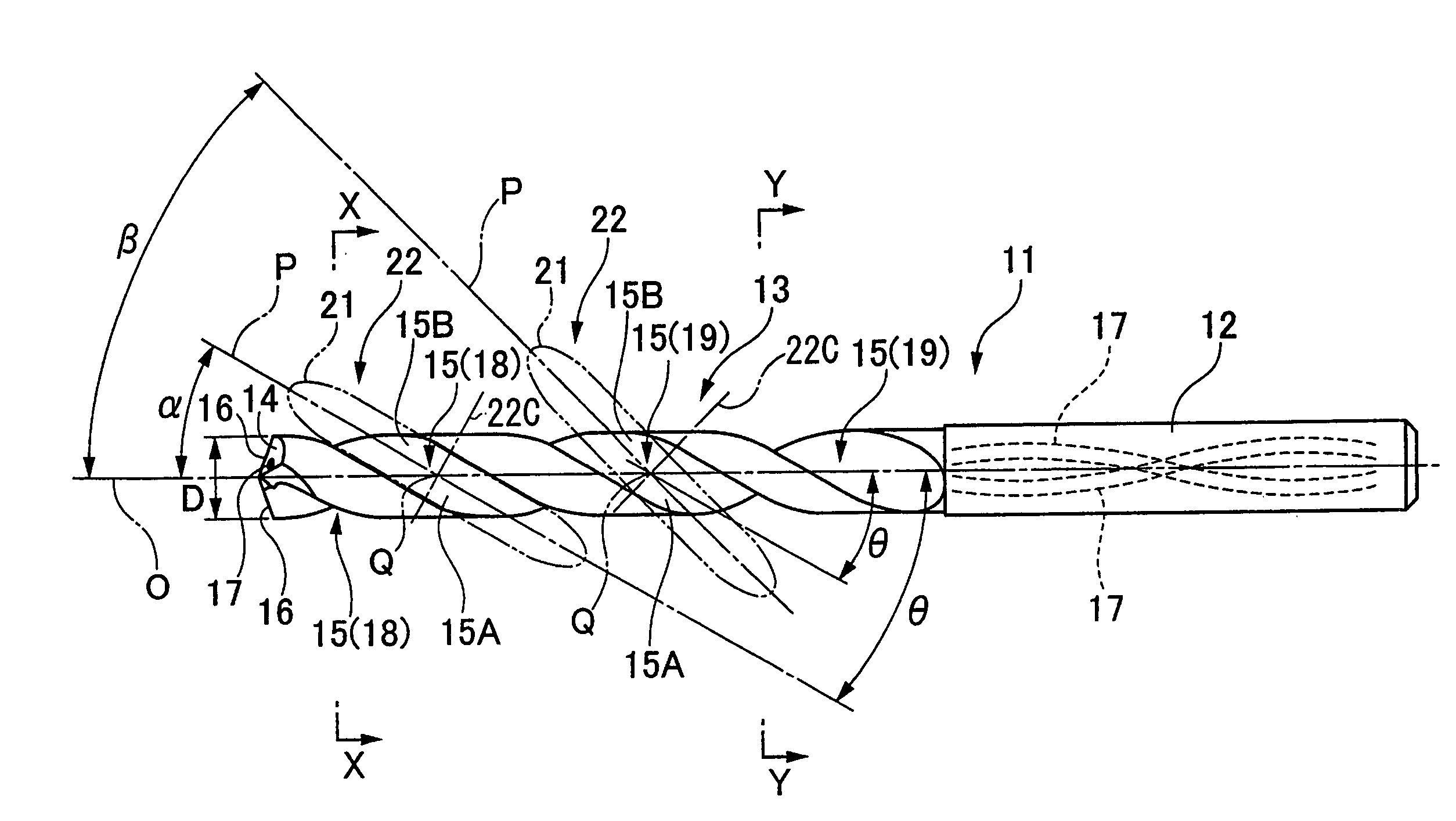
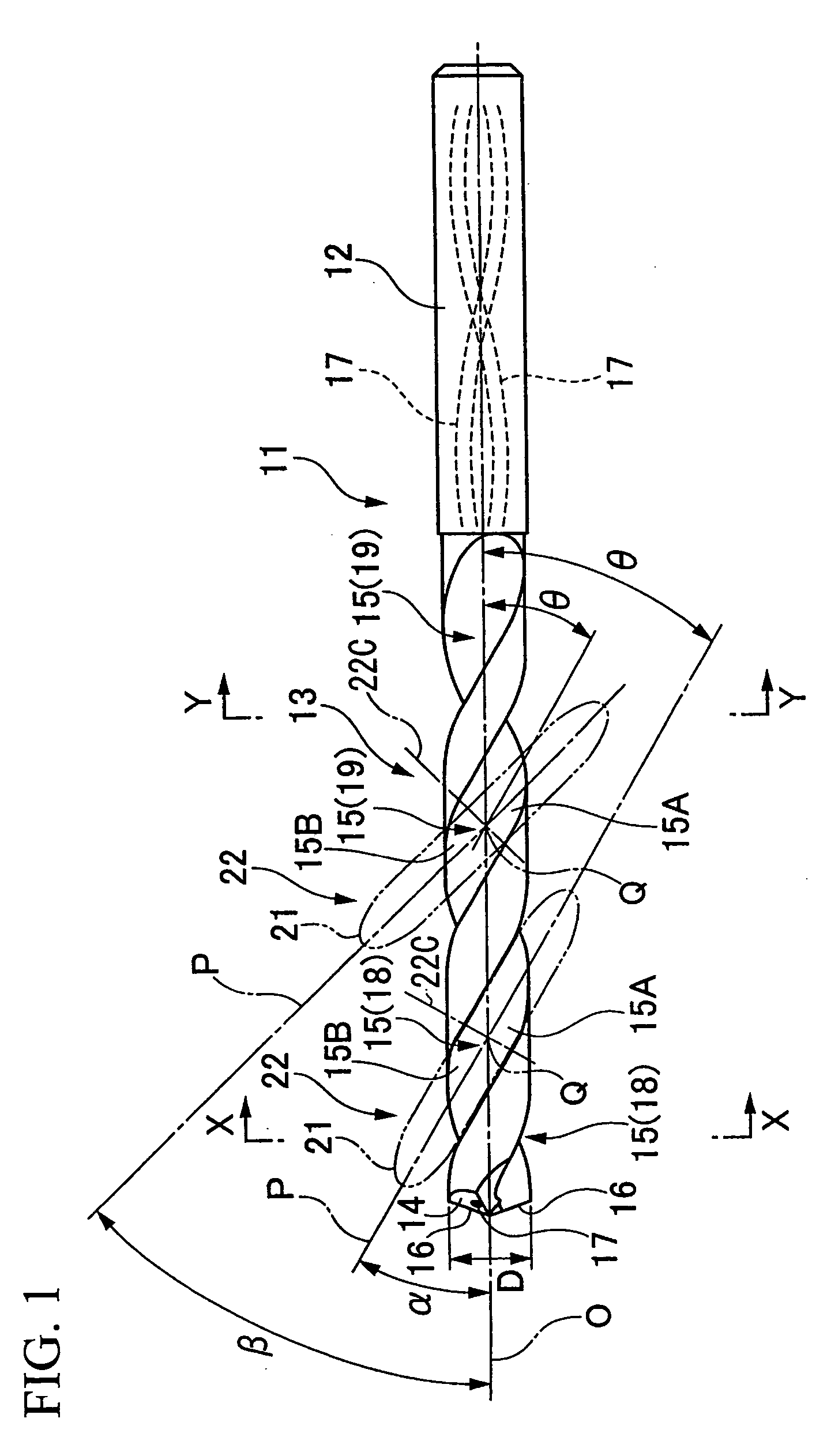
If the location of this boundary is farther towards the tip than this range, the proportion of section where the
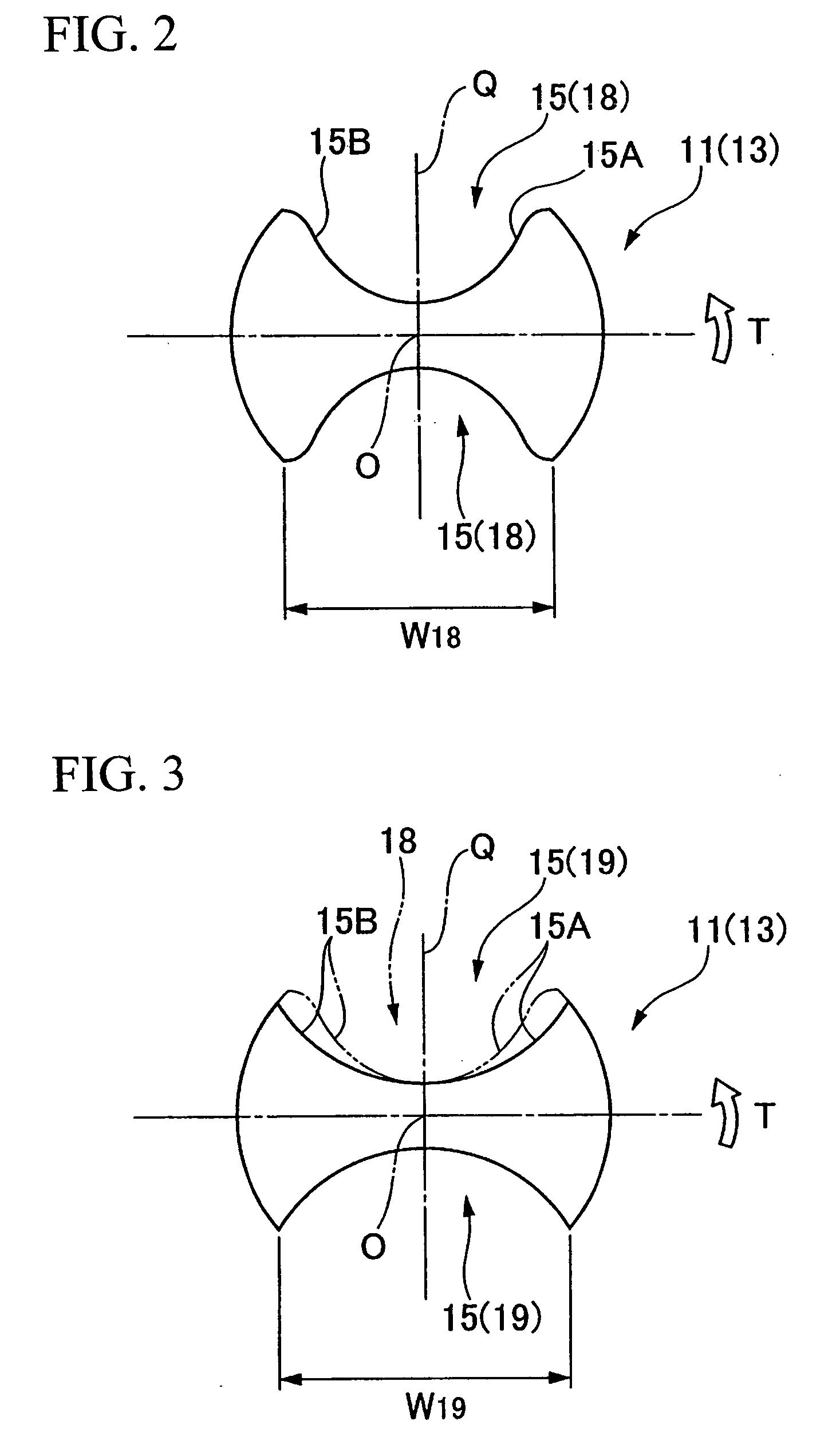
groove width is large of the chip discharge groove extending from the expanding width section farther towards the rear end side to the wide width section becomes excessively large, resulting in a decrease in thickness of the drill body and insufficient rigidity, thereby resulting in the possibility of increased susceptibility to breakage during drilling.
Conversely, if the location of the boundary is farther towards the rear end side than the above range, the length of the narrow width section of the chip discharge groove farther towards the tip becomes long, resulting in the possibility of chips becoming clogged in this narrow width section.
However, in these methods, since the chip discharge groove formation step comprises a plurality of steps and becomes complex, or there is increased susceptible to breakage due to reduced core thickness at the wide width section, it is preferable to use the production method of the aforementioned embodiment.


 Login to View More