

Fractal harmonic overtone mapping of speech and musical sounds
a harmonic overtone and speech technology, applied in the field of fractal harmonic overtone mapping of speech and musical sounds, can solve the problems of preventing possible mechanisms, introducing artifacts in sample rate, and humans not being able to hear harmonic overtones
- Summary
- Abstract
- Description
- Claims
- Application Information
AI Technical Summary
Benefits of technology
Problems solved by technology
Method used
Image

Examples
Embodiment Construction
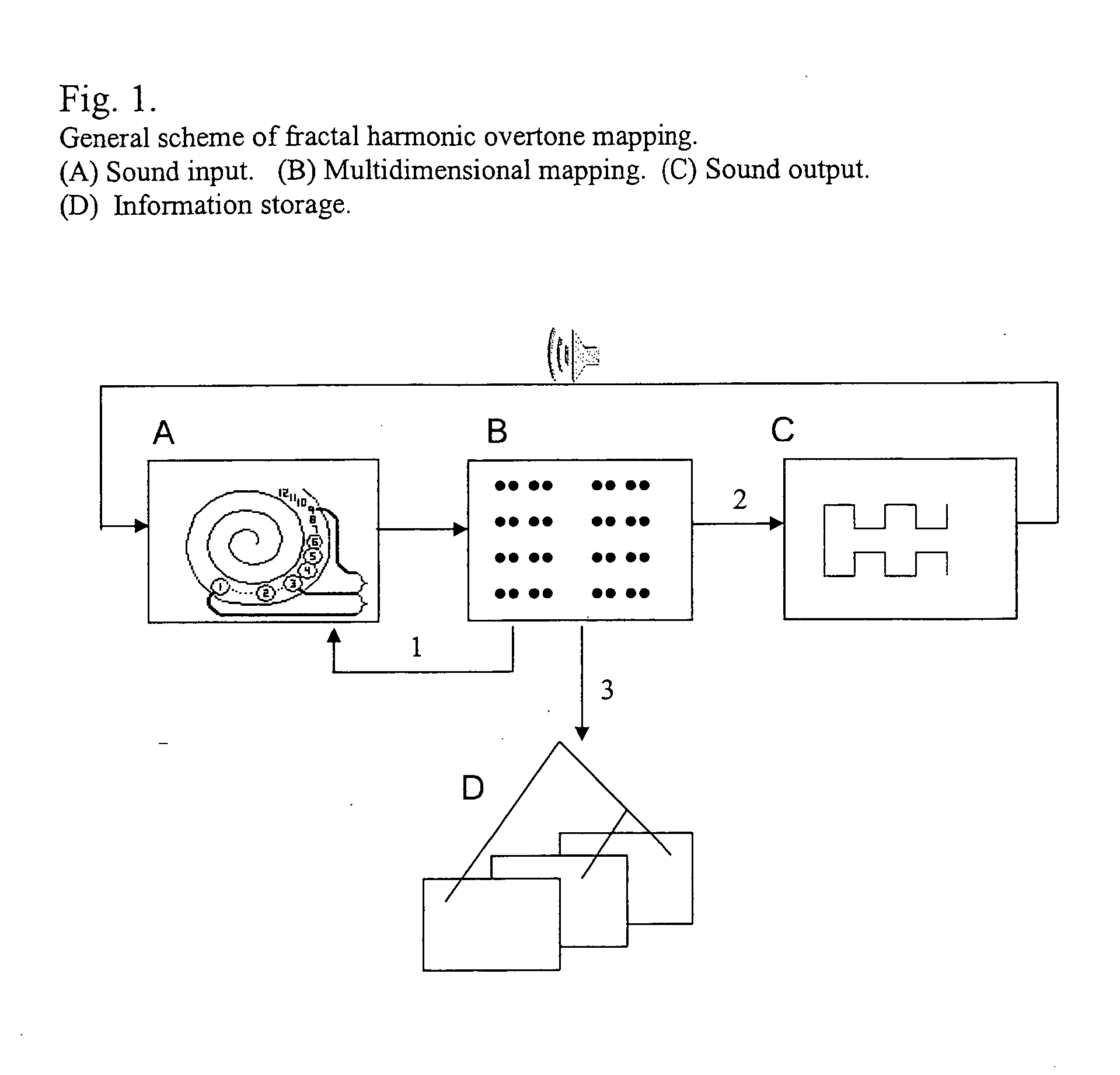
Referring now specifically to the drawings, a system for fractal harmonic overtone mapping according to the present invention is illustrated in the Figures.
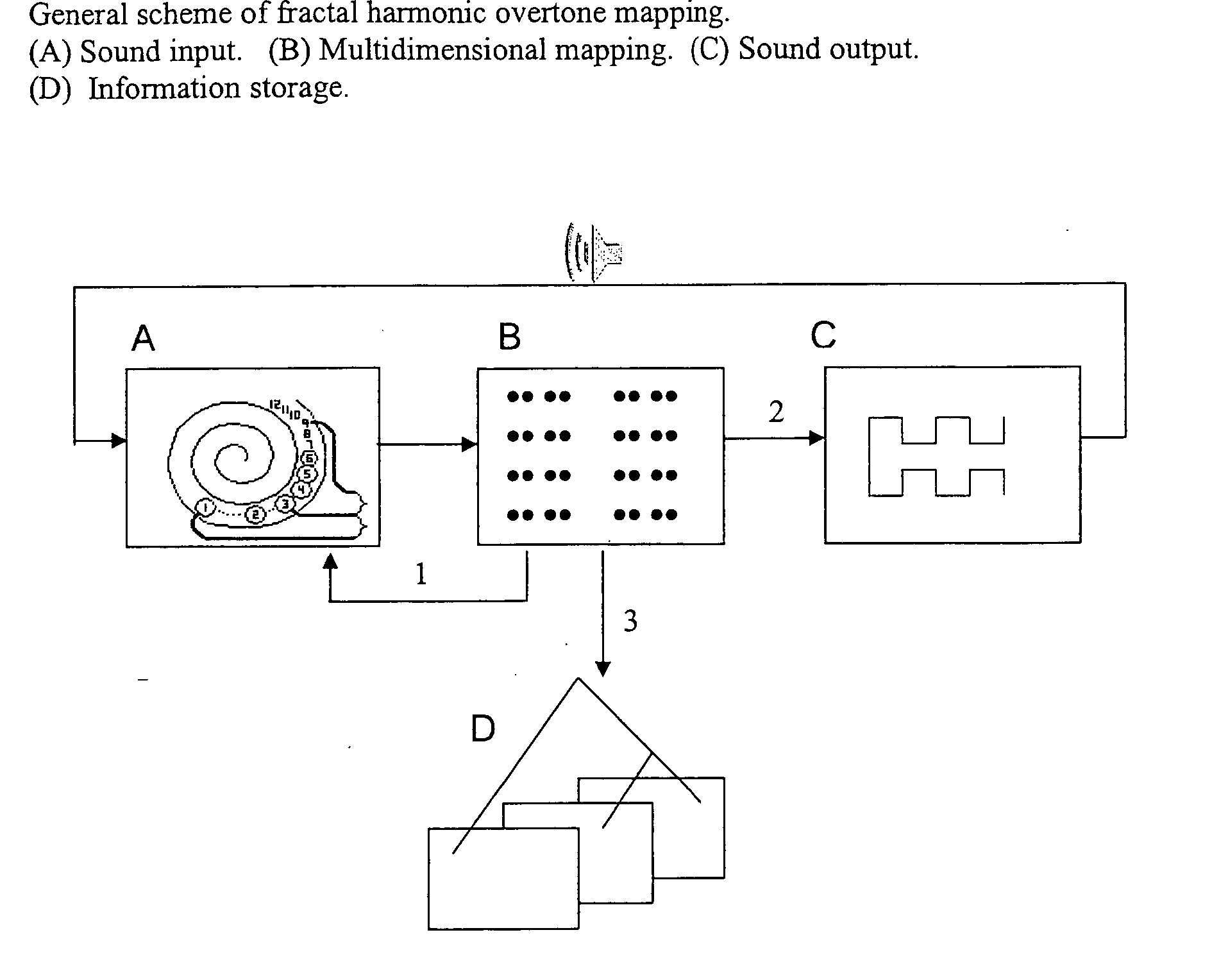
Fractal harmonic overtone mapping has four essential elements, labeled A through D in FIG. 1. Fractal mapping manifests three types of signal processing illustrated by feedback analysis of FIG. 1.
Sound input (Block A) is analyzed via harmonic fields of different sizes, with parallel processing of the information from numerous staggered fields. Harmonic field correlational data from Block A are accumulated in Block B, where multidimensional mapping takes place. The simple feedback loop from Block B to Block A (“Process 1” signal processing) provides dynamic control of input sensitivity, via harmonic fields of different sizes.
Signals from Block B to Block C control sound output (“Process 2” signal processing). Feedback from Block C can be transmitted as an auditory signal to Block A which is then mapped to Block B, resulting...
PUM
 Login to View More
 Abstract
Description
Claims
Application Information
 Login to View More