
Bird-pecking-preventive polymer insulator
a polymer insulator and preventive technology, applied in the field of polymer insulators, can solve the problems of economic disadvantage in the use of a polymer insulator device in practice, the sheath portion of the cover member breaking, and the structure-related drawbacks of porcelain insulators, so as to prevent the breakage of the cover member and inhibit the pecking of the polymer insulator
- Summary
- Abstract
- Description
- Claims
- Application Information
AI Technical Summary
Benefits of technology
Problems solved by technology
Method used
Image

Examples
example 1
[0027] In Example 1, the bird-pecking-preventive effect of the bird-pecking-preventive polymer insulator according to the present invention was experimentally confirmed and also, a conventional polymer insulator was observed so as to be compared with the bird-pecking-preventive effect of the bird-pecking-preventive polymer insulator of the present invention. In Example 1, the following avian repellents were employed: a 5 wt. % solution of capsaicin dissolved in ethanol (repellent 1); a 0.05 wt. % solution of capsaicin dissolved in ethanol (repellent 2); and a 0.05 wt. % solution of capsaicin dissolved in silicone oil (repellent 3).
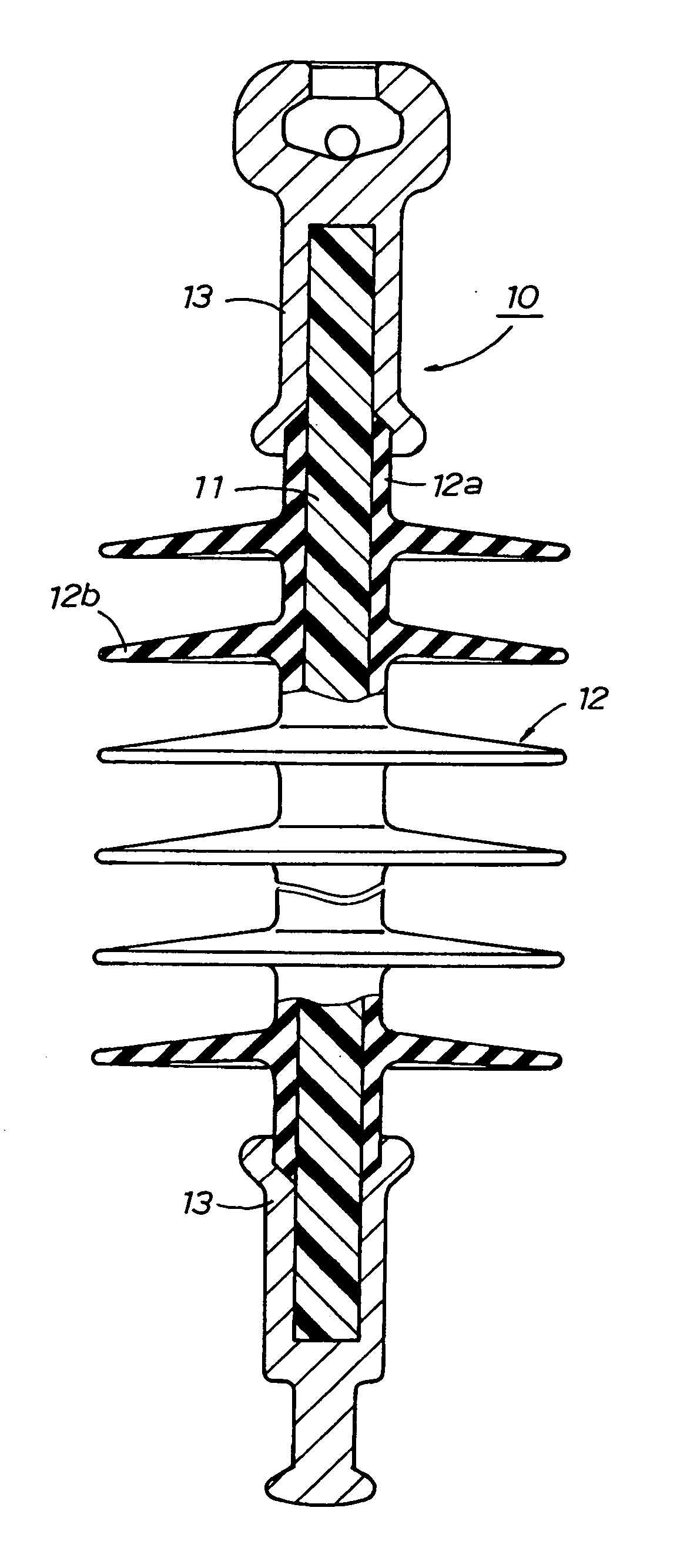
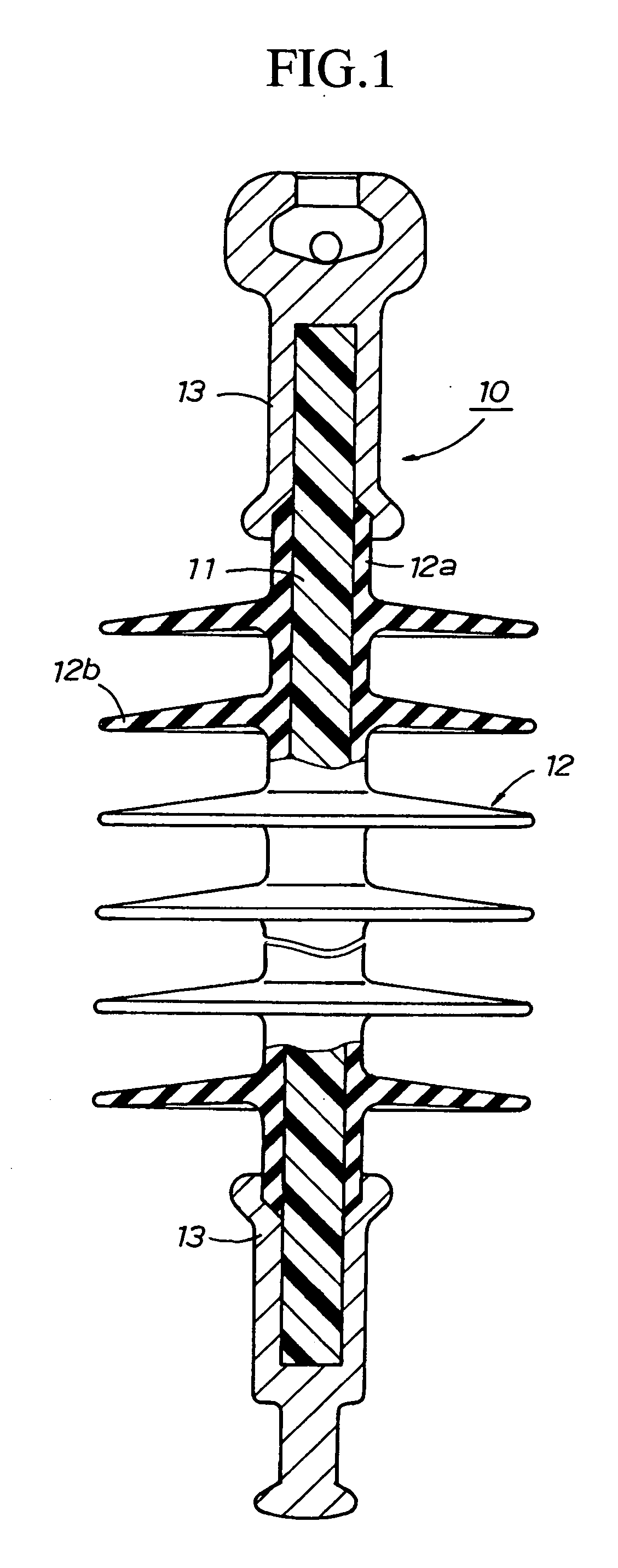
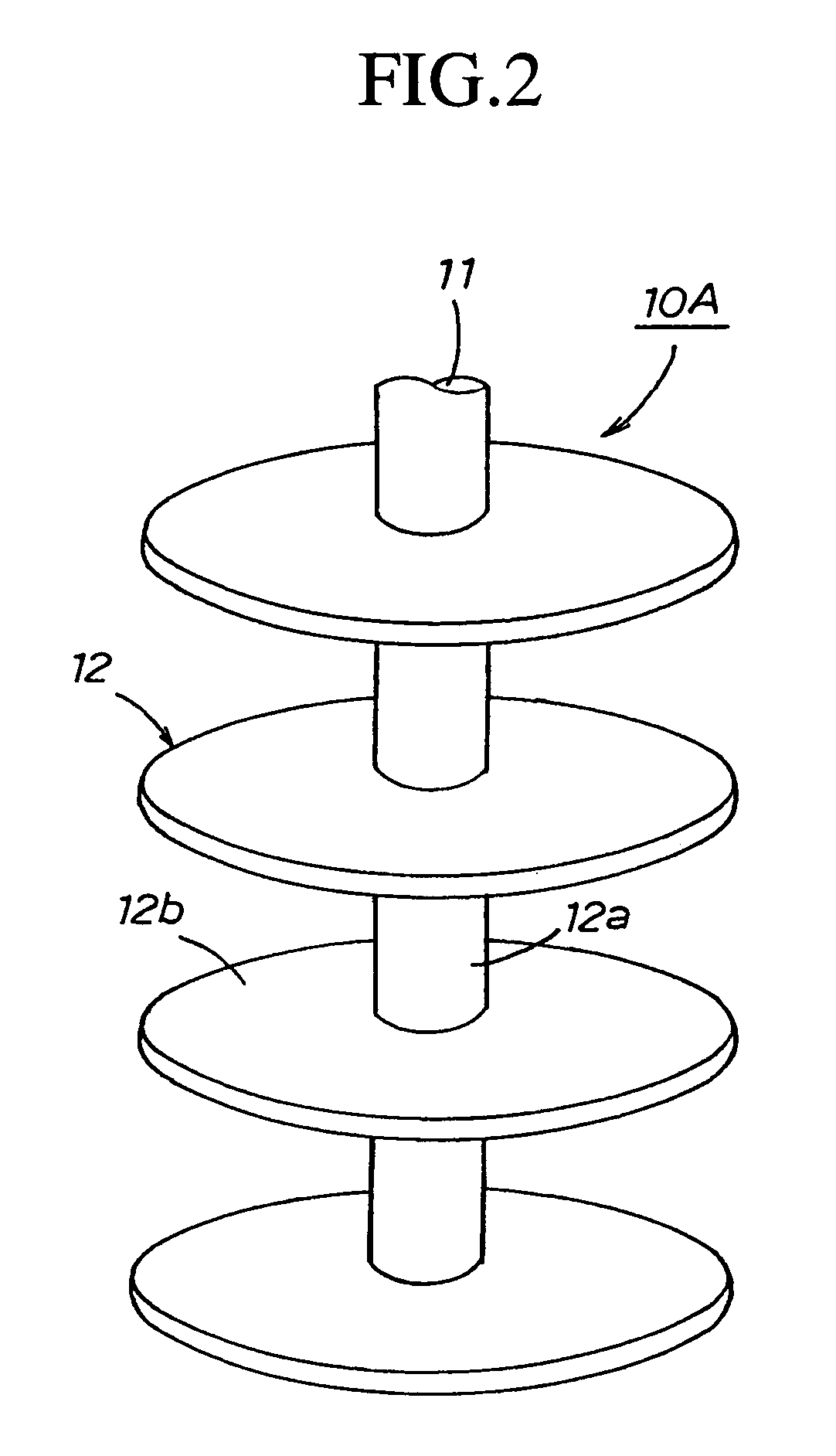
[0028] In each experiment, the polymer insulator samples had the same structure as those employed in the above embodiment (i.e., conventional polymer insulators). Each polymer insulator sample had four sheds arranged in a ladder-like fashion. The insulator body had a length of 25 cm, and each shed had an outer diameter of 12.6 cm and a thickness of 0.7 cm...
example 2
[0037] In Example 2, insulator samples were prepared by using two types of avian repellents different from the avian repellent employed in Example 1. The bird-pecking-preventive effect of two types of bird-pecking-preventive polymer insulators was experimentally confirmed.
[0038] In the experiments of Example 2, a 5 wt. % solution of 6-gingerol dissolved in ethanol (repellent 5), and a 5 wt. % solution of quassin dissolved in ethanol (repellent 6) were employed as avian repellents. Upon preparation of insulator samples of the experiments, a polymer insulator having the same shape and structure as those employed in the experiments of Example 1 was used. Sample 5 was prepared by applying repellent 5 to the entire surfaces of the sheds forming the insulator body through spraying, and sample 6 was prepared by applying repellent 6 to the entire surfaces of the sheds forming the insulator body through spraying. In each case, coating film of repellent 5 or 6 covered the entire surfaces of ...
PUM
 Login to View More
 Abstract
Description
Claims
Application Information
 Login to View More