
Satiety enhancing food compositions
a technology of food composition and satiety, which is applied in the field of food composition, can solve the problems of unsatisfactory satiety, difficult to adapt to modern lifestyle, and unsatisfactory satiety, and achieve the effect of improving the satiety
- Summary
- Abstract
- Description
- Claims
- Application Information
AI Technical Summary
Benefits of technology
Problems solved by technology
Method used
Image

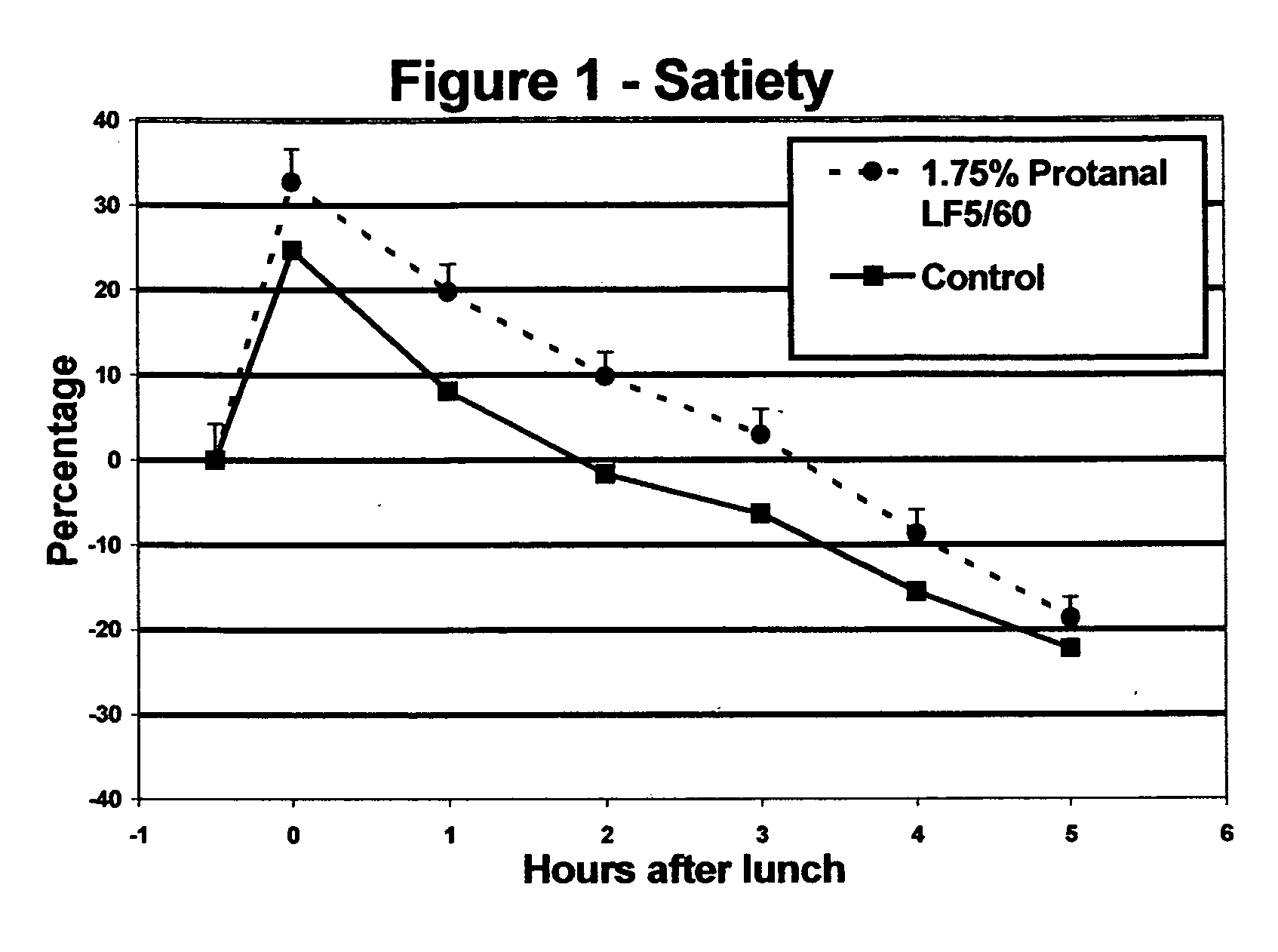
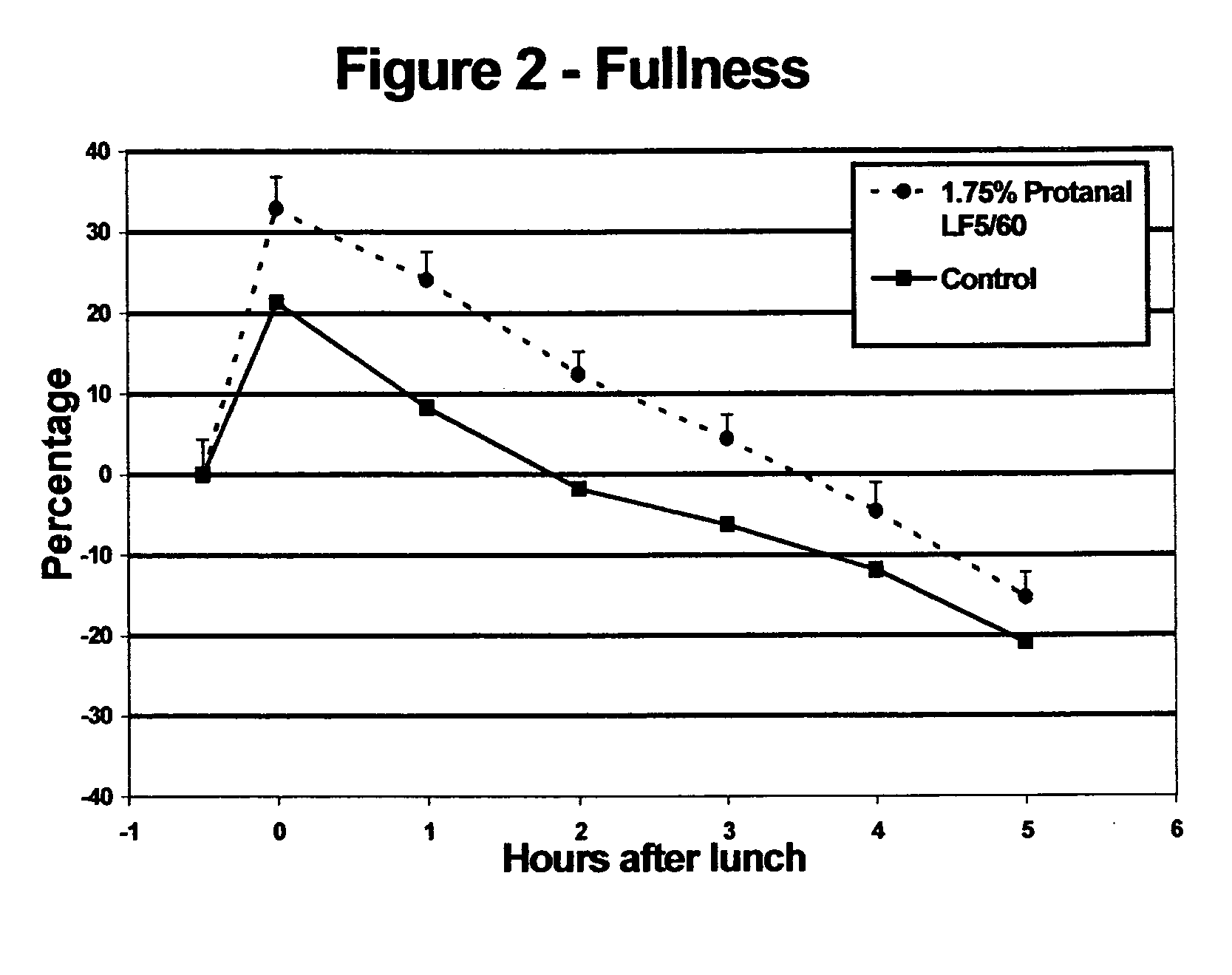
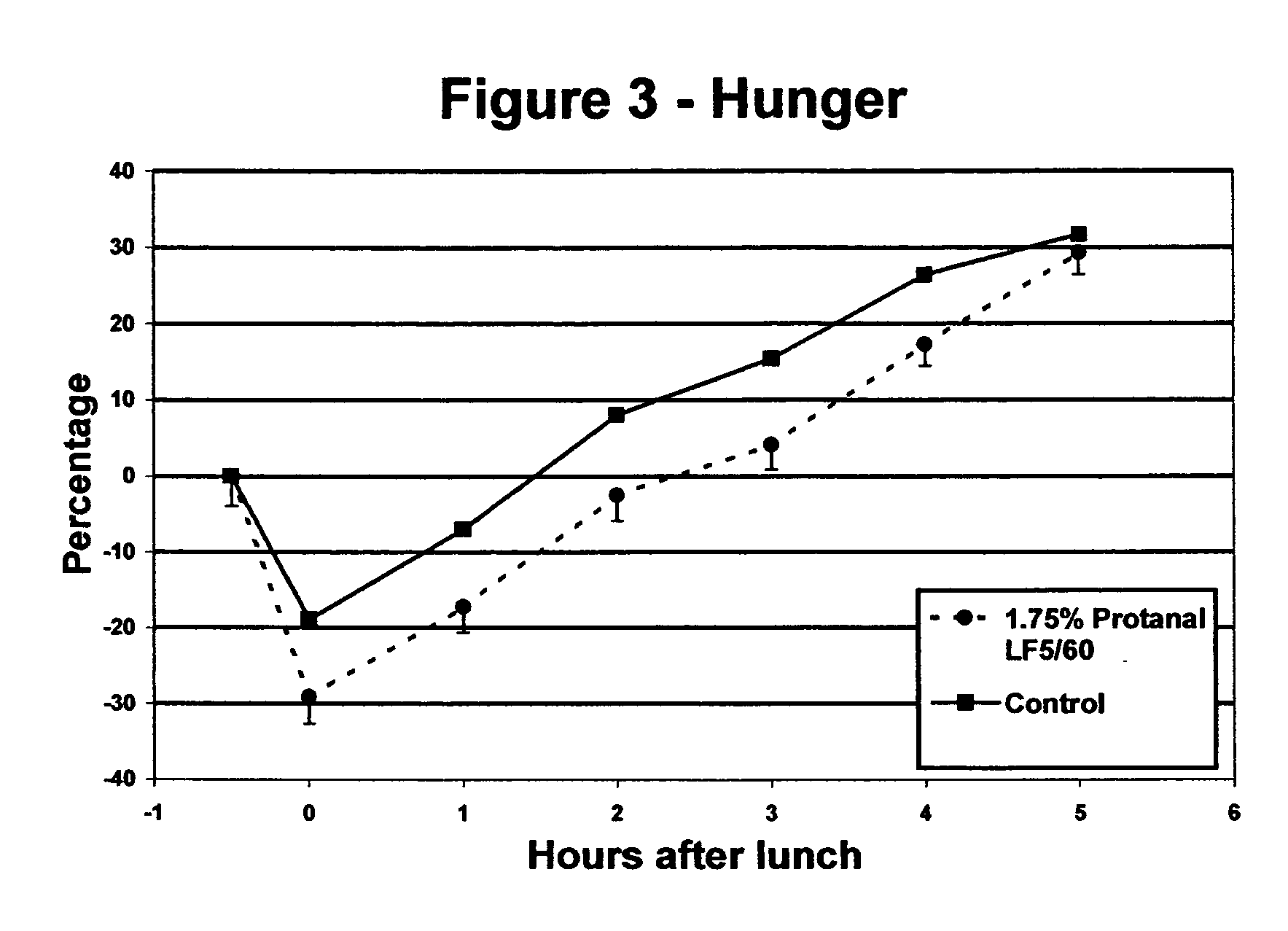
Examples
example 1
[0126] 1.75% Protanal LF5 / 60™ (alginate with an L-guluronic acid content of 69% and a weight average molecular weight of 1.0-1.2×10⁵, available from FMC Biopolymer) was added to a commercially available meal replacement beverage (US Slim*Fast™ Chocolate Royale Ready-to-drink beverage, purchased in cans from the same batch) by the method given below, such that 325 ml of the beverage contained 5.69 g of the alginate. The meal replacement beverage comprised about 6.6 g of protein.
[0127] The cans were shaken, opened and weighed and brought over in a Wolff food processor. The alginate, lactulose (5 g, added for intestinal transit time calculation) and tricalcium phosphate (10% wt based on the weight of alginate) were blended and mixed in at a speed of 1500 rpm for 2 minutes at ambient temperature. The mixture was then vacuumed and mixed for a further 5 minutes. The Wolff jacket was heated with steam until the content was at 60° C. and mixed at this temperature for 15 minutes at 1500 rpm...
example 2
[0140] A control composition without alginate was prepared according to the formulation given in Table 1 below. All weights are given as percentages by weight based on the total weight of the composition.
TABLE 1% by weightWater86.60 Skimmed Milk Powder (SMP)6.50Sucrose4.05Calcium Caseinate1.60Flavour (French Vanilla)0.54Canola Oil0.33Lecithin0.10Emulsifier0.09Total 100%
[0141] The control composition was prepared as follows. The water was heated to 50° C. and pre-blended Skimmed Milk Powder (SMP), caseinate and sucrose was added and mixed. This mixture was heated to 55° C. and mixed with an Ultra-Turrax for 15 minutes. The pre-heated fat phase (>60° C.) (oil, lecithin and emulsifier) was added and mixed for 2 minutes. This mixture was homogenised in two-stages; 100 / 40 bars (Niro homogeniser: throughput ˜14 kg / hr; back pressure 4 bar) and then sterilised using a small UHT line (heating / holding section at 145° C.; cooling section at 72° C.). The samples were filled in a flow cabinet ...
example 3
[0152] Granola-style nutrition bars may be made by mixing the following ingredients in the amounts given below. The percentages by weight refer to the weights of the ingredients.
AB% wt% wtBinder:Glucose syrup12.013.2Polydextrose syrup11.010.0Inulin syrup6.06.0Sugar2.52.5Pectose paste6.06.0Coconut oil3.03.05Lecithin0.70.7Glycerol5.55.5Invert syrup4.44.4Date paste3.33.3Corn oil2.32.3Flavourings0.50.5Colourings0.20.2Dry material:Manugel DMB*41.00.8Calcium carbonate0.20.15Oatflakes7.57.5Coconut flakes,5.05.0sweetened andshreddedFruit fibre5.05.0Soy protein nuggets5.05.01*1Soy protein nuggets15.015.02*2Vitamin / mineral mix*33.903.90
*1soy protein nuggets comprising 60% wt soy protein, available from Dupont Protein Technologies Inc., USA.
*2soy protein nuggets comprising 80% wt soy protein, available from Dupont Protein Technologies Inc., USA.
*3vitamin / mineral mix comprising zinc, iron, copper. Mix provides 2 mg of zinc, 1 mg of iron and 0.18 mg of copper per bar.
*4as used in examples 1...
PUM
 Login to View More
 Abstract
Description
Claims
Application Information
 Login to View More