
Ultrasonic probe with detachable slidable cauterization forceps
a technology of cauterization forceps and ultrasonic probes, which is applied in the field of ultrasonic tissue ablation instruments and ultrasonic medical treatment devices with electrocautery, can solve the problems of affecting the effect of surgical forceps, and affecting the safety of patients
- Summary
- Abstract
- Description
- Claims
- Application Information
AI Technical Summary
Benefits of technology
Problems solved by technology
Method used
Image

Examples
Embodiment Construction
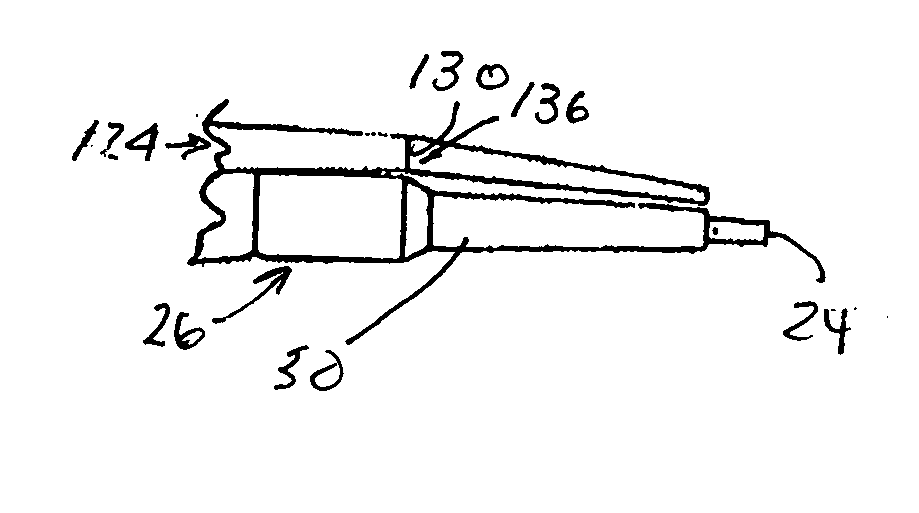
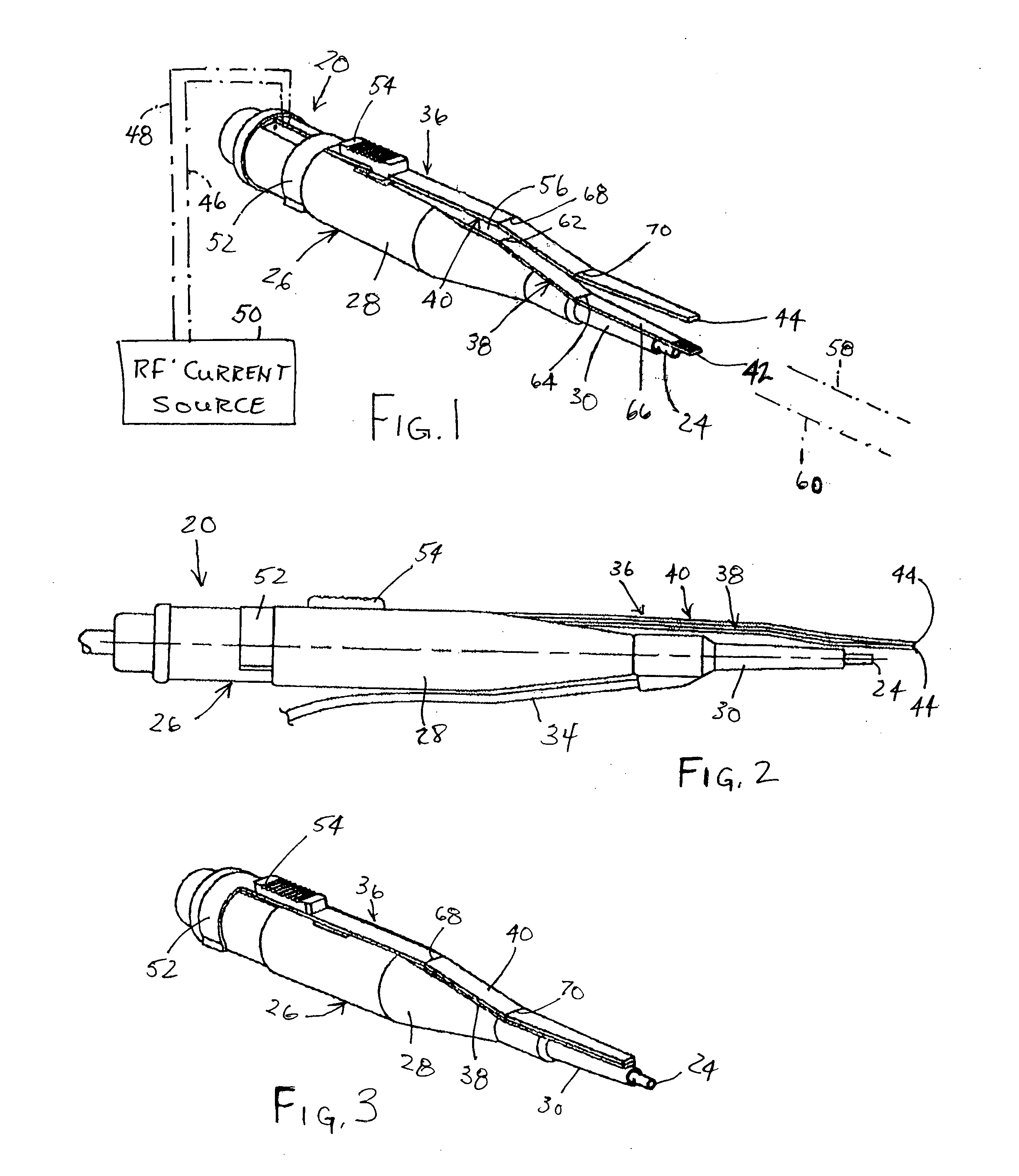
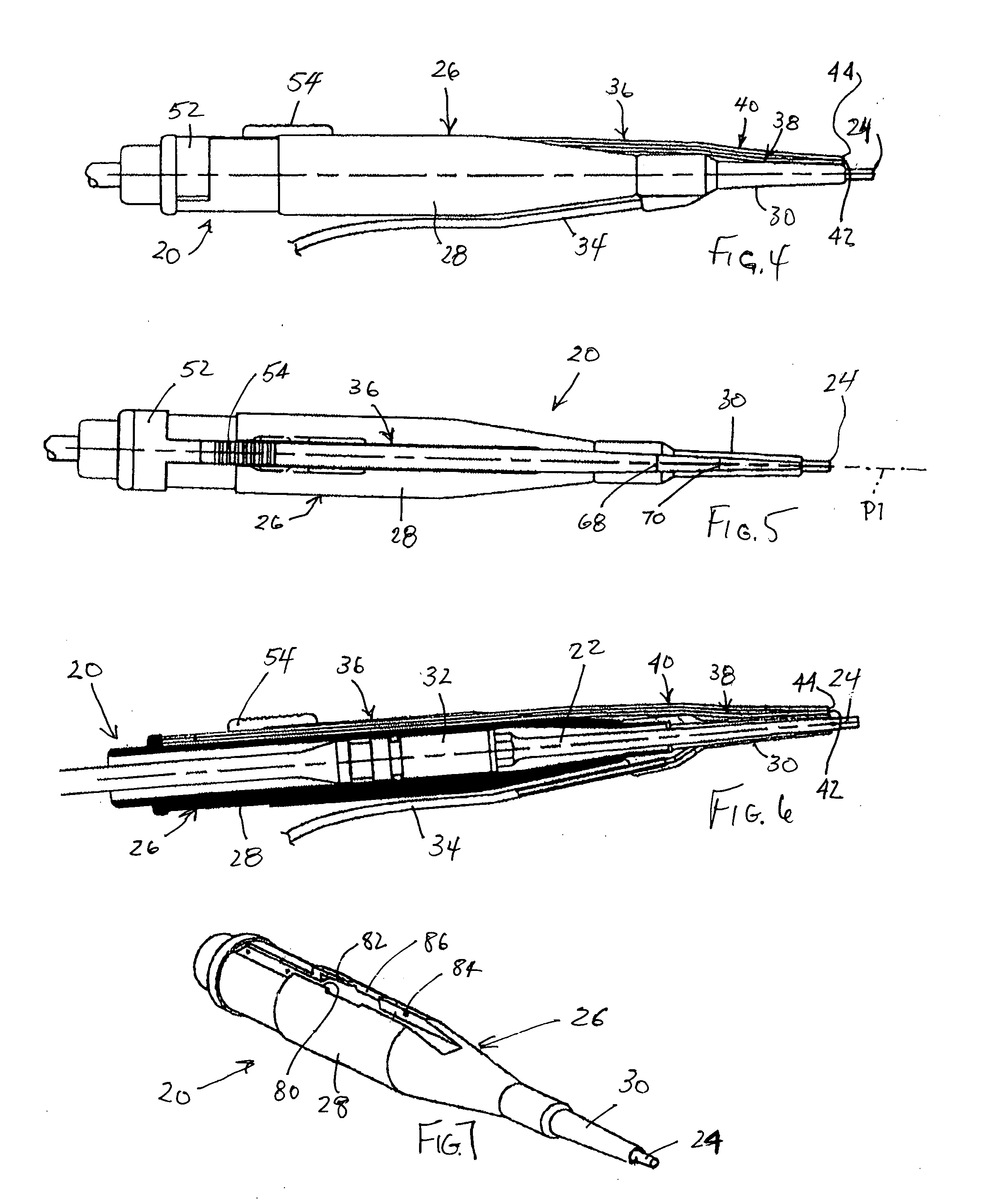
[0042] As illustrated in FIGS. 1-6, a surgical instrument assembly for ultrasonic ablation and RF cauterization includes an ultrasonic instrument 20 having an ultrasonic probe or horn 22 (FIG. 6) enclosed, except for an operative tip 24, in a casing 26. Casing 26 includes a housing portion 28 towards a proximal end of the instrument assembly and a sheath 30 at a distal end of the assembly. Casing further includes a handle (not shown) than is connected to a proximal end of housing portion 28 via an elbow joint (not shown). Sheath 30 surrounds a distal end portion of horn or probe 22. The ultrasonic instrument 20 further includes a piezoelectric transducer array (not shown) connected to a front driver 32 (FIG. 6) for generating ultrasonic standing waves in probe 22. A tube 34 is connected to casing 26 for irrigation. Suction is provided via an internal passage through the probe 22.
[0043] As illustrated in FIGS. 1-6, the surgical instrument assembly further includes a forceps member 3...
PUM
 Login to View More
 Abstract
Description
Claims
Application Information
 Login to View More