[0010] Advantageously, therefore, embodiments described herein provide a
system and method for organizing information and retrieving documents from a
database using the physical address of the location for which the information and documents pertain. Advantageously, this mechanism of storing information of physical locations is intuitive and user-friendly. With regard to the physical world, people are familiar with each physical location having an address. The embodiments described herein, therefore, take the familiar concept of the physical address as an identifier for each physical location and employs the physical address as a
unique identifier for information in the
virtual world. Accordingly, embodiments described herein provide for the “
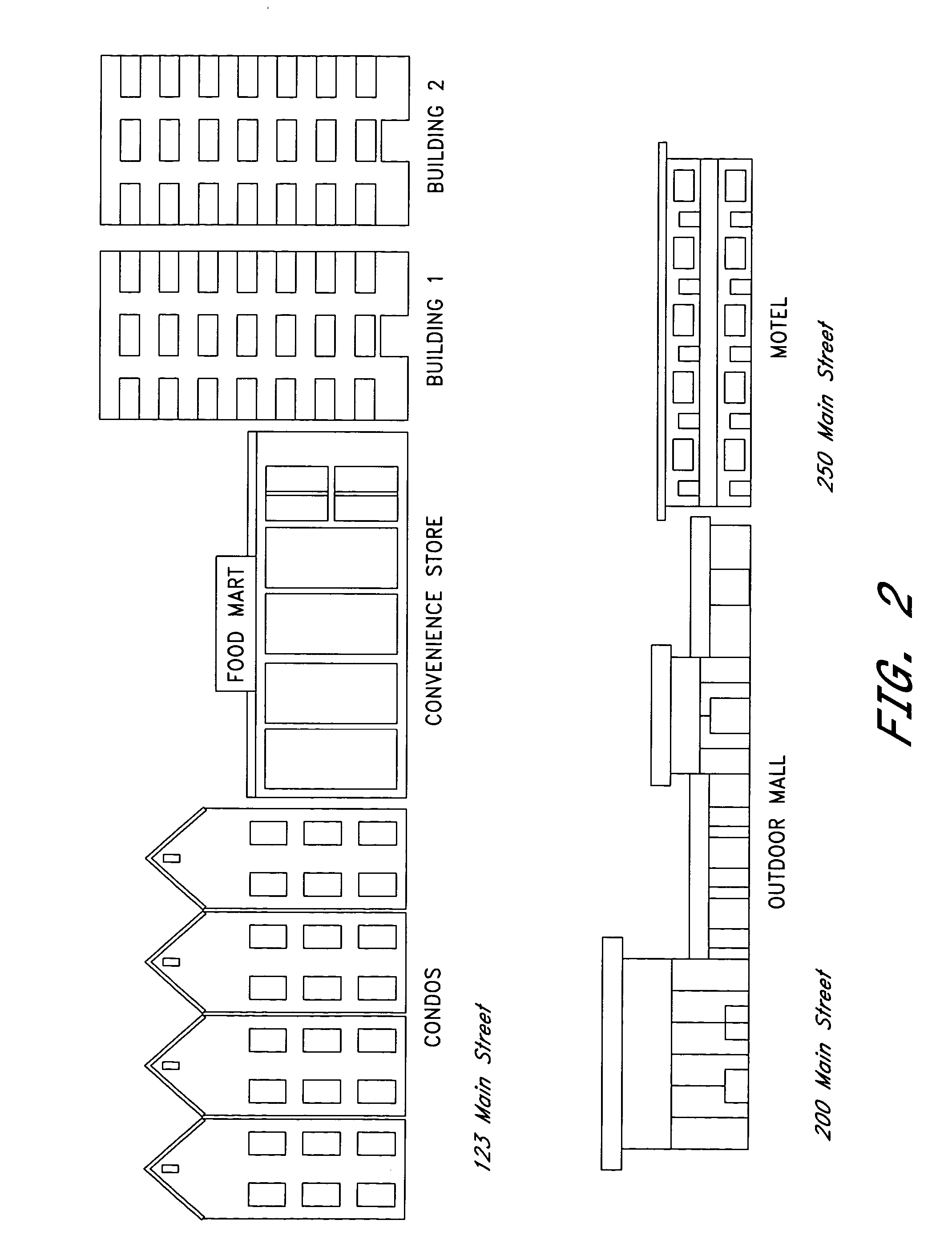
virtualization” of physical locations. That is, embodiments described herein create a “virtual location” corresponding to each of a large number of physical locations. The virtual locations are organized and related geographically into communities, such as, for example, blocks, neighborhoods, cities, counties, states, and the like.
[0038] An embodiment of a geographical
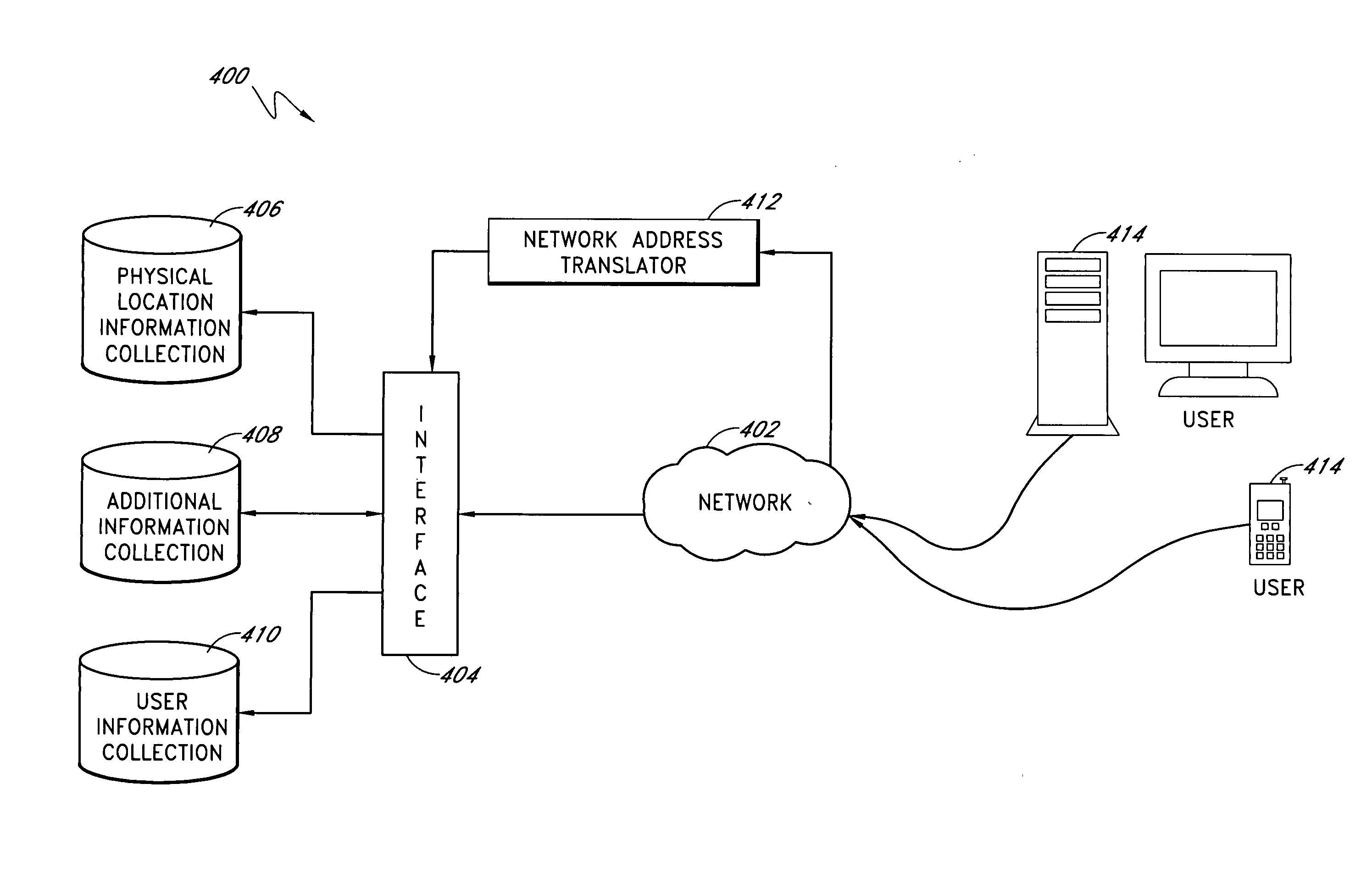
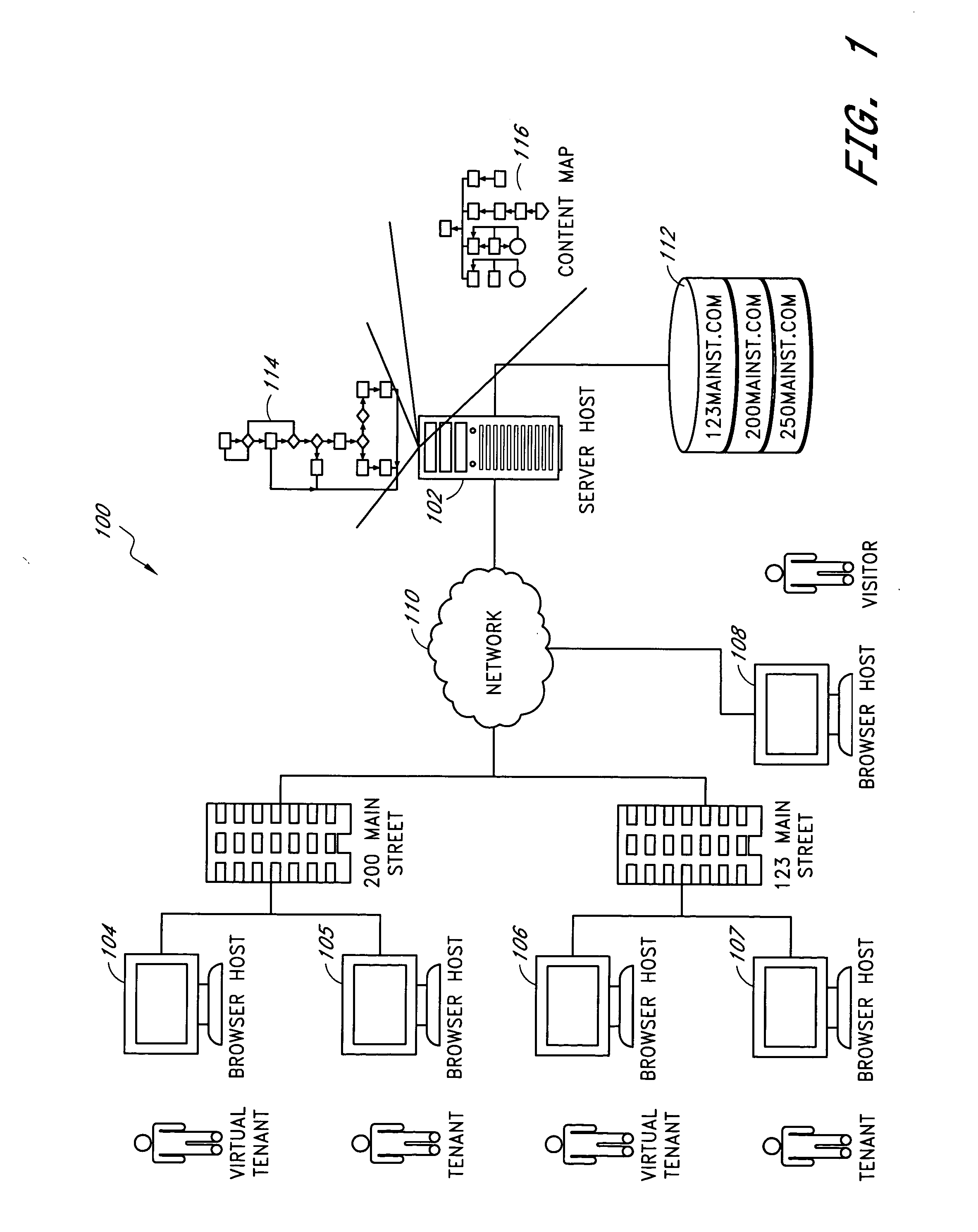
information system comprises a collection of information relevant to a geographical location, an interface to the collection, and an output module. The collection is connected to a network. The interface is configured to provide user access to the collection over the network, such access being provided, at least in part, by receiving, over the network, a network address that identifies the collection. The network address comprises, as a host name of the network address, at least a portion of a physical street address. The output module is configured to retrieve information from the information collection and transmit the information to a user. The system provides a variable level of access for users wherein a user is allowed to alter varying quantities of content in the information collection based on user attributes stored in the information collection.
[0046] An embodiment of the foregoing system further comprises at least one physical location information collection
server, wherein at least two of the collections are stored on the at least one
electronic information collection
server. Another embodiment further comprises an
address resolution module configured to receive, as part of a network address, at least a portion of a physical address, to match the portion of a physical address with one of the physical addresses that identifies a physical location for which data is stored in one of the collections, and to cause the geographical
information system to transmit to the user at least a portion of the data related to the physical location identified by the matched physical address. Another embodiment further comprises a
global positioning system coordinate module configured to receive, as part of a network address, at least one
global positioning system coordinate, to match the
global positioning system coordinate with a physical address by determining which physical address corresponds to a physical location located at the global
positioning system coordinate, and to cause the geographical
information system to transmit to the user at least a portion of the data related to the physical location identified by the matched physical address.
[0051] In accordance with the foregoing and other embodiments described herein, the system and method described herein allow for the creation and organization of virtual locations that correspond to physical locations. The system and method allow users to easily access such virtual locations by using a network address that includes at least a portion of a physical address. Accordingly, the information is organized and accessed using a type of identification, physical addresses, with which users are familiar. Furthermore, such virtual locations can be related such that when a user visits one virtual location, the user can be presented with related information associated with related locations. Moreover, communities of users can be created and associated with the virtual locations, in which users are granted additional access privileges for information related to locations for which the users are
community members. These and other features and advantages are made available by embodiments of the system and method described herein. A skilled artisan will appreciate, in light of this disclosure, that not every feature or
advantage described herein is a necessary part of every embodiment, and that some embodiments may have additional features and advantages that have not been described.



 Login to View More
  Login to View More