
Container base structure responsive to vacuum related forces
a vacuum-related force and container-based technology, applied in the field of plastic containers, can solve the problems of spherulitic morphology, inability to withstand temperature and time demands, interference with light transmission, etc., and achieve the effect of reducing pressure and force and facilitating movemen
- Summary
- Abstract
- Description
- Claims
- Application Information
AI Technical Summary
Benefits of technology
Problems solved by technology
Method used
Image

Examples
Embodiment Construction
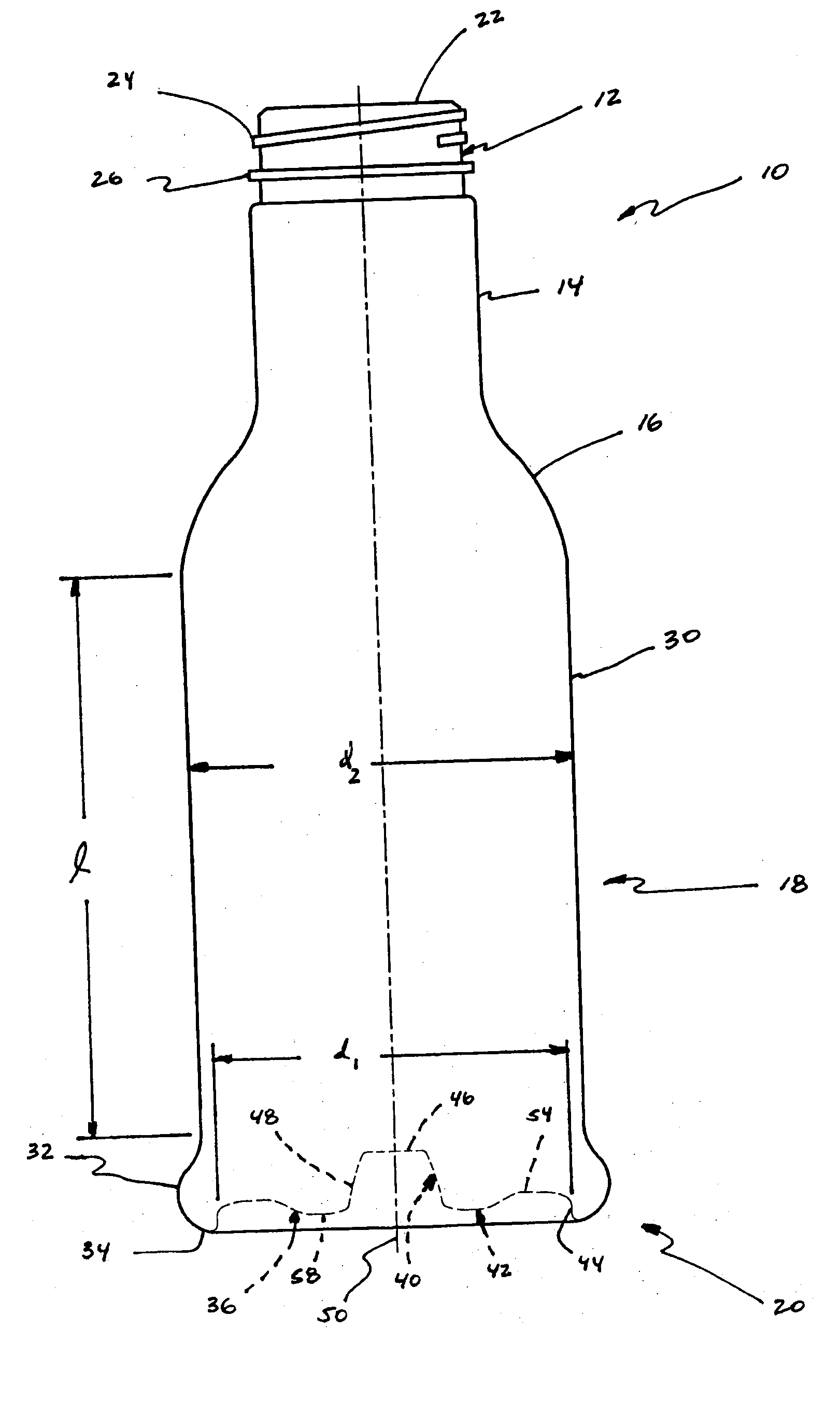
[0025] The following description of the preferred embodiments is merely exemplary in nature, and is in no way intended to limit the invention or its application or uses.
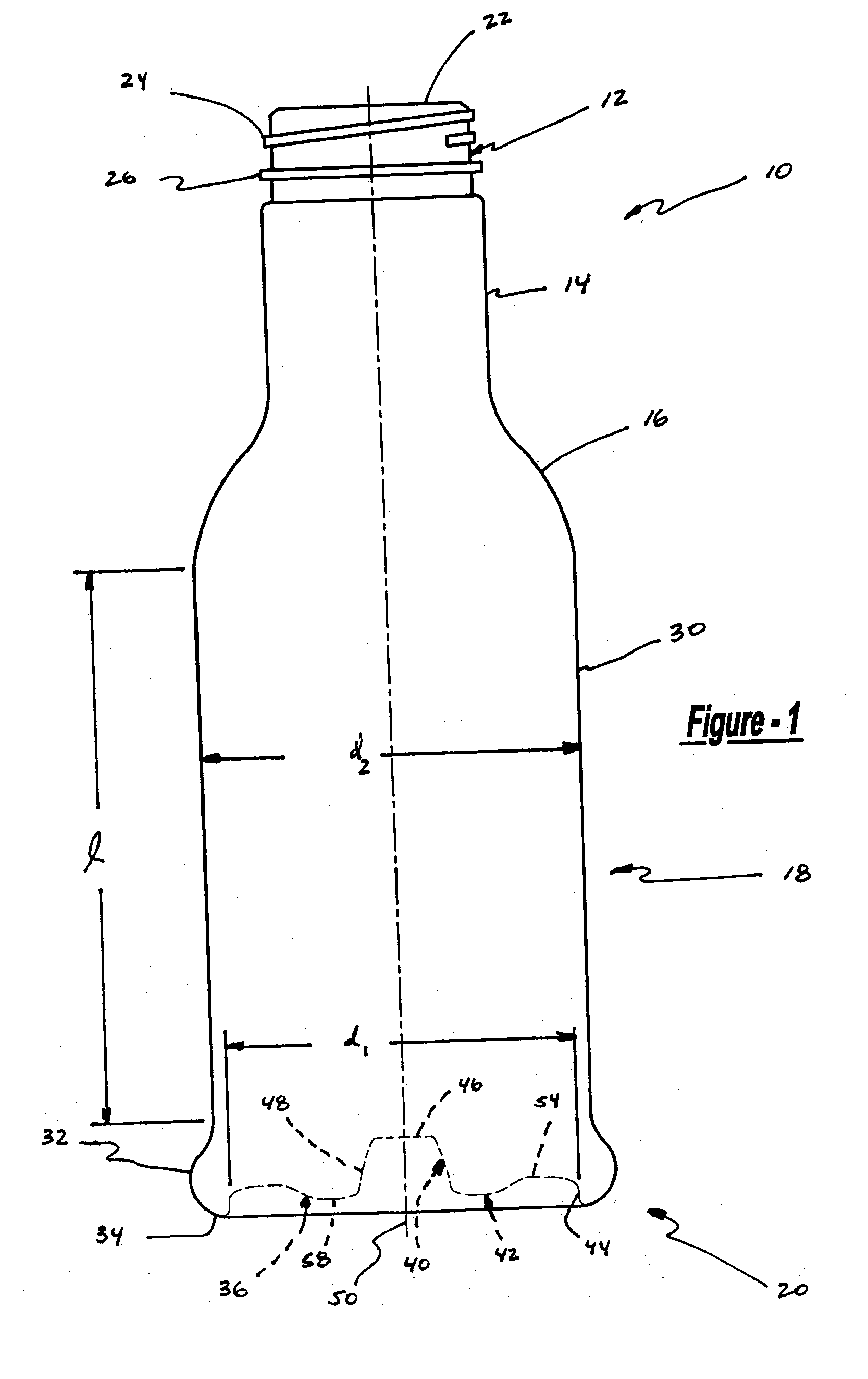
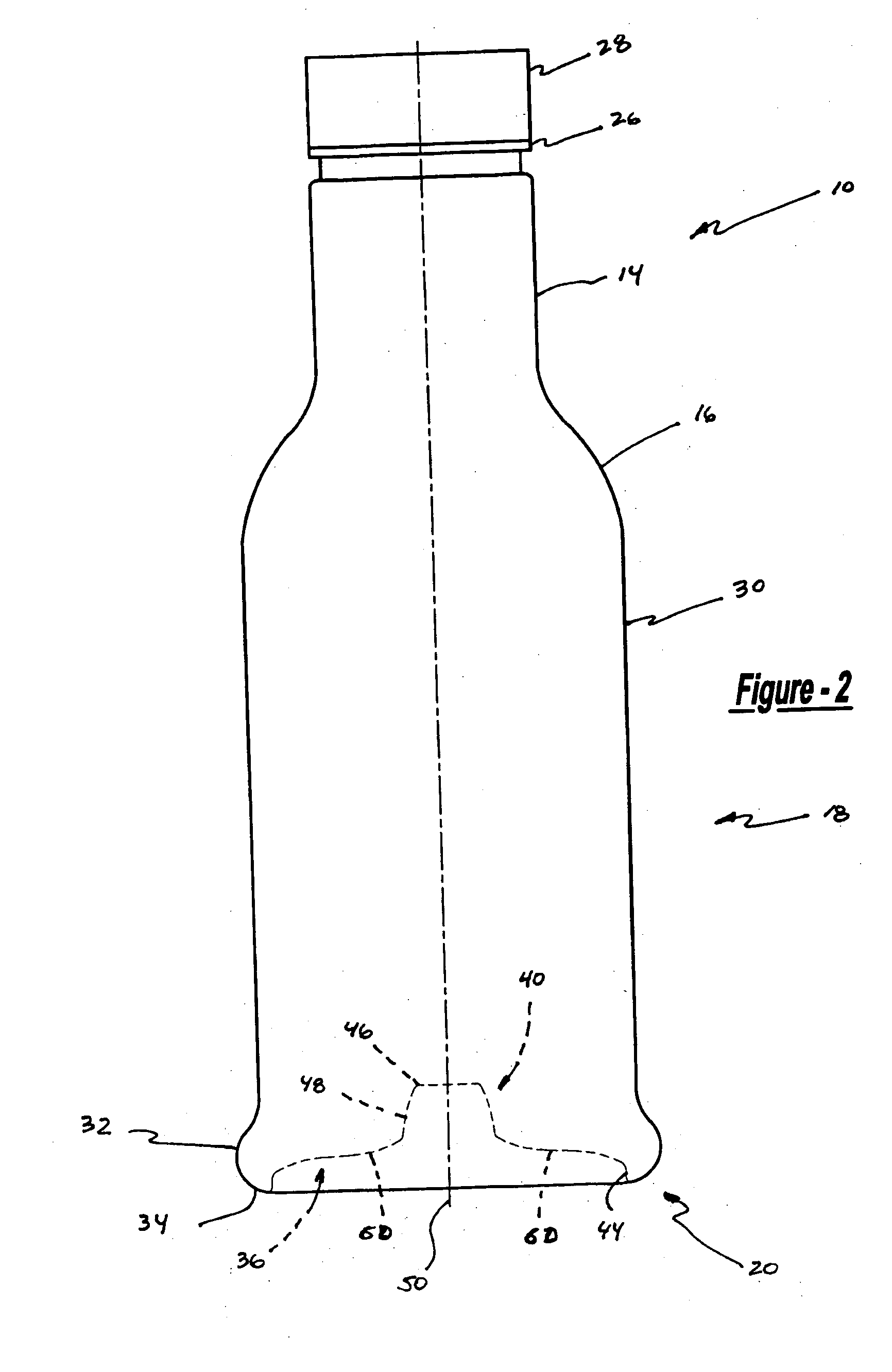
[0026] As discussed above, to accommodate vacuum forces during cooling of the contents within a heat set container, containers have been provided with a series of vacuum panels or pinch grips around their sidewalls. The vacuum panels and pinch grips deform inwardly under the influence of the vacuum forces and prevent unwanted distortion elsewhere in the container. However, with the vacuum panels and pinch grips, the container sidewall cannot be smooth or glass-like, an overlying label is not smooth, and end users can feel the vacuum panels and pinch grips when grasping and picking up the containers.
[0027] In a vacuum panel-less container, a combination of controlled deformation (e.g. in the base or closure) and vacuum resistance in the remainder of the container is required. Accordingly, this invention provides for...
PUM
| Property | Measurement | Unit |
|---|---|---|
| angle | aaaaa | aaaaa |
| thickness | aaaaa | aaaaa |
| height | aaaaa | aaaaa |
Abstract
Description
Claims
Application Information
 Login to View More