
Profile correction for RFID label with transponder
- Summary
- Abstract
- Description
- Claims
- Application Information
AI Technical Summary
Benefits of technology
Problems solved by technology
Method used
Image

Examples
Embodiment Construction
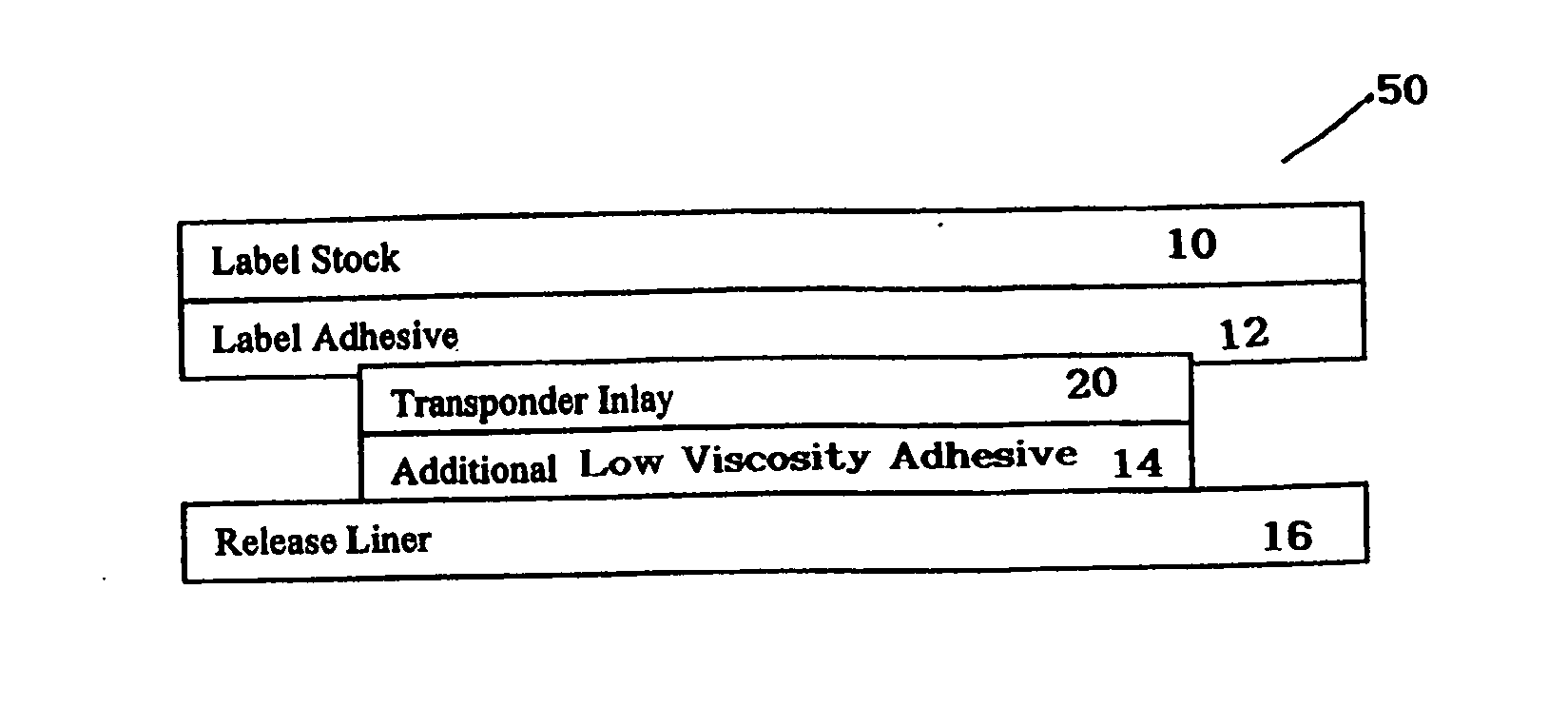
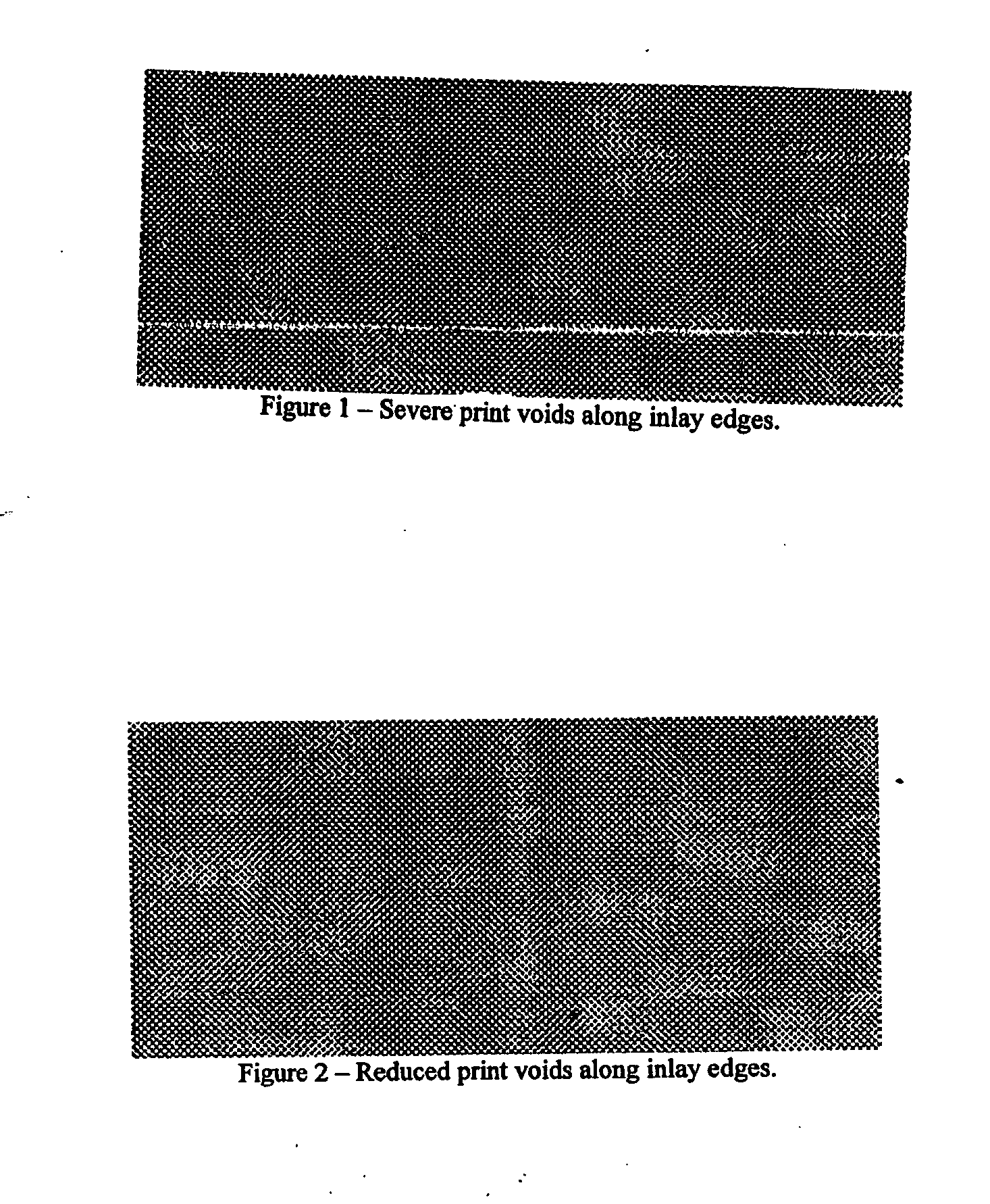
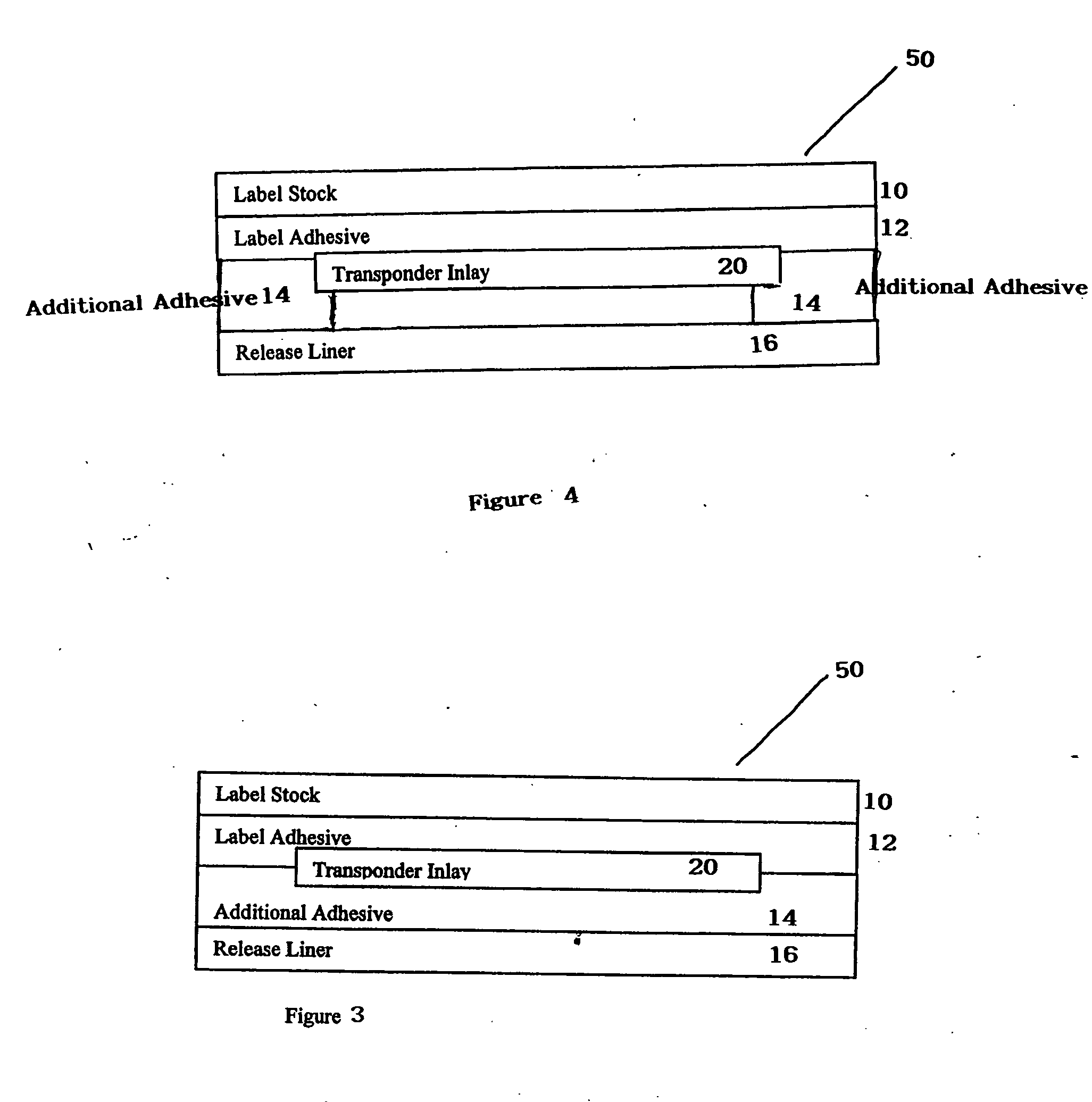
[0023] The inventive smart label construction provides a more uniform profile for improved print performance in a thermal label printer as shown in FIG. 2. Label 50 comprises label face stock 10, an adhesive layer 12 on adhesive face stock, an RFID insert 20 (also known as a chip, tag, transponder). Label 50 may be on release liner 16. The label construction has a layer of pressure sensitive adhesive 14 of applied over the inlay 20 and beyond the edges of the inlay 20. Extending adhesive layer 14 beyond inlay edges 20 provides a smoother step transition, which eliminates printing voids along inlay 20 edges.
[0024] A first preferred method of applying additional adhesive layer 14 is to have additional adhesive layer 14 extend out beyond the perimeter edges of inlay 20, thus masking the thickness transition of the inlay 20 and base film 10 as shown in FIG. 3. This can be accomplished by applying an oversized adhesive patch to the release liner 16 or directly on the label stock / inlay b...
PUM
| Property | Measurement | Unit |
|---|---|---|
| Thickness | aaaaa | aaaaa |
| Pressure | aaaaa | aaaaa |
| Viscosity | aaaaa | aaaaa |
Abstract
Description
Claims
Application Information
 Login to View More