
Device having a hydrophobic and/or lipophobic surface and method of producing one such device
a technology of hydrophobic and/or lipophobic surfaces, applied in the field of devices, can solve the problem that the liquid reagent used cannot reach the whole surface of each carbon nanofiber
- Summary
- Abstract
- Description
- Claims
- Application Information
AI Technical Summary
Benefits of technology
Problems solved by technology
Method used
Image

Examples
Embodiment Construction
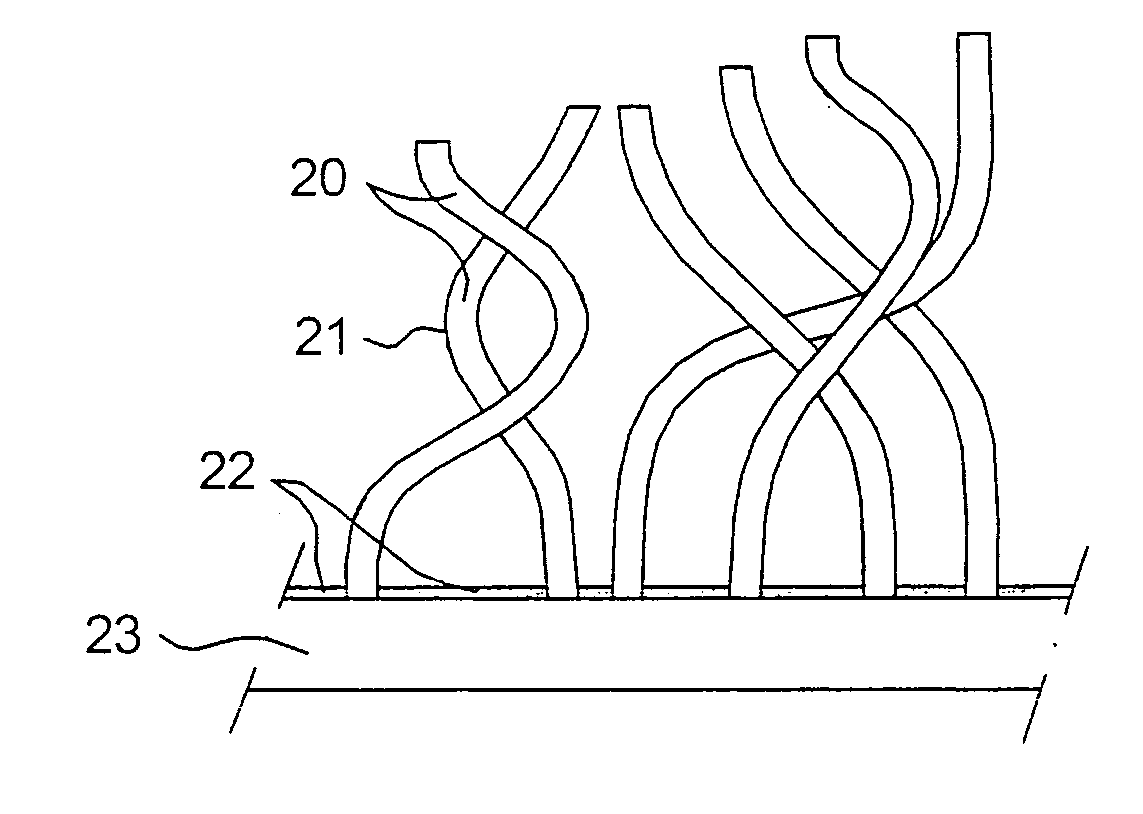
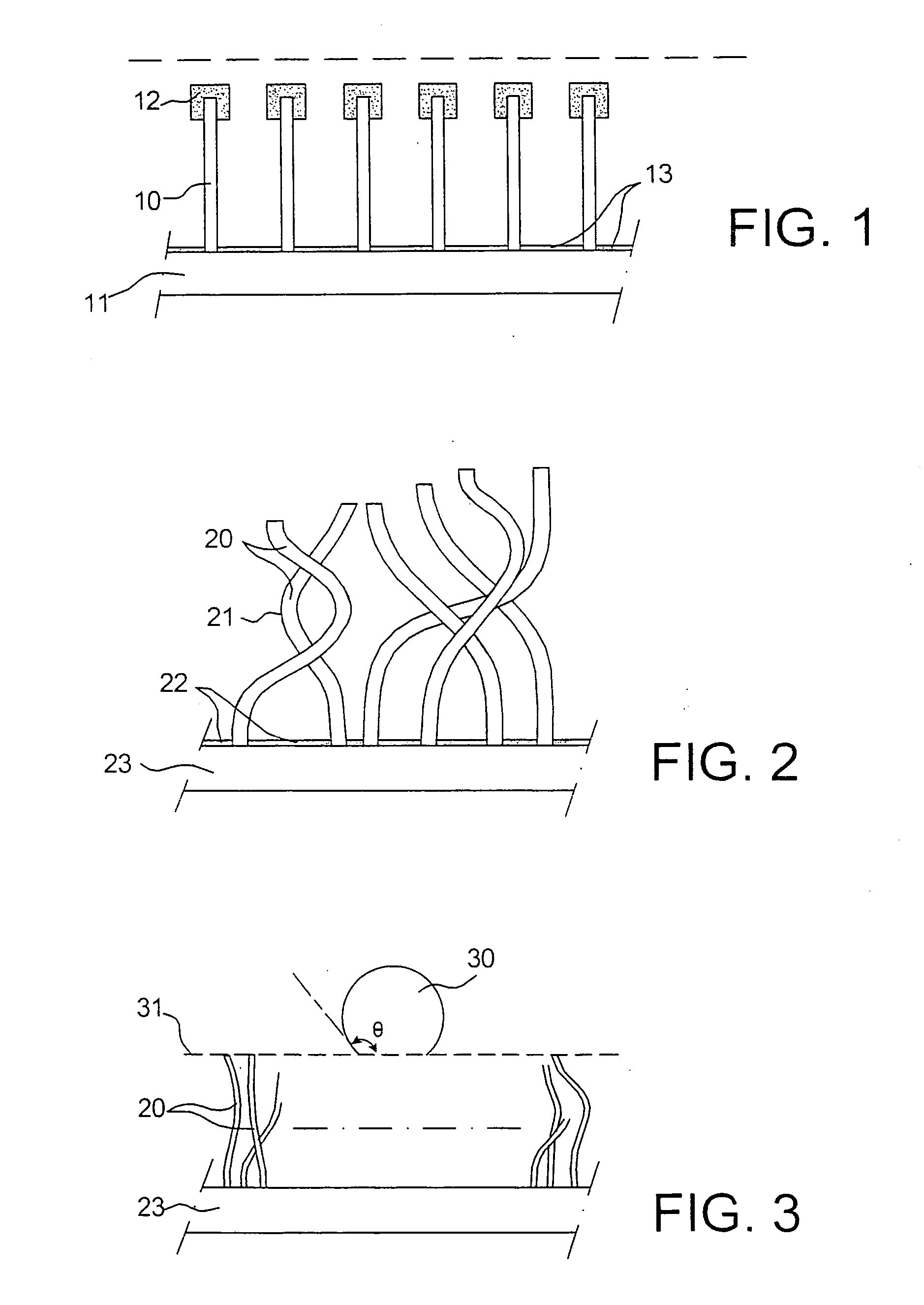
[0035] The device of the invention, as illustrated in FIG. 2, is a device with a hydrophobic and / or lipophobic surface comprising a carpet of nanofibers 20, which are totally cladded with a hydrophobic and / or lipophobic, continuous polymer film 21. The surface 22 existing between these nanofibers is itself covered with a layer of this same polymer.
[0036] Continuity of the polymer film allows the nanofibers to be bonded or firmly attached onto the surface 23.
[0037] The cladding may be achieved by a dry physical deposition technique or by an electrografting technique.
[0038] The following characteristics may thereby be obtained:
[0039] exemplary nanofibers used: carbon nanofibers
[0040] exemplary polymer film used: polysiloxane or carbofluorinated polymer
[0041] diameter of a nanofiber 20: about 20 to 30 nm
[0042] length of a nanofiber: about 3 μm
[0043] thickness of the hydrophobic polymer film: about 50 nm.
[0044] The method for making such a device with a hydrophobic and / or lipop...
PUM
| Property | Measurement | Unit |
|---|---|---|
| Hydrophobicity | aaaaa | aaaaa |
| Lipophobicity | aaaaa | aaaaa |
Abstract
Description
Claims
Application Information
 Login to View More