
Positive electrode active material for non-aqueous electrolyte-based secondary battery, production method therefor and non-aqueous electrolyte-based secondary battery using the same
a technology of non-aqueous electrolyte-based secondary batteries and active materials, which is applied in the direction of cell components, electrochemical generators, and nickel compounds, etc., can solve the problems of low heat stability, large cost fluctuation, and unstable supply of lithium nickelates, and achieve excellent heat stability, low cost, and high capacity
- Summary
- Abstract
- Description
- Claims
- Application Information
AI Technical Summary
Benefits of technology
Problems solved by technology
Method used
Image

Examples
example 1
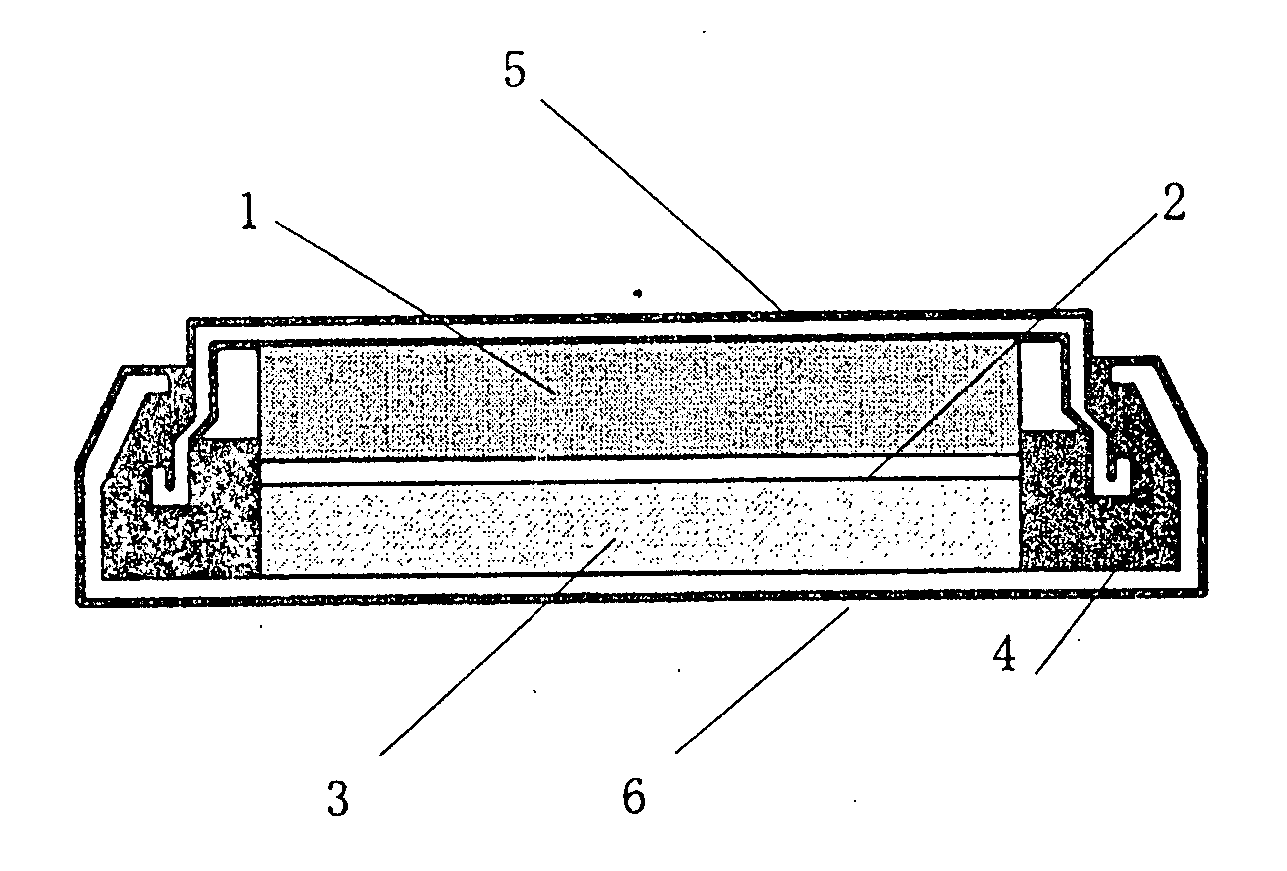
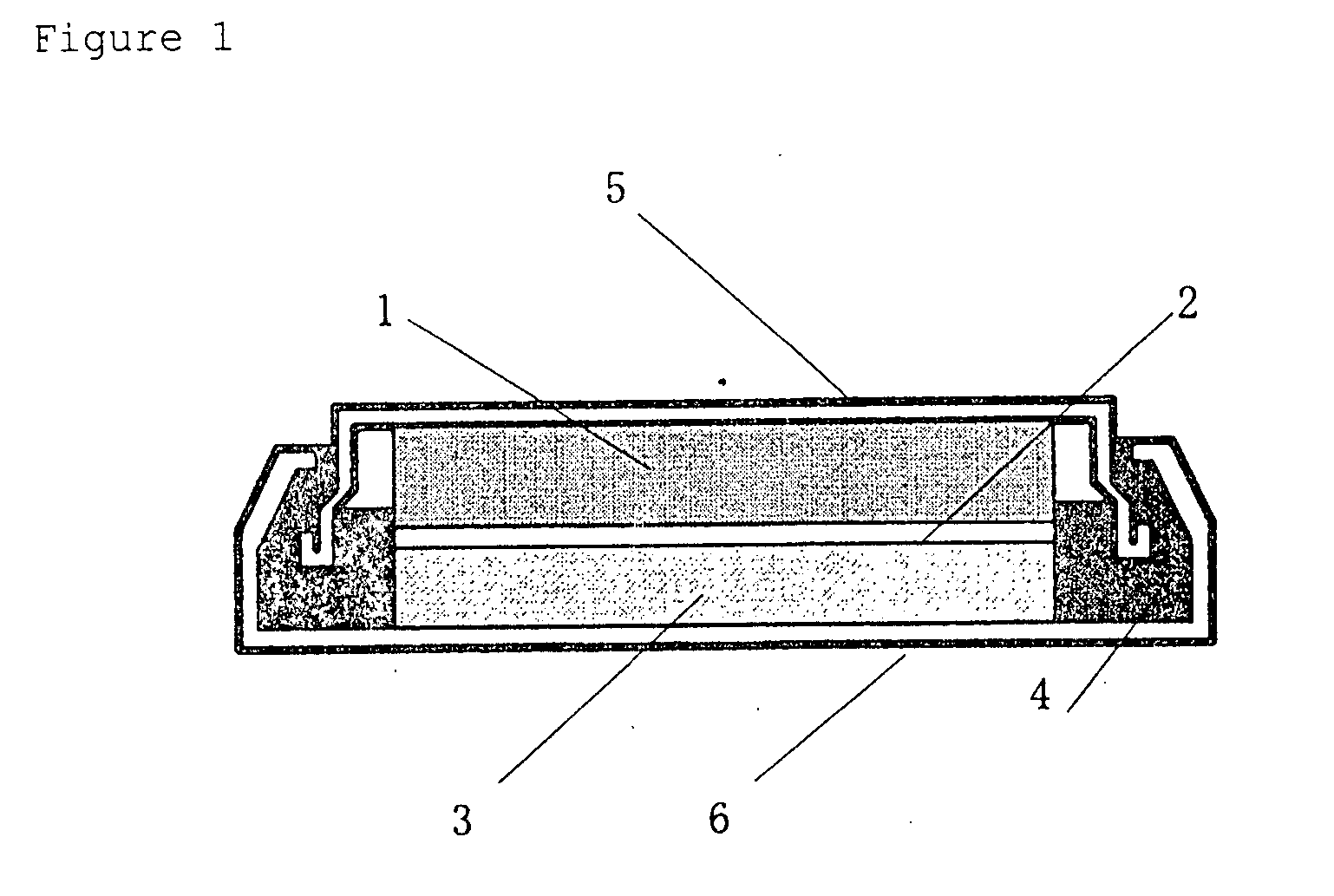
[0100] By a series of the steps composed of the step for preparation of a nickel oxide having a specified composition, the step for preparation of fired powders having a specified composition, and the step for drying the resultant fired powders after water washing processing, a positive electrode active material composed of a lithium / nickel composite oxide was produced, and specific surface area thereof was determined. Furthermore, a coin battery using this positive electrode active material as a positive electrode material was prepared, and initial discharge capacity and DSC heat generation amount thereof were evaluated. In this connection, each raw material was weighed so that each of metal components of the lithium / nickel composite oxide became Ni:Co:Al: Li=0.82:0.15:0.03:1.02.
(1) The Step for Preparation of a Nickel Oxide
[0101] First of all, nickel sulfate hexahydrate (product of Wako Pure Chemical Ind., Ltd.) cobalt sulfate heptahydrate (product of Wako Pure Chemical Co., Lt...
example 2
[0109] A lithium / nickel composite oxide was produced similarly as in Example 1, except that roasting temperature of nickel hydroxide was changed to 900° C. in the step of preparation of the nickel oxide; composition and specific surface area of the resultant powders, along with initial discharge capacity and DSC heat generation amount of the battery were measured and the results are shown in Tables 1 and 2, respectively.
example 3
[0110] A lithium / nickel composite oxide was produced similarly as in Example 1, except that roasting temperature of nickel hydroxide was changed to 1100° C. in the step of preparation of the nickel oxide; composition and specific surface area of the resultant powders, along with initial discharge capacity and DSC heat generation amount of the battery were measured and the results are shown in Tables 1 and 2, respectively.
PUM
 Login to View More
 Abstract
Description
Claims
Application Information
 Login to View More