Unfortunately, this process is hampered when a wound is large or has become infected.
Without sufficient
blood flow, the epithelial and subcutaneous tissues surrounding the wound not only receive diminished
oxygen and nutrients, but are also less able to successfully fight bacterial infection and, thus, less able to naturally close the wound and heal the tissue.
Additionally, some wounds harden and inflame to such a degree that closure by stapling or suturing is not feasible.
With human patients, it is often possible (although certainly not always possible) to insist upon
reduced mobility or even immobile conditions in order to carry out the tissue treatment.
With animal patients, this is of course generally not possible at all unless the animal is sedated.
As the preference is to permit the tissue to heal over a period of time, it is generally not practical to maintain
sedation of an animal to carry out either research or treatment with reduced pressure application.
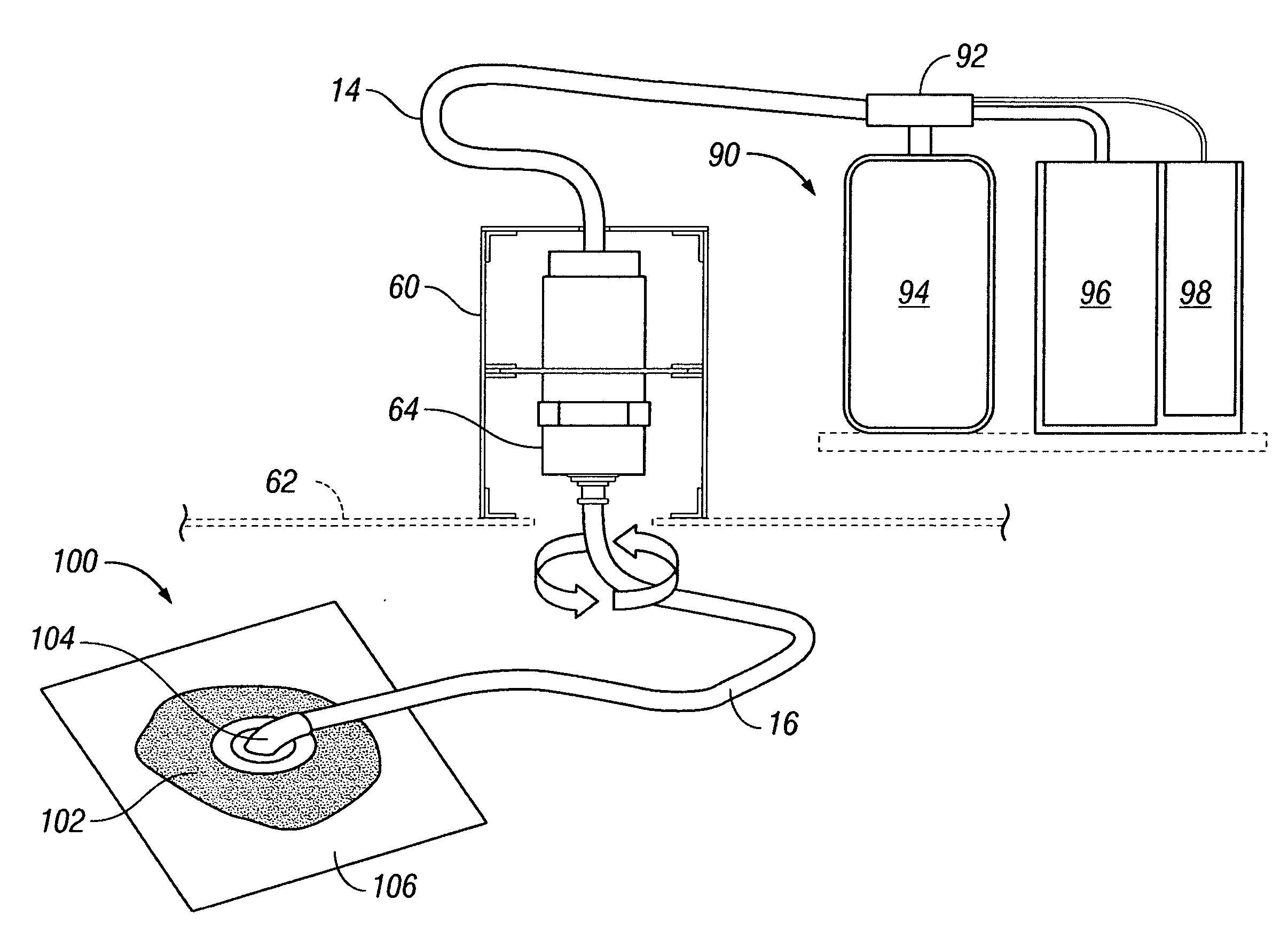
The problems that arise therefore in maintaining an effective connection between the negative pressure
instrumentation and the reduced pressure treatment dressing can become complex.
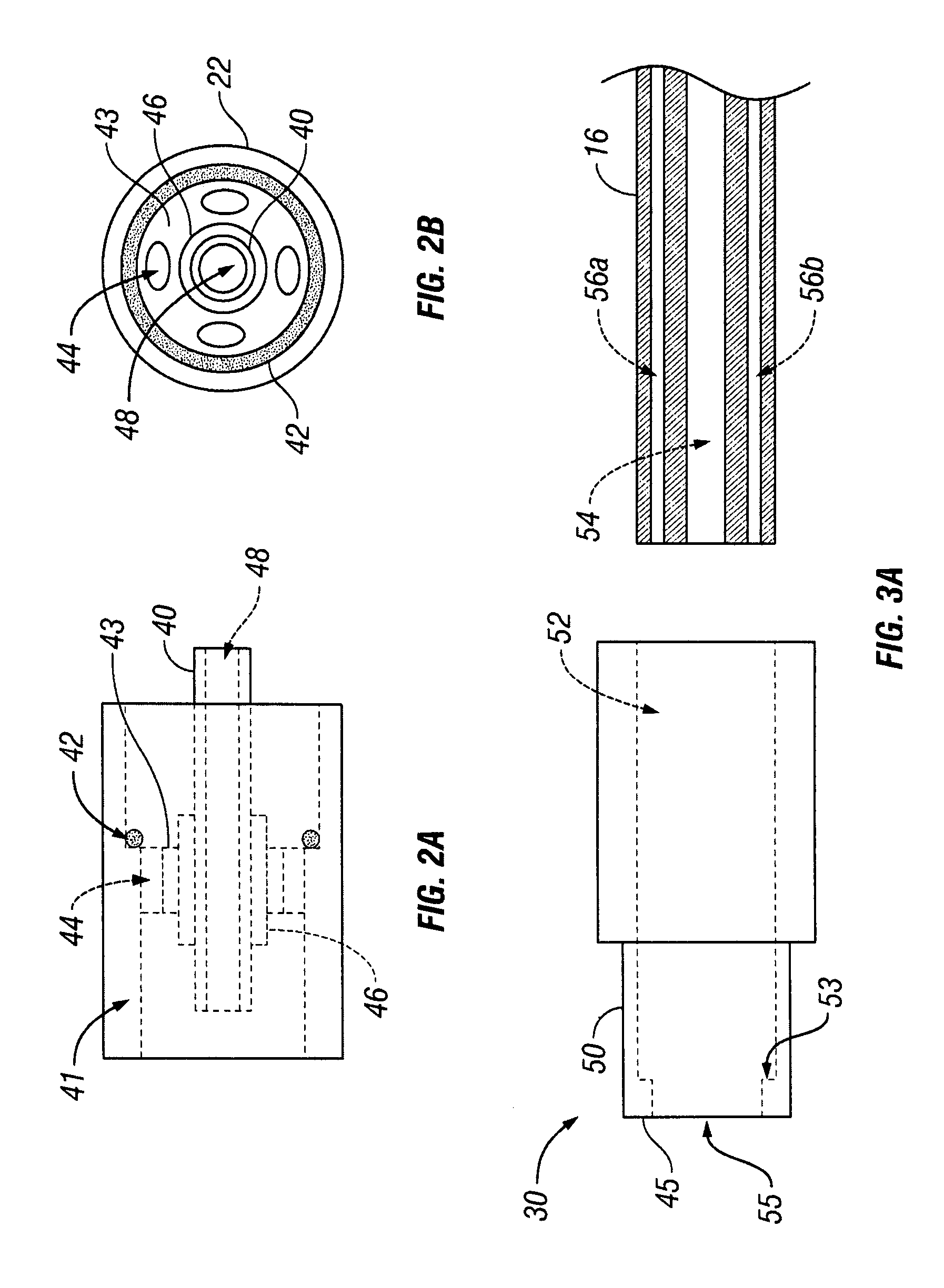
However, where multi-lumen tubing is utilized, maintaining the structural simplicity of the connector becomes more challenging.
Such efforts clearly suffer, however, from the complexities associated with maintaining a turntable integrating all of the electronic and electrical components necessary to carry out the reduced pressure treatment regimens prescribed.
In addition, such systems generally work only for very
large animal subjects as even with the best support structures a greater force is required to initiate the rotation of the entire instrument laden turntable.
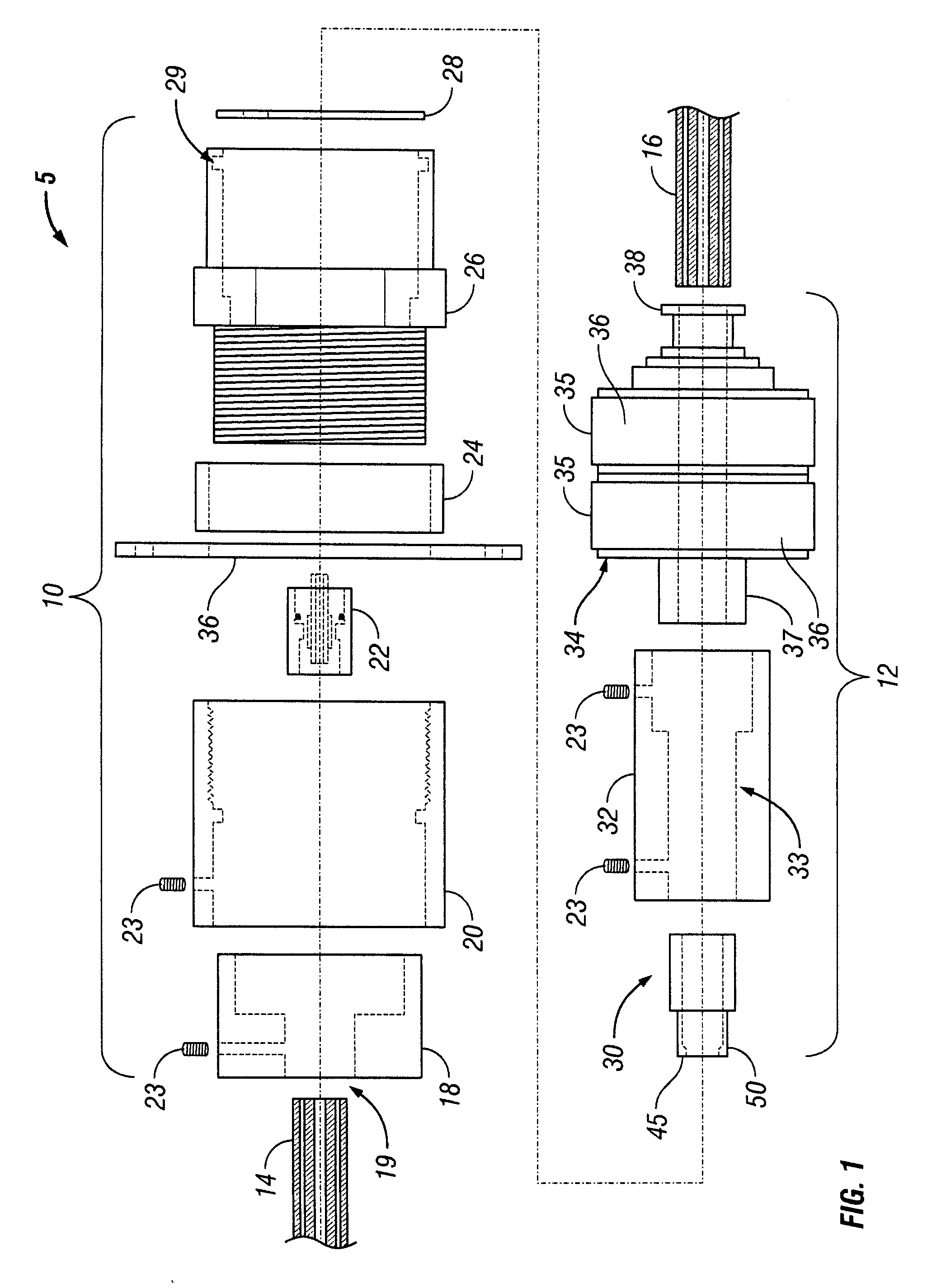
A number of problems arise in attempting to provide a swivel connector for a multi-lumen tube of the structure described above.
An added concern, however, is the
increased risk of cross-
contamination between the larger primary lumen and the ancillary smaller lumens that need to remain clear.
Any leakage in the swivel connector structure could cause fluids and solids to find their way into the small ancillary lumens, thereby clogging those lines and reducing or preventing the effectiveness of the reduced pressure
treatment system.
One further complication that arises as a result of the application of such reduced pressure treatment systems to veterinary environments is the wide range in animal size that the systems must accommodate.
Providing a tight seal, however, works contrary to the general requirement of providing an easily rotatable connection.
Smaller animals and
small children may be wholly unable to rotate a tight connection, resulting in an ineffective swivel connector.



 Login to View More
  Login to View More