

Accoustically Transparent Occlusion Reduction System and Method
a transparent and occlusion reduction technology, applied in the direction of occlusion effect electronic compensation, transducer details, electrical transducers, etc., can solve the problems of increasing the sound pressure within the occluded of partially occluded ear, creating discomfort and/or unnatural sound sensation, and limiting the amplification of hearing aids
- Summary
- Abstract
- Description
- Claims
- Application Information
AI Technical Summary
Benefits of technology
Problems solved by technology
Method used
Image

Examples
Embodiment Construction
[0029] The preferred embodiment operates to reduce the level of signals generated within an electro-acoustic negative feedback loop, such as signals produced by vibration in the ear canal walls due to bone conduction of a user's voice. The reduction occurs in the low to mid audible frequencies, typically ranging from 80 Hz up to 1 kHz, where the occlusion effect is more predominant and perceptually apparent.
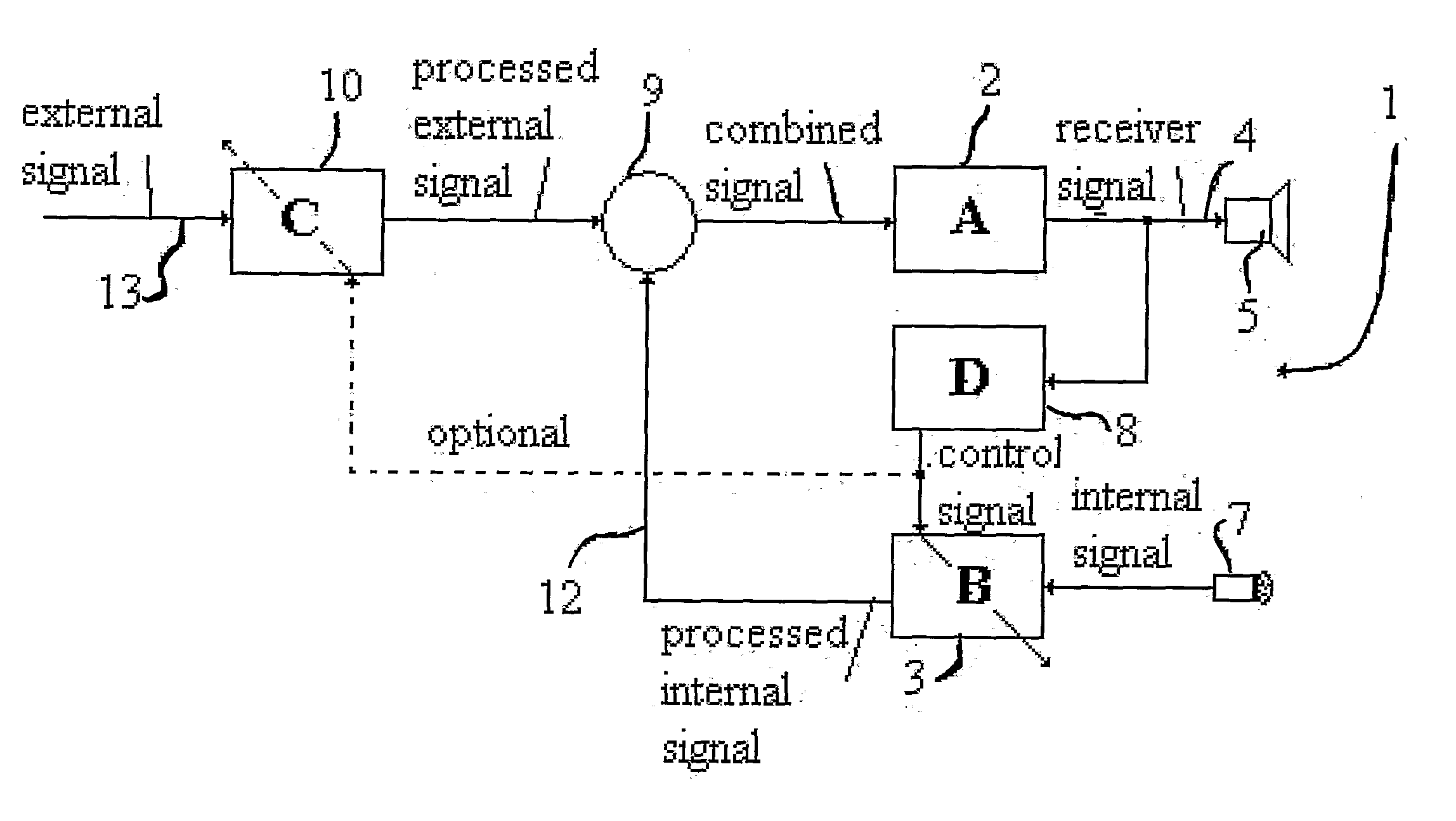
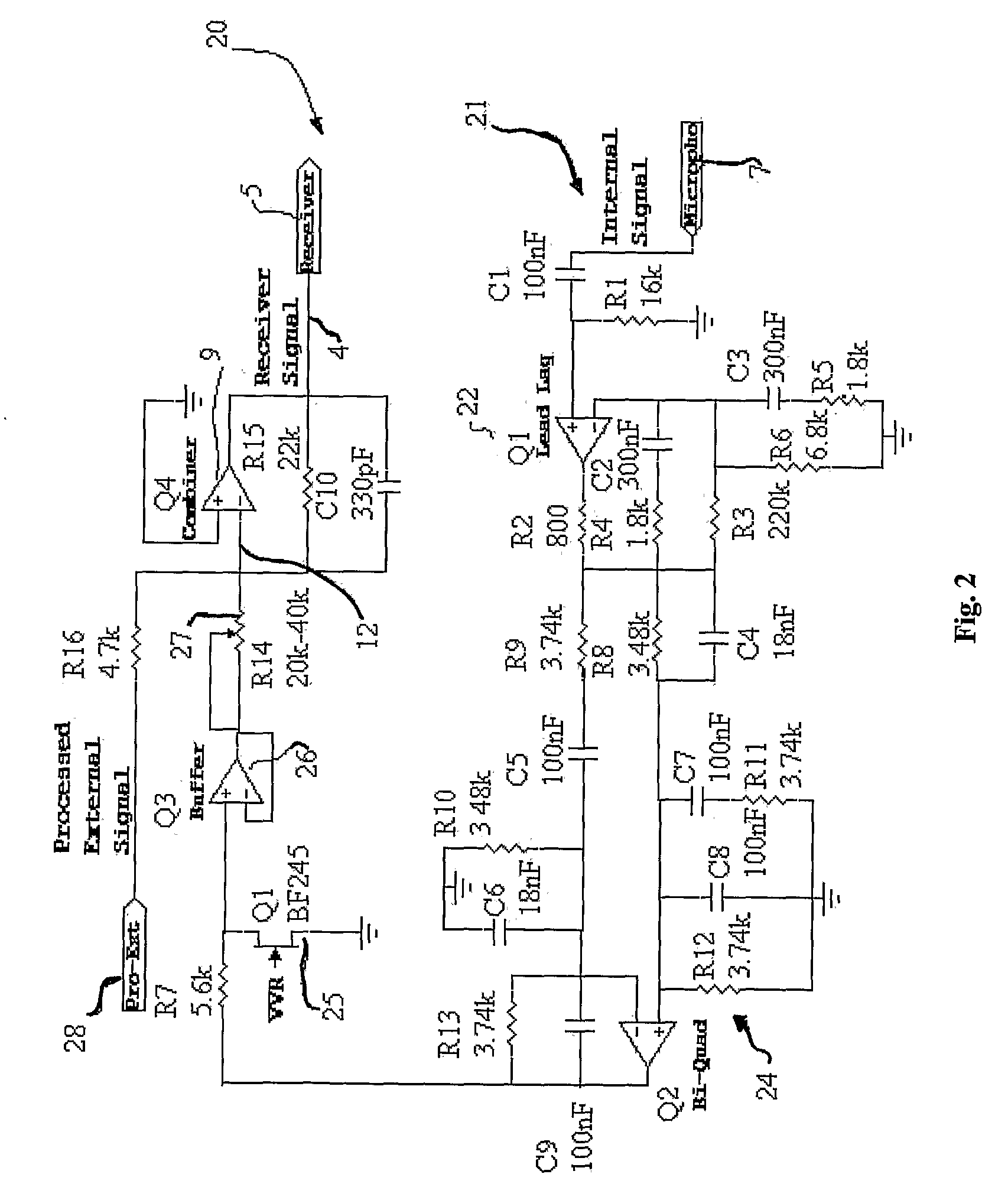
[0030] A negative feedback scheme is provided which combines a processed externally generated signal such as from an external microphone or a sound system with a processed internal signal such as from a microphone located within or closely coupled to the occluded or partially occluded ear. The combined signal after optional further processing is applied to a receiver located within or closely coupled to the occluded or partially occluded ear. The level of the signal to be applied to the receiver is optimally estimated either from the signal applied to the receiver or from the co...
PUM
 Login to View More
 Abstract
Description
Claims
Application Information
 Login to View More