
Heat transfer apparatus containing a compliant fluid film interface and method therefor
a fluid film interface and heat transfer apparatus technology, applied in the direction of cooling/ventilation/heating modification, semiconductor/solid-state device details, semiconductor devices, etc., can solve the problem of poor thermal conductivity of tim, and achieve the effect of providing the needed space for thermal expansion mismatch
- Summary
- Abstract
- Description
- Claims
- Application Information
AI Technical Summary
Benefits of technology
Problems solved by technology
Method used
Image

Examples
Embodiment Construction
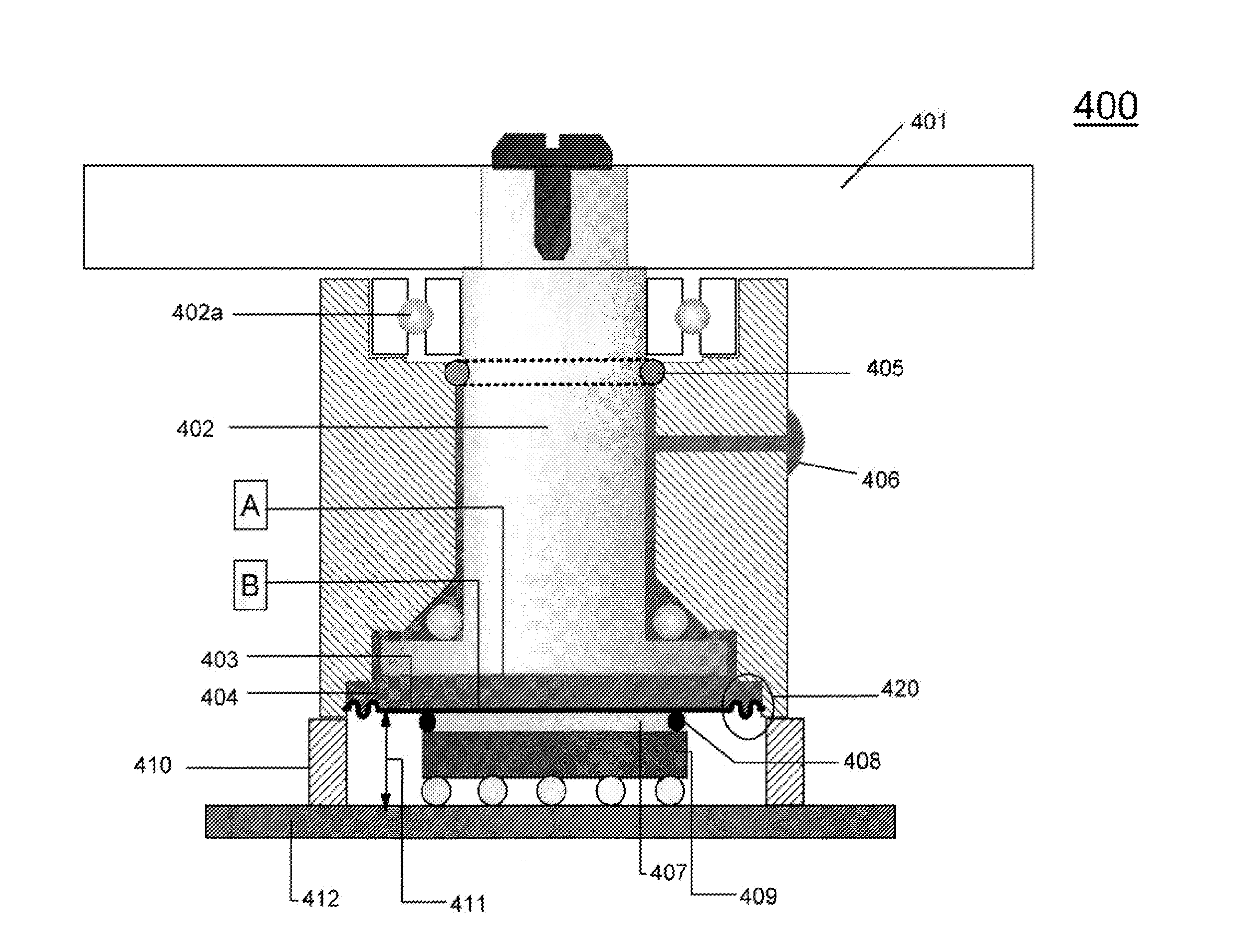
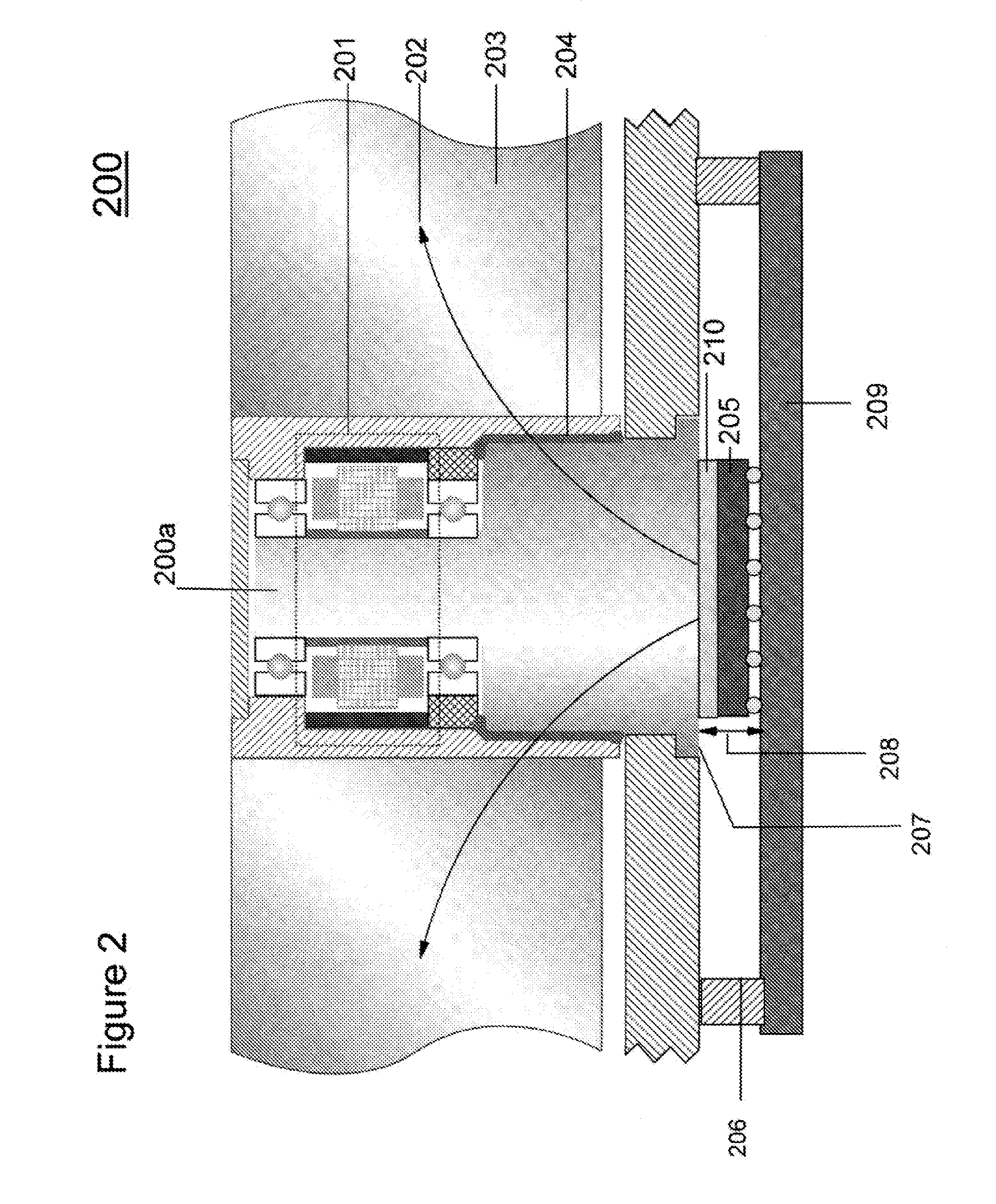
[0023]Referring now to the drawings, and more particularly to FIGS. 1(a)-9, there are shown exemplary embodiments of the method and structures according to the present invention.
Exemplary Embodiment
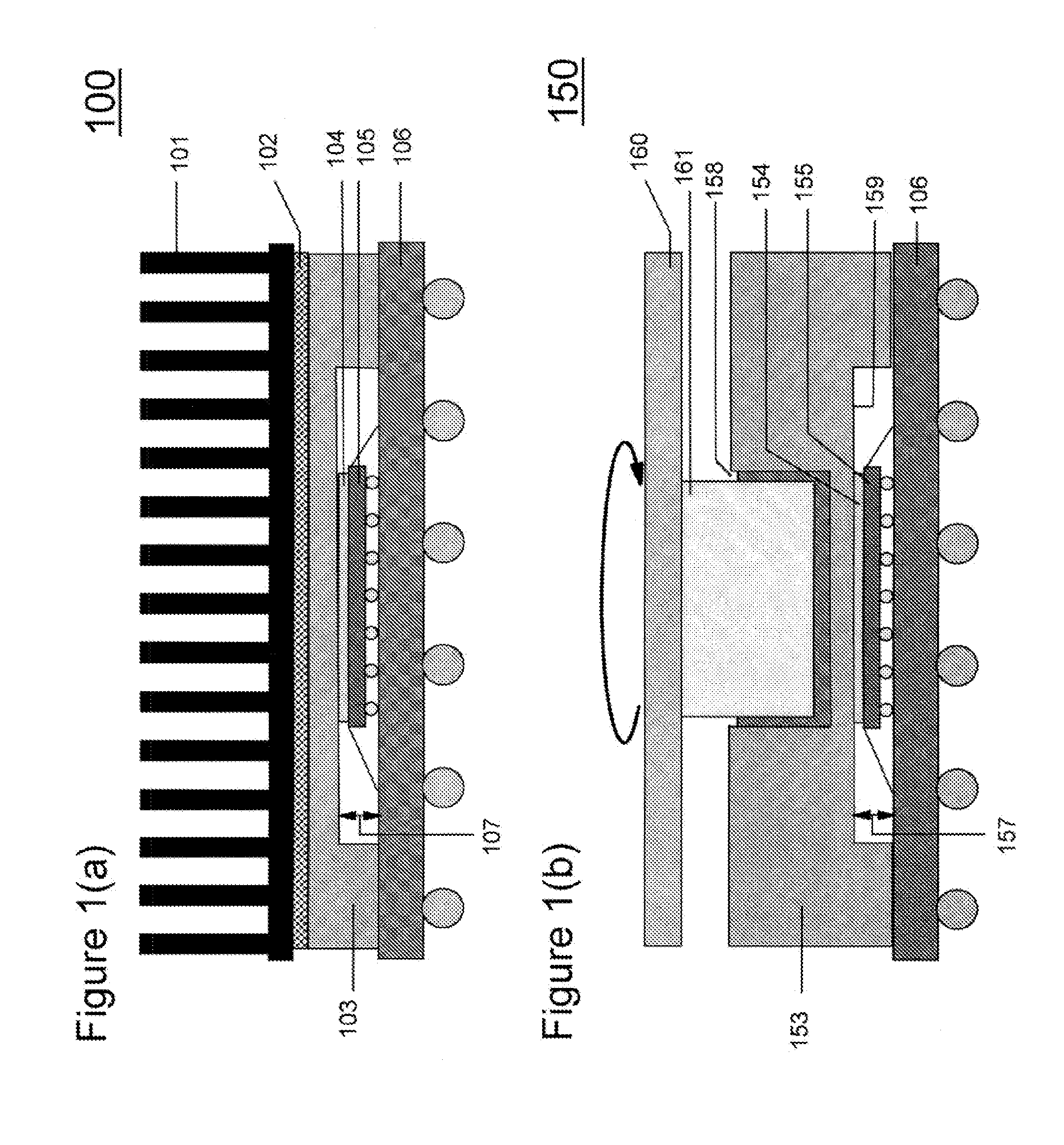
[0024]FIG. 1(a) shows a conventional structure 100 including a static heat sink 101. A thermal interface material (TIM) 102 provides heat conduction from one modular component to another, while absorbing the thermally induced variation in clearances between the components. A rigid heat spreader 103 is provided between TIM 102 and another TIM 104. TIM 104 is applied to a top surface of a die (chip) 105. “Legs” of the spreader 103 are mounted on a ceramic base 106. As shown by reference numeral 107, there is a rigid spacing between the under surface of the spreader 103 and a top surface of the ceramic base 106.
[0025]FIG. 1(b) shows a structure 150 including a novel kinetic heat sink (KHS) where a rigid heat spreader 153 supports a fluid film 158 on one side and provides a conduction path f...
PUM
 Login to View More
 Abstract
Description
Claims
Application Information
 Login to View More