

Antimicrobial Compositions
a technology of compositions and antimicrobial agents, applied in the direction of antibacterial agents, drug compositions, peptide/protein ingredients, etc., can solve the problems of inability to meet the needs of patients,
Inactive Publication Date: 2009-01-15
CERNOFINA
View PDF0 Cites 44 Cited by
- Summary
- Abstract
- Description
- Claims
- Application Information
AI Technical Summary
Benefits of technology
"The present invention is about new compositions that can kill, reduce, or interfere with the life cycle of microbial agents like bacteria, viruses, and fungi. These compositions can be used alone or in combination with other antimicrobial agents. They can be administered through various means such as injection, orally, or through a coating or article. The compositions have a synergistic effect, meaning they work better together than individually. The invention also includes methods of using the compositions to treat microbial illnesses and disinfect surfaces. The invention can be used in pharmaceutical compositions and in the manufacture of medicines to treat microbial-related conditions. The invention can also be used in kits for treatment regimes. Overall, the invention provides new ways to fight microbial agents and protect against their harmful effects."
Problems solved by technology
However, frequent and prolonged antibiotic courses are likely to be a major factor in the selection of highly antibiotic-resistant P. aeruginosa strains.
Similar resistance issues have arisen for human fungal pathogens.
Some plants suffer from detrimental soil-spread diseases, which have not been possible to control owing to restrictions of use of chemical control agents and hazard periods due to possible residues or lack of sufficiently effective products.
In many industrial processes and operations, for example cooling towers, heat exchangers, biofilms lead to rapid deterioration of systems and compromise efficiencies and functions.
Many commonly used biocidal agents have created unacceptable environmental risks, many are ineffective against microbial biofilms, some cause direct deterioration of certain systems like enhanced metal corrosion, and in some cases resistance to known treatments has been identified.
Method used
the structure of the environmentally friendly knitted fabric provided by the present invention; figure 2 Flow chart of the yarn wrapping machine for environmentally friendly knitted fabrics and storage devices; image 3 Is the parameter map of the yarn covering machine
View moreImage
Smart Image Click on the blue labels to locate them in the text.
Smart ImageViewing Examples

Examples
Experimental program
Comparison scheme
Effect test
example 1
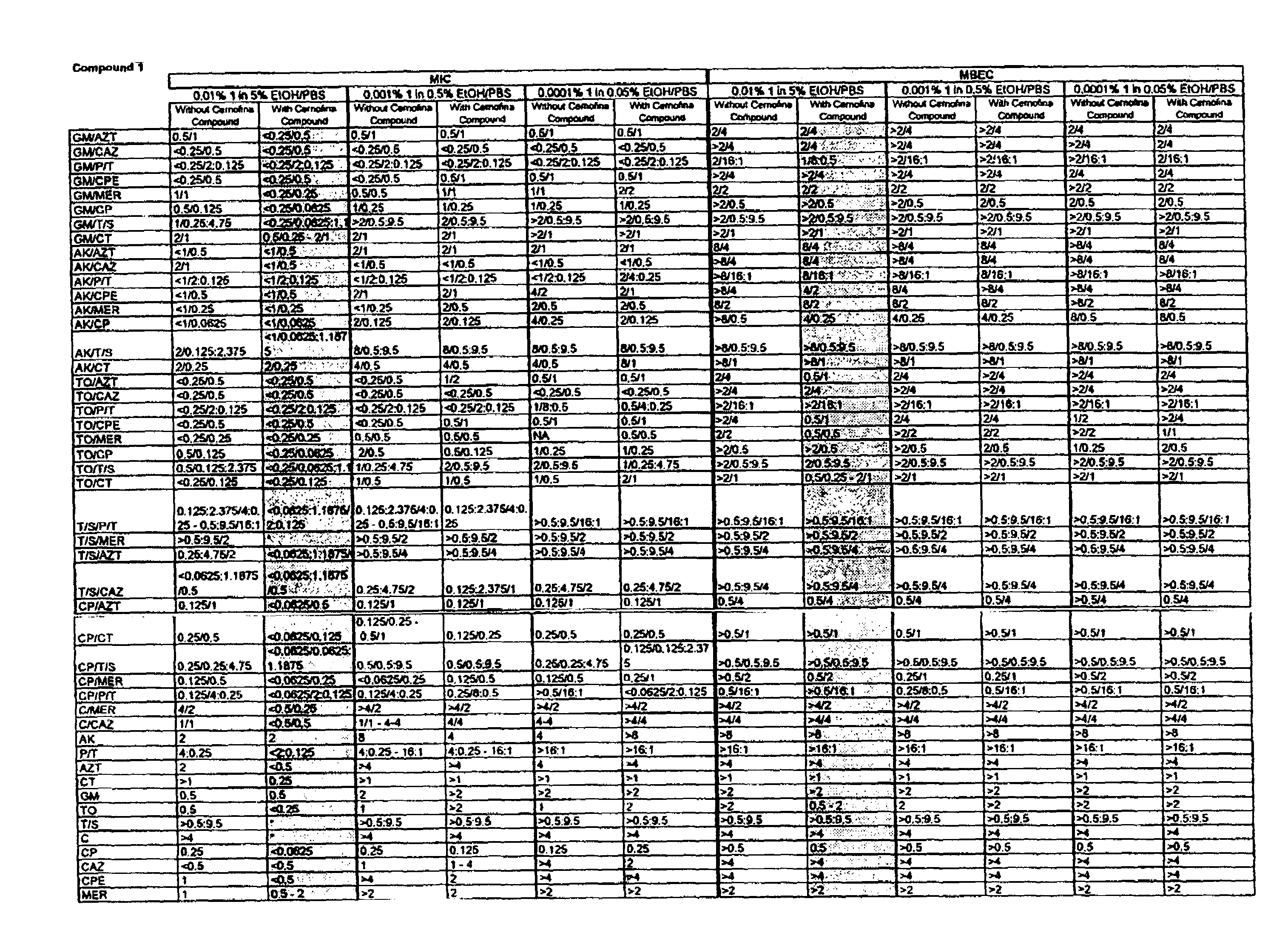
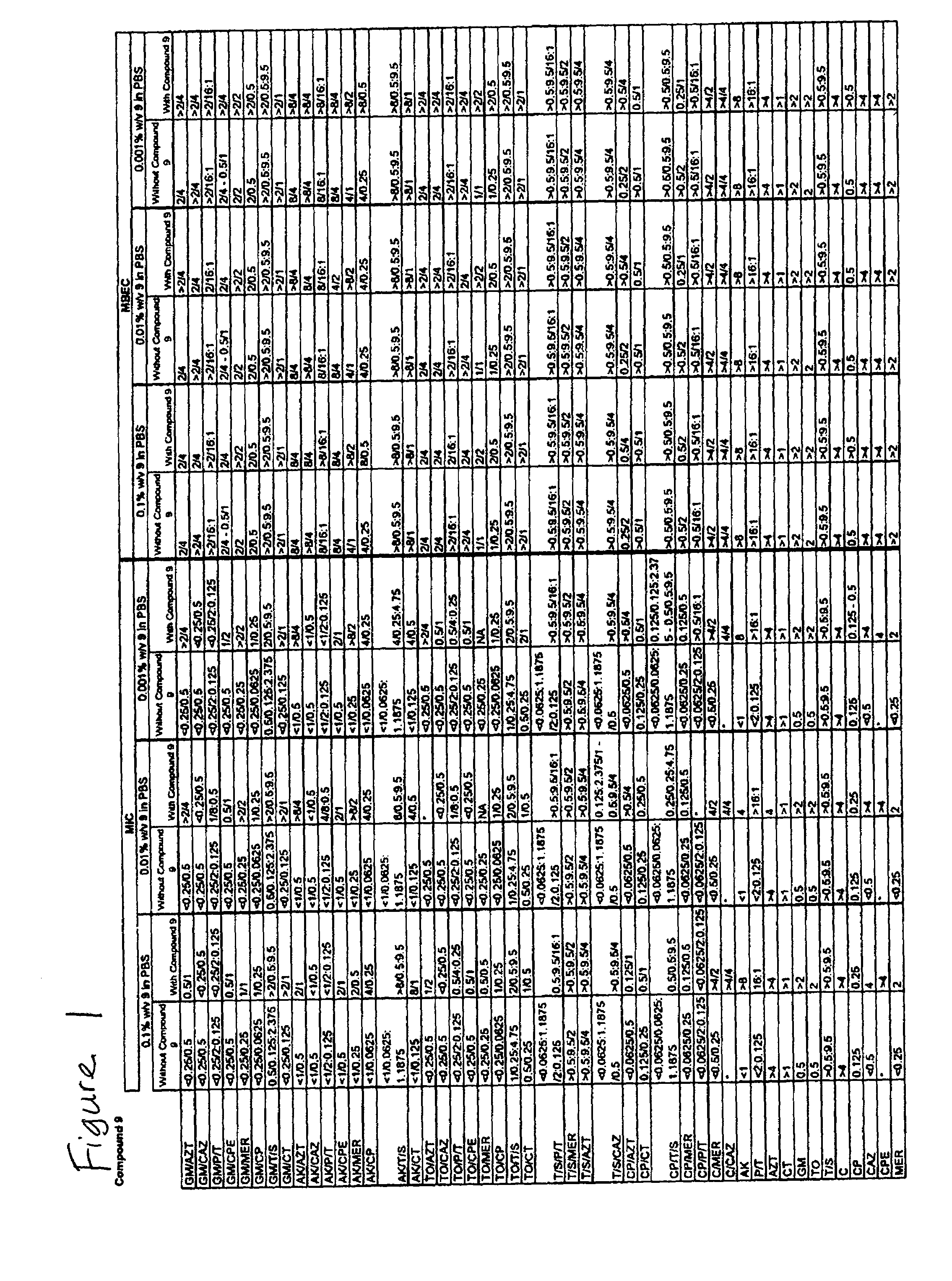
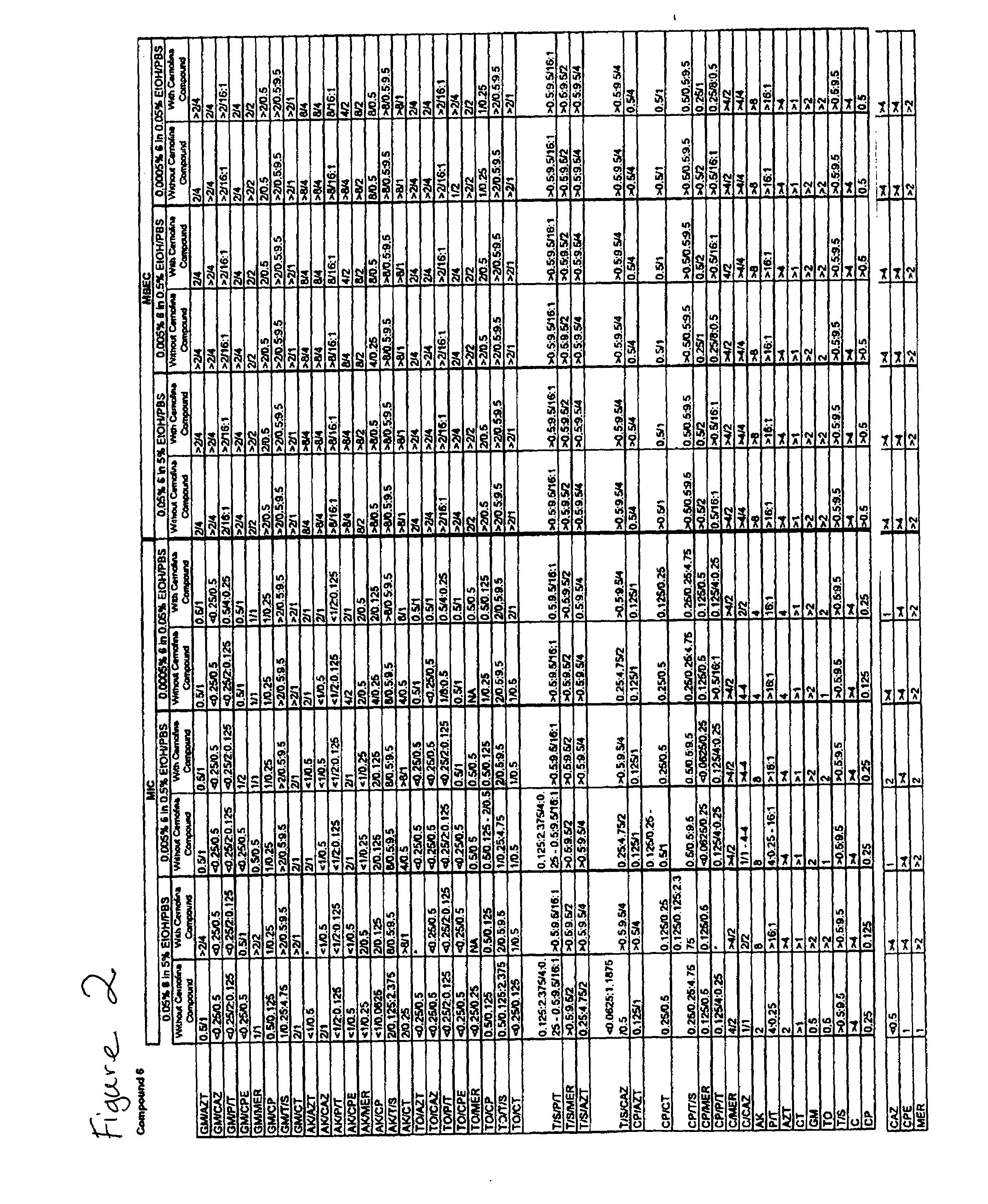
[0404]MBEC bioFilm PA panel—Panel wells are inoculated with planktonic Pseudomonas aeruginosa using a 95 peg inoculation lid. Panels and pegged lids are then incubated at 35° C. for 18 h. Planktonic susceptibility and resistance is determined by measuring inhibition and growth in the presence of antimicrobial agents after incubation. Biofilm susceptibility and resistance is determined by measuring inhibition and growth after peg sonication, biofilm bacteria recovery, then incubation for additional 18-24 h at 35° C.
the structure of the environmentally friendly knitted fabric provided by the present invention; figure 2 Flow chart of the yarn wrapping machine for environmentally friendly knitted fabrics and storage devices; image 3 Is the parameter map of the yarn covering machine
Login to View More PUM
| Property | Measurement | Unit |
|---|---|---|
| diameter | aaaaa | aaaaa |
| depth | aaaaa | aaaaa |
| composition | aaaaa | aaaaa |
Login to View More
Abstract
The present invention relates in part to a composition comprising a compound of Formula I or Formula II and at least one other antimicrobial agent. The invention also relates in part to a pharmaceutical composition comprising the composition of claim 1 and a pharmaceutically acceptable carrier or excipient. The invention further relates in part to a method of treating a subject with a microbial illness comprising administering to a subject in need thereof the aforementioned pharmaceutical composition. The invention further relates in part to a method of disinfecting a surface comprising administering to the surface the aforementioned a composition. The invention also relates in part to a coating comprising the aforementioned composition.
Description
RELATED APPLICATIONS[0001]This application claims the benefit of priority to U.S. Provisional Patent Application Ser. No. 60 / 897,147, filed on Jan. 24, 2007, which is hereby incorporated by reference in its entirety.BACKGROUND OF THE INVENTION[0002]Infections caused by or related to microbial agents are a major cause of human illness worldwide, and the frequency of resistance to standard antimicrobial agents has risen dramatically over the last decade. Microbial agents include but are not limited to bacteria, viruses, and fungi.[0003]For example, methicillin resistant Staphylococcus aureus (MRSA) have become a major public health concern. Increasing numbers of individuals, and particularly the young and elderly, test positive for MRSA strains of this Gram positive bacterium common to blood stream infections, cutaneous infections and medical device biofilms. Antibiotic resistance is also common in Gram negative bacteria including entercocci and Pseudomonas aeruginosa. The entercocci ...
Claims
the structure of the environmentally friendly knitted fabric provided by the present invention; figure 2 Flow chart of the yarn wrapping machine for environmentally friendly knitted fabrics and storage devices; image 3 Is the parameter map of the yarn covering machine
Login to View More Application Information
Patent Timeline
 Login to View More
 Patent Type & AuthorityApplications(United States)
IPC IPC(8): A01N43/62A01N37/10A01N37/00A01N59/12A01P1/00A01N59/00A01N59/20A01N37/18
CPCA61K31/185A61K45/06A61K2300/00
InventorALBERTE, RANDALL S.MITTELMAN, MARC W.
OwnerCERNOFINA