Starting device for internal combustion engines in motor vehicles

a technology for starting devices and internal combustion engines, which is applied in the direction of engine starters, machines/engines, electric control, etc., can solve the problems of increased noise emissions, increased mechanical load on the pinion and the toothed ring, and time delay every time the internal combustion engine is started

US20090020091A1Inactive Publication Date: 2009-01-22ROBERT BOSCH GMBH
4 Cites 76 Cited by

Patent Information

Authority / Receiving Office
US · United States
Current Assignee / Owner
Publication Date
2009-01-22
Estimated Expiration
Not applicable · inactive patent

Smart Images

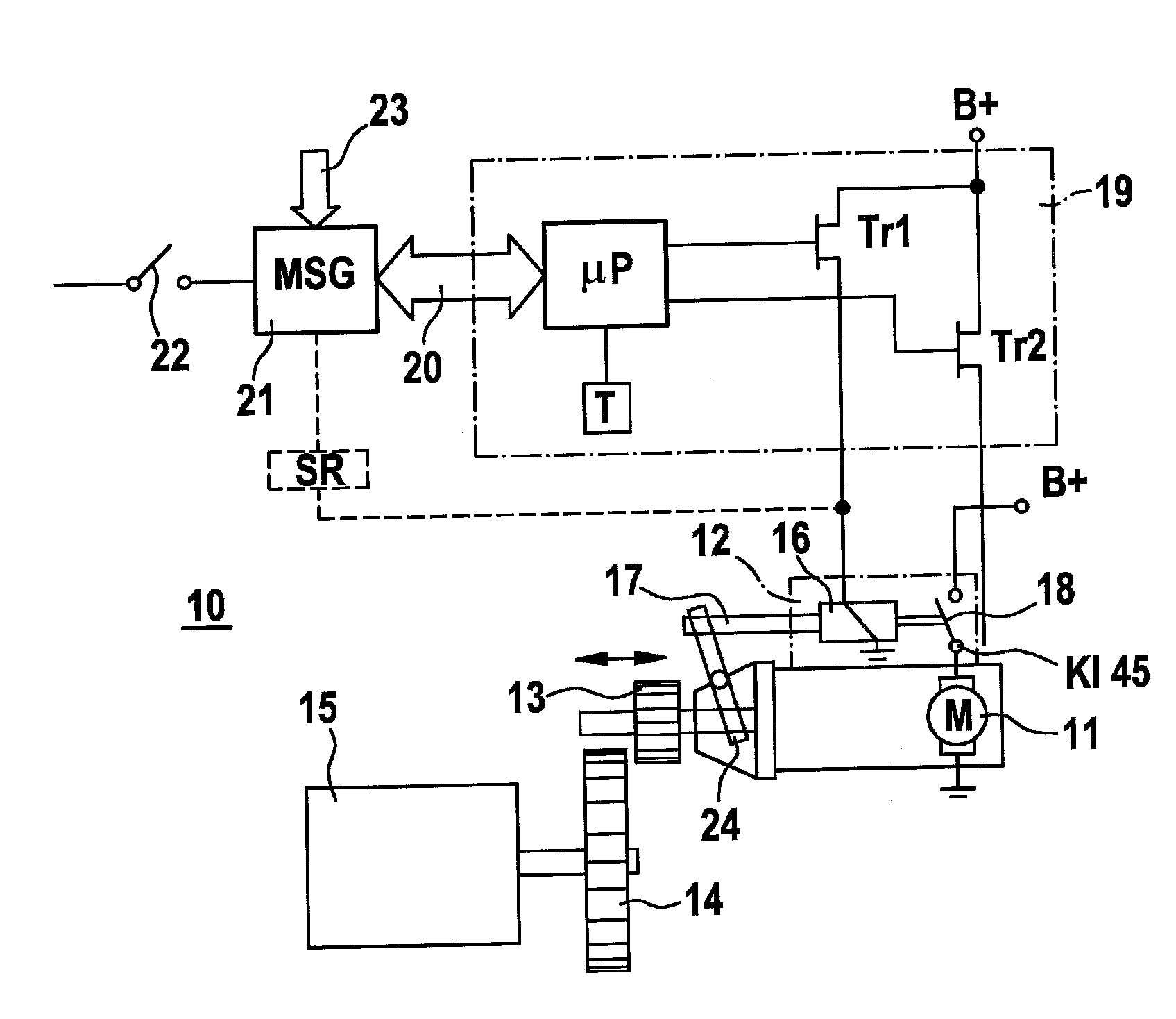
  • Figure 1
    Figure 1
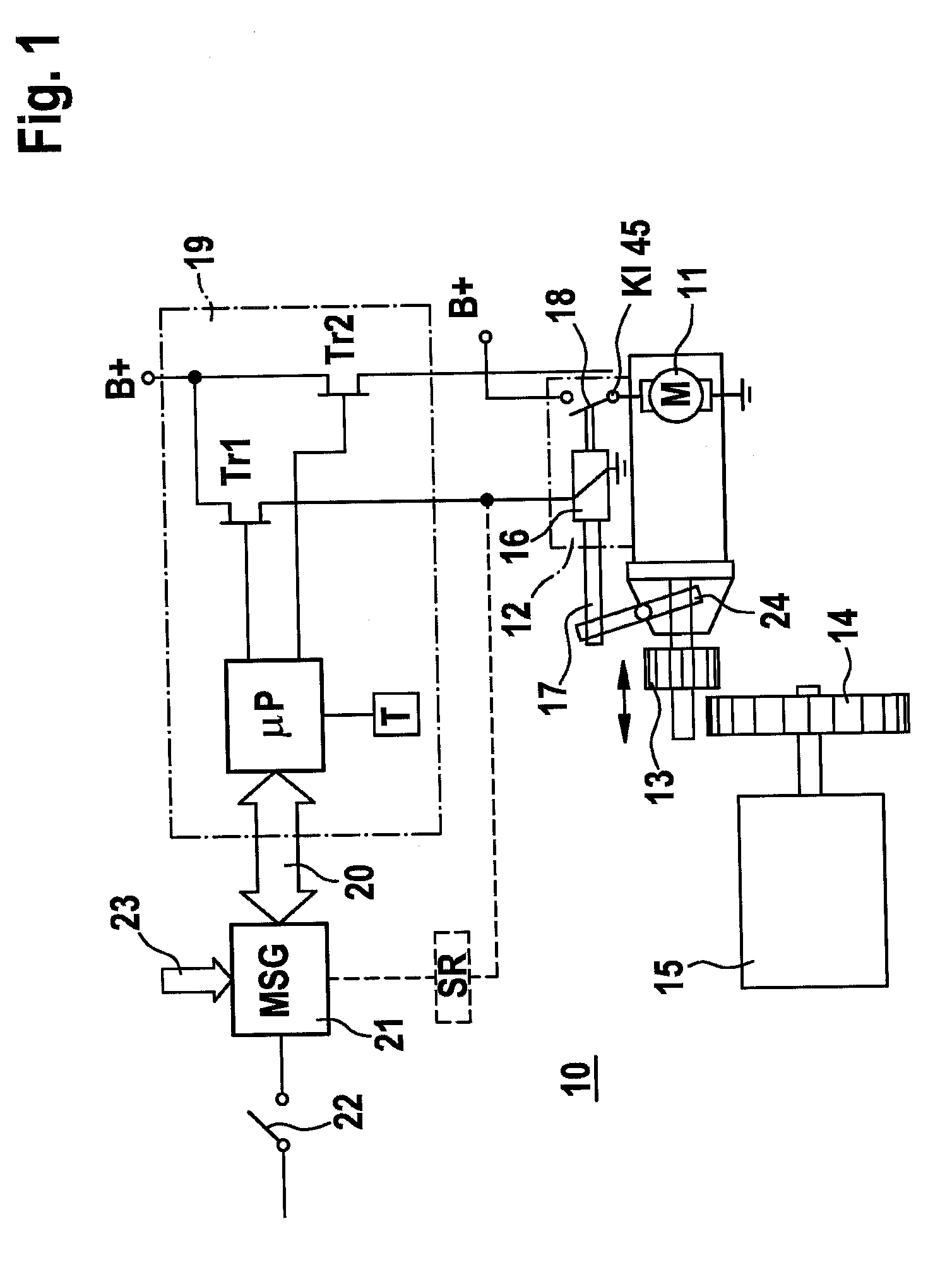
  • Figure 2
    Figure 2
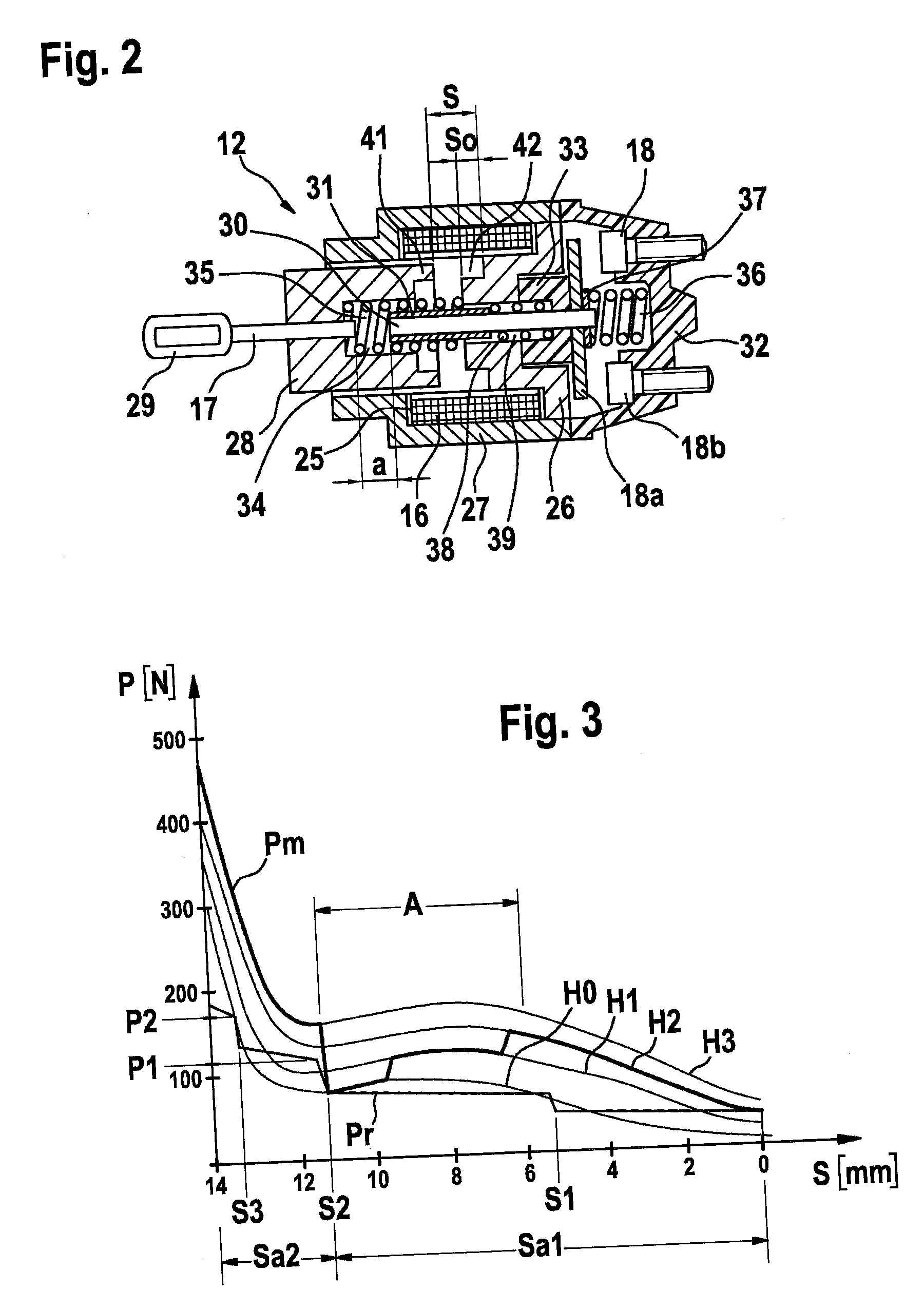
  • Figure 3
    Figure 3
Patent Text Reader

Abstract

The invention relates to a starter device (10) for internal combustion engines (15) in motor vehicles with a controller (19), a starter relay (12), a starter pinion (13) and a starter motor (11), whereby on each start / stop process in the stop phase (first step) the starter relay engages the starter pinion in the toothed ring (14) of the engine and in the start phase (second step) the engine is turned over by the starter motor. According to the invention, the starter pinion (13) may be engaged as quietly as possible for a subsequent starting process on switching off the engine (10) and held in position until starting, whereby, in the first step of the starting process, the armature (28) of the starter relay (12) is withdrawn with reduced force to a position with open switch contact (18) and held there until the start of the second step, whereupon the armature (28) closes the switch contact (18) of the starter motor with full force.
Need to check novelty before this filing date? Find Prior Art

Description

[0001] The present invention relates to a starting device for internal combustion engines in motor vehicles according to the general class of claim 1, with a starter relay according to the general class of claim 5.RELATED ART

[0002] Internal combustion engines of motor vehicles are typically started by a starter motor via a starter relay, which first engages a pinion of the starter motor in a toothed ring of the internal combustion engine and then connects—via a switch contact—the starter motor with the storage battery of the motor vehicle in order to turn the internal combustion engine over. It is also known to equip motor vehicles with an automatic start-stop system. This enables the internal combustion engine to be shut off automatically when the vehicle comes to a standstill for an extended period of time, e.g., at a red light. To continue driving, the internal combustion engine is automatically restarted. The stop state is detected, e.g., by registering the rotational speed of the...

Examples

Embodiment Construction

[0022]FIG. 1 shows, in a schematicized depiction, an inventive starting device—labeled with reference numeral 10—for internal combustion engines in motor vehicles. It essentially includes a starter motor 11, a starting relay 12, and a starter pinion 13 for engaging axially in a toothed ring 14 of an internal combustion engine 15, and a control unit 19. Starter relay 12 includes a relay winding 16, a plunger 17, and a switch contact 18 for switching the main current for starter motor 11. Control unit 19 supplies relay winding 16 with current via a transistor Tr1. Separately from this, starter motor 11 is controlled directly by control device 19 by a further transistor Tr2 via terminal KI45. Transistors Tr1 and Tr2 are connected, on the input side, via terminal B+, to the positive pole of the vehicle power supply of the not-shown motor vehicle, and to the positive pole of a storage battery of the motor vehicle. Transistors Tr1 and Tr2 are controlled at their control connections separa...