
Probe, probe set, probe-immobilized carrier, and genetic testing method
a technology of probeimmobilization carrier and probe, which is applied in the field of probe, probe, probe set, and genetic testing method, can solve the problems of difficult no easy task of design of probe, etc., and achieve the effect of maintaining the cross contamination level low
- Summary
- Abstract
- Description
- Claims
- Application Information
AI Technical Summary
Benefits of technology
Problems solved by technology
Method used
Image

Examples
example 1
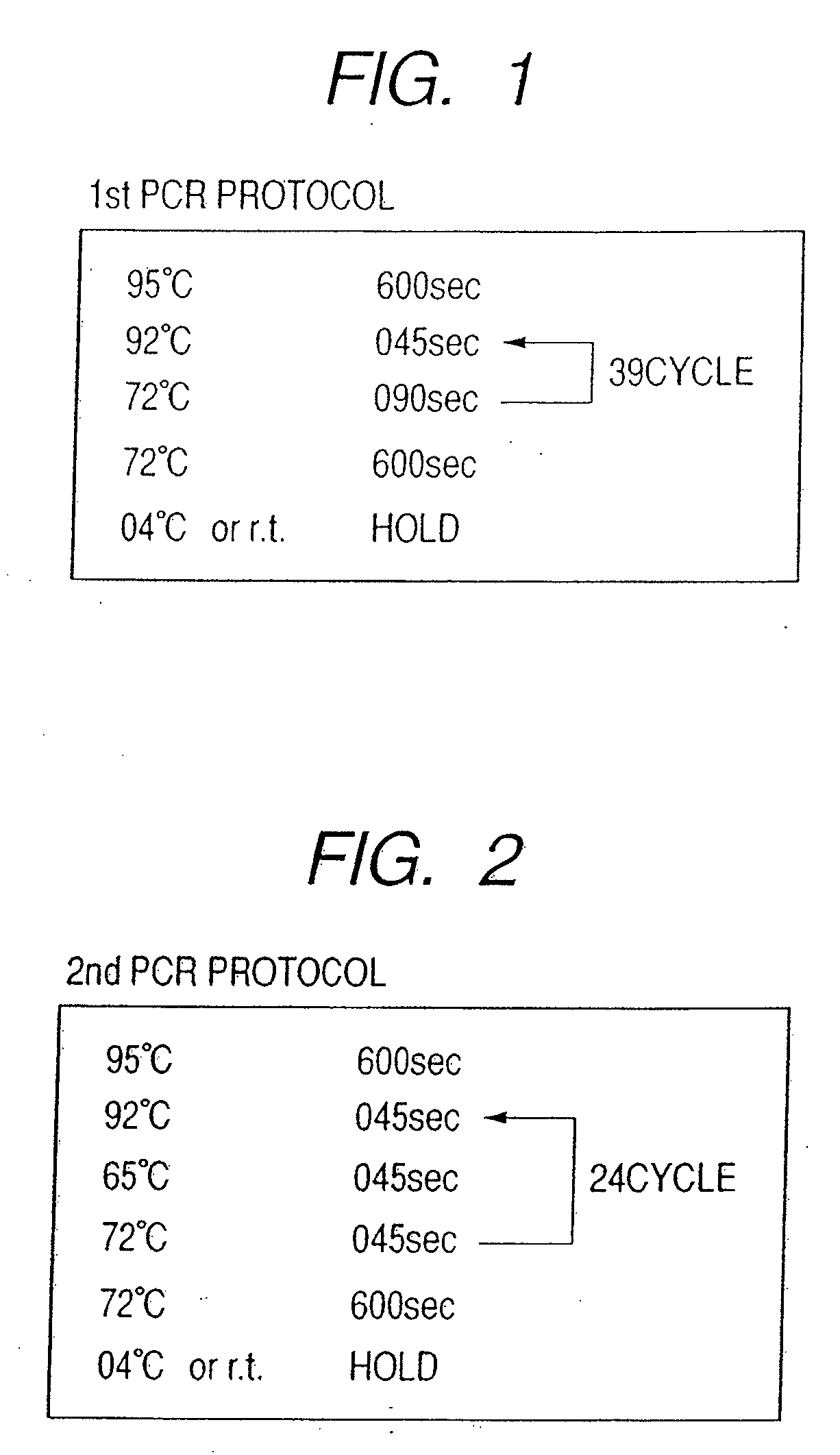
[0045]In this example, microorganism detection using 2-step PCR will be described.
[0046]1. Preparation of Probe DNA
[0047]A nucleic acid sequence shown in Table 1 was designed as probe to be used for detection of Propionibacterium (genus). Specifically, the following probe base sequence was selected from the genome part coding for the 16s rRNA gene of Propionibacterium (genus). This probe base sequence was designed such that it could have an extremely high specificity to the bacterium, and a sufficient hybridization sensitivity could be expected without variance for the probe base sequence. The probe base sequence need not always completely match with those shown in Table 1. Probes having base lengths of 20 to 30 which include the base sequence shown in Table 1 can also be used, in addition to the probe having the base sequence shown in Table 1. However, it should be ensured that the other portion of the base sequence than the portion shown in Table 1 in such a probe has no effect on...
example 2
Preparation of DNA Chip by which Various Bacterial Species can be Simultaneously Determined
[0102]In a manner similar to the stage 1 (Preparation of Probe DNA) of Example 1, probes having base sequences as shown in Table 8 below were prepared.
TABLE 8Bacterial speciesSEQ(or genus)IDof interestProbe sequence (5′→3′)NO.AnaerococcusTCATCTTGAGGTATGGAAGGGAAAGTGG35prevotiiGTGTTAGGTGTCTGGAATAATCTGGGTG36ACCAAGTCTTGACATATTACGGCGG37BacteroidesAAGGATTCCGGTAAAGGATGGGGATG38fragilisTGGAAACATGTCAGTGAGCAATCACC39BacteroidesAAGAATTTCGGTTATCGATGGGGATGC40thetaiotaomicronAAGTTTTCCACGTGTGGAATTTTGTATG41TAAGGCAGCTACCTGGTGACAGGAT42ClostridiumAATATCAAAGGTGAGCCAGTACAGGATG43difficileGACCGTAGTAAGCTCTTGAAACTGGGAGAC44TCCCAATGACATCTCCTTAATCGGAGAG45ClostridiumAACCAAAGGAGCAATCCGCTATGAGAT46perfringensGAGCGTAGGCGGATGATTAAGTGGG47CCCTTGCATTACTCTTAATCGAGGAAAT48CEggerthella lentaGGAAAGCCCAGACGGCAAGGGA49CCTCTCAAGCGGGATCTCTAATCCGA50TGCCCCATGTTGCCAGCATTAGG51FusobacteriumTTTTCGCATGGAGGAATCATGAAAGCTA52necrophorumAGATGCGCCGGTGCCC...
example 3
[0108]Using the DNA chip prepared in Example 2, detection was attempted when a plurality of bacterial species was present in an analyte.
[0109]A culture medium in which Propionibacterium acnes as Propionibacterium (genus) and Eggerthella lenta were cultured was prepared and subjected to the same treatment as that of Example 1 to react with the DNA chip.
[0110]As a result, only the spots of the probes having SEQ ID NOS. 49, 50, 51, 87, 88, 89, and 94 showed high fluorescence intensity, so the coexistence of those bacteria was able to be simultaneously confirmed.
[0111]The present invention is not limited to the above-mentioned embodiments and various changes and modifications can be made within the spirit and scope of the present invention. Therefore to apprise the public of the scope of the present invention, the following claims are made.
[0112]While the present invention has been described with reference to exemplary embodiments, it is to be understood that the invention is not limite...
PUM
| Property | Measurement | Unit |
|---|---|---|
| melting temperatures | aaaaa | aaaaa |
| concentration | aaaaa | aaaaa |
| size | aaaaa | aaaaa |
Abstract
Description
Claims
Application Information
 Login to View More