
Design support method, design support system, and design support program for heat convection field
a technology of design support and heat convection, applied in the direction of instruments, cad techniques, analogue processes for specific applications, etc., can solve the problems of difficult to realize optimization within a reasonable amount of time, inapplicability of the boundary condition technique, etc., and achieve the effect of reducing the number of numerical simulations
- Summary
- Abstract
- Description
- Claims
- Application Information
AI Technical Summary
Benefits of technology
Problems solved by technology
Method used
Image

Examples
Embodiment Construction
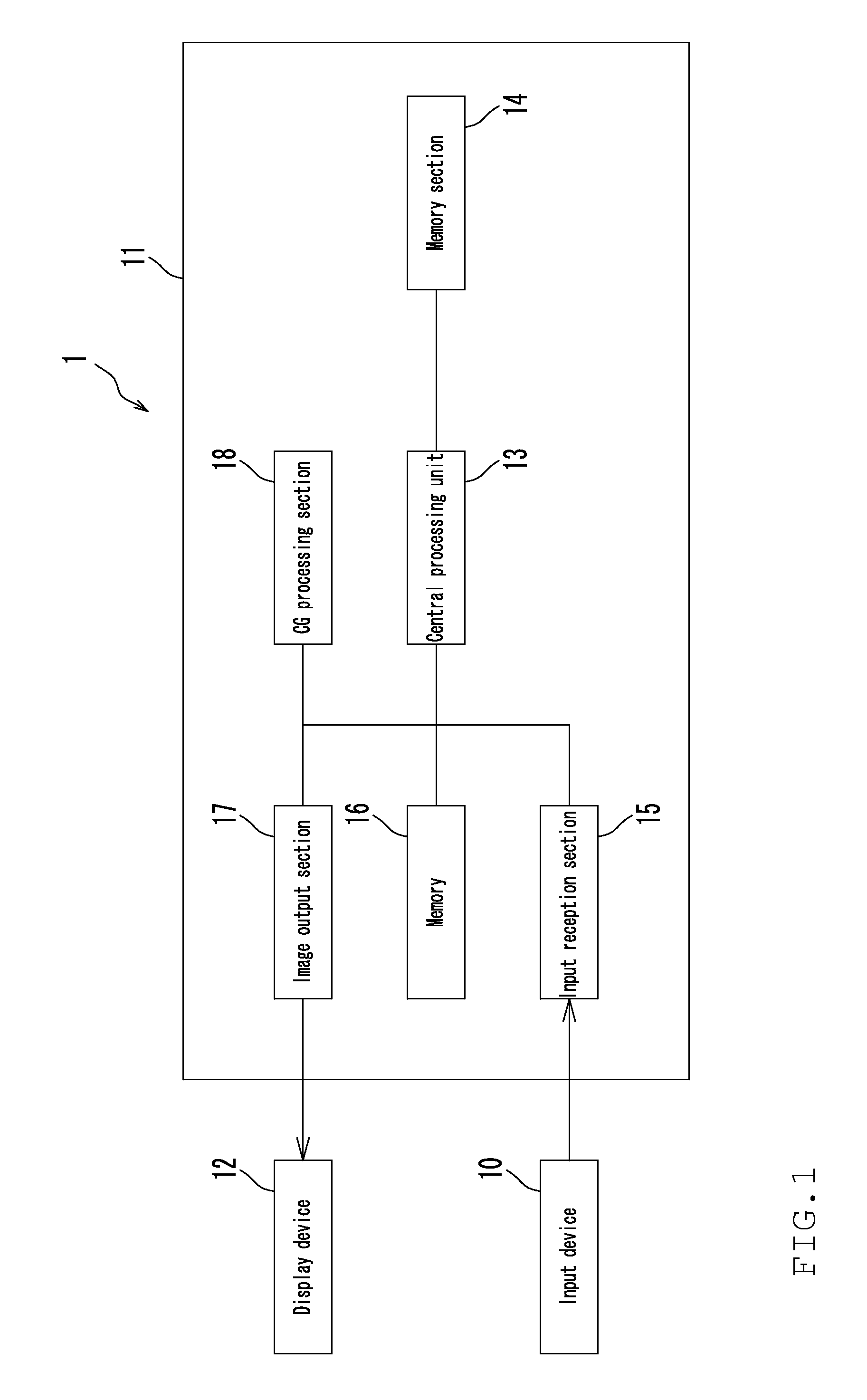
[0036]Hereinafter, preferred embodiments of the present invention will be described in detail with reference to the included drawings.
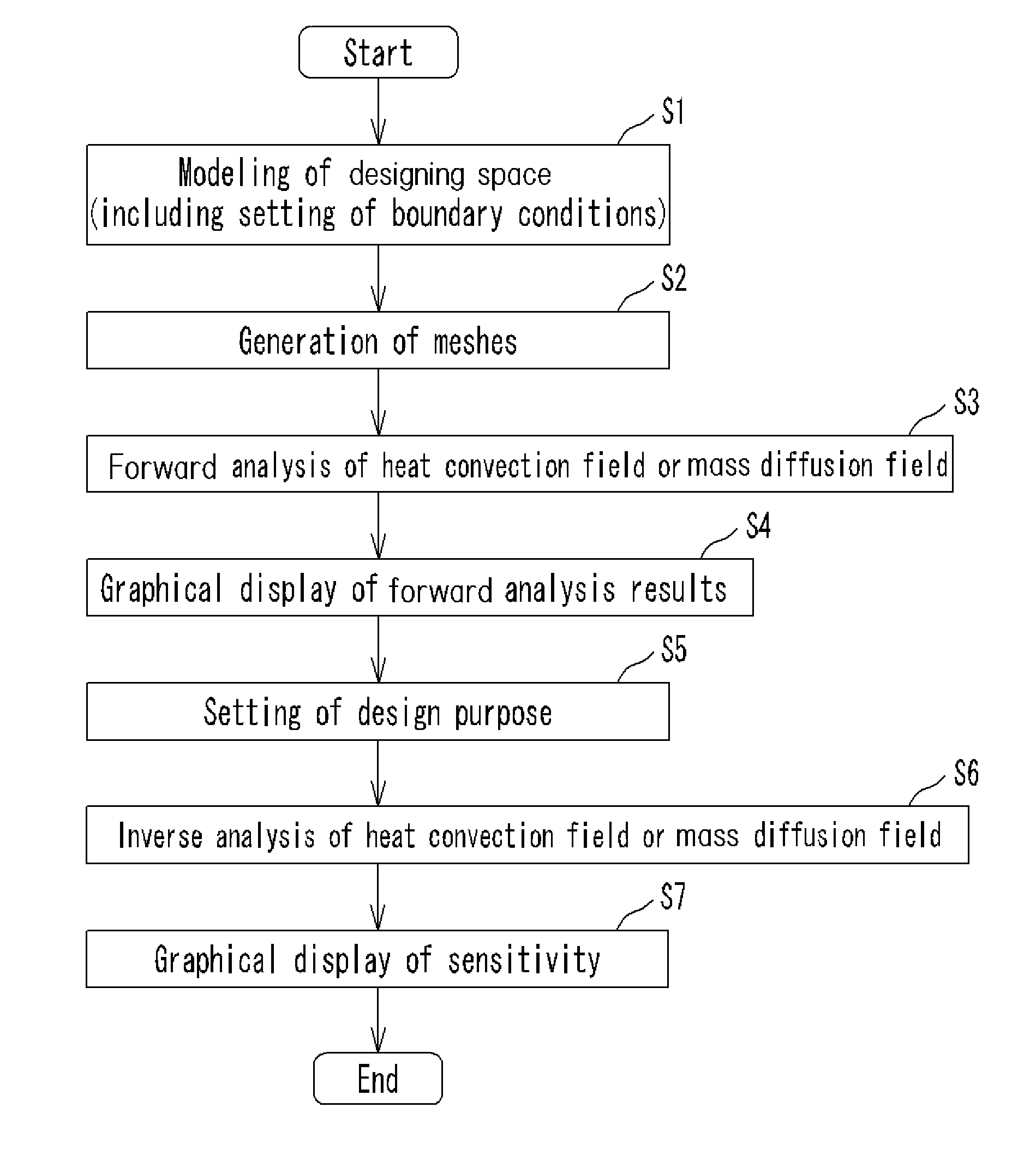
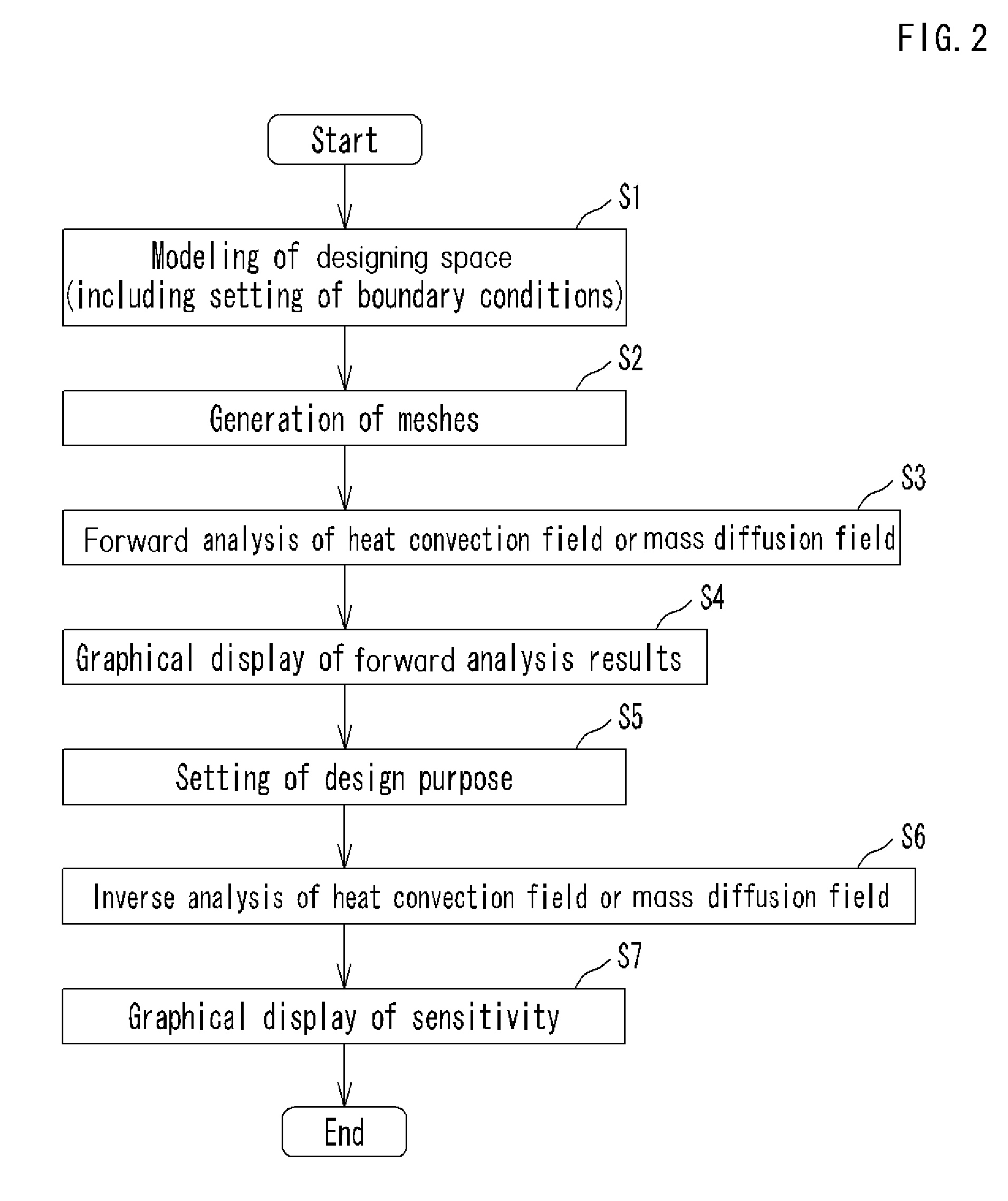
[0037]In one preferred embodiment according to the present invention, numerical analysis, for example, a forward analysis, is performed with predetermined boundary conditions (for example, initially set values of designing parameters). Using the results of the forward analysis, an inverse analysis is performed based on an adjoint numerical analysis. In this way, an analysis of sensitivity for a design purpose is performed. With the adjoint numerical analysis, the sensitivity to any number of designing variables and any distribution designing variable is obtained by performing a numerical analysis once. As a result, a quantitative and visual guide on how to improve the design is obtained. In another preferred embodiment, the result thus obtained is used together with mathematical programming. In this case, it is possible to realize an automatic optimiz...
PUM
 Login to View More
 Abstract
Description
Claims
Application Information
 Login to View More