

Electro-dynamic or electro-static lens coupled to a stacked ring ion guide
a stacked ring ion guide and electro-static technology, applied in the direction of isotope separation, electric discharge tube, separation process, etc., can solve the problems of large transmission loss large differences of multiply charged ions, and strong field at the entrance of ions,
- Summary
- Abstract
- Description
- Claims
- Application Information
AI Technical Summary
Benefits of technology
Problems solved by technology
Method used
Image

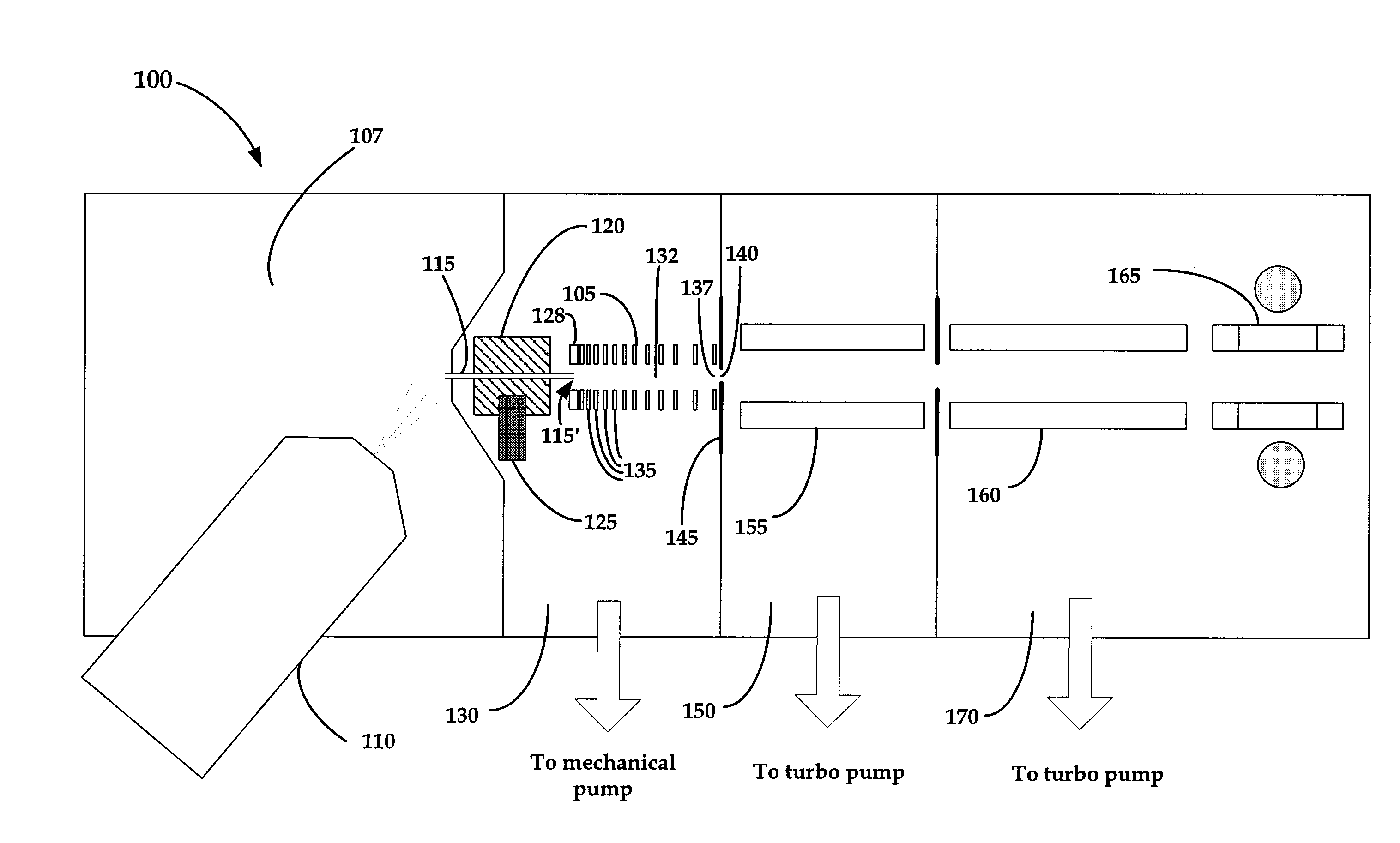
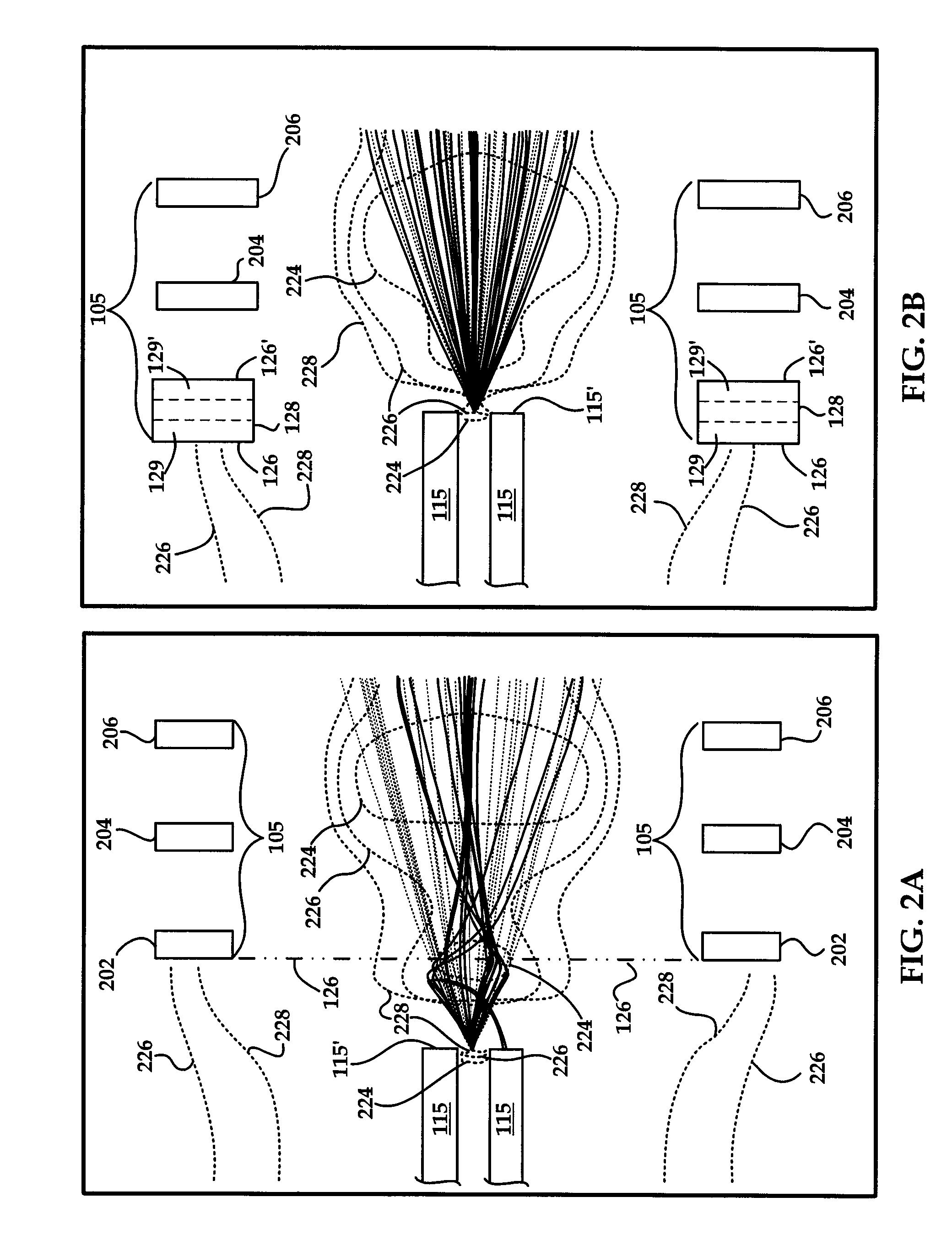
Examples
Embodiment Construction
[0019]In the description of the invention herein, it is understood that a word appearing in the singular encompasses its plural counterpart, and a word appearing in the plural encompasses its singular counterpart, unless implicitly or explicitly understood or stated otherwise. Furthermore, it is understood that for any given component or embodiment described herein, any of the possible candidates or alternatives listed for that component may generally be used individually or in combination with one another, unless implicitly or explicitly understood or stated otherwise. Additionally, it will be understood that any list of such candidates or alternatives is merely illustrative, not limiting, unless implicitly or explicitly understood or stated otherwise.
[0020]Moreover, unless otherwise indicated, numbers expressing quantities of ingredients, constituents, reaction conditions and so forth used in the specification and claims are to be understood as being modified by the term “about.” ...
PUM
 Login to View More
 Abstract
Description
Claims
Application Information
 Login to View More