[0005]In embodiments, a frame joint
system is provided. Embodiments of the frame joint system find utility in many applications where rigid corners and other frame intersections are desired. Embodiments of the frame joint system include a quick release
coupling to secure a mitered corner joint or other frame joints together. In some embodiments the quick release coupling includes first and second sleeve members and a gripping member. The frame joint system provides improvements in safety, reliability, ruggedness, ease of
assembly and disassembly, rigidity, ease of manufacturing, and functionality. Embodiments provide improved functionality, particularly when the embodiments are used in temporary display systems that are frequently moved, erected, handled, and disassembled. Improvements are achieved by reducing the number and complexity of the parts, which improves reliability and reduces cost. A minimum number of operations are required to manufacture and install the components, thus reducing costs and improving quality. Simplicity of
assembly and disassembly, rigidity, and durability are of great significance in certain applications such as, for example, temporary displays.
[0006]In embodiments that are particularly suited for use, among other uses, in frames in temporary displays, the frame joint system allows the quick and repeated erection, handling, and disassembly of even large display frames in the order of six feet by ten feet, or larger. The existence of rigid joints permits the handling of an assembled frame without damaging it.
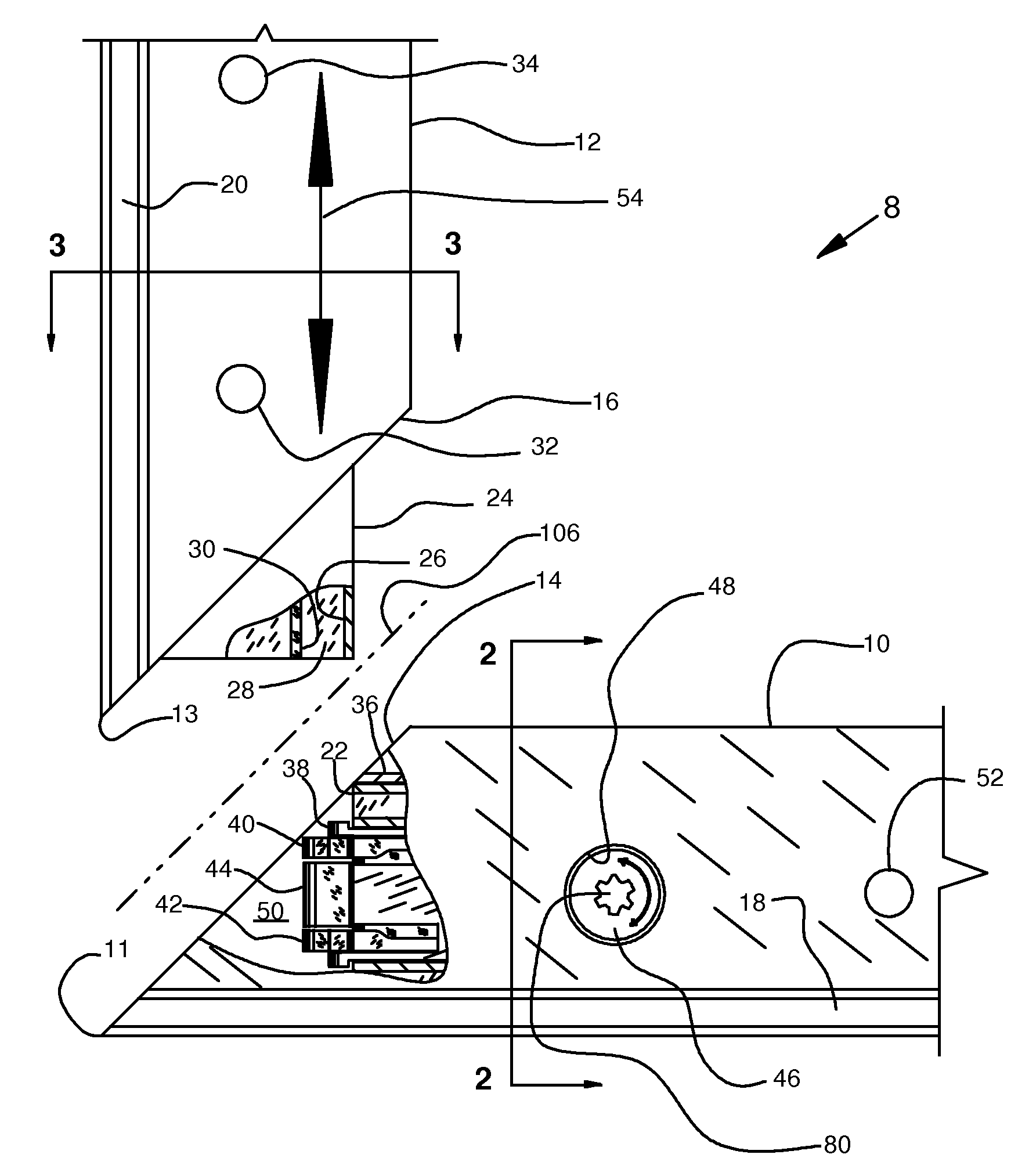
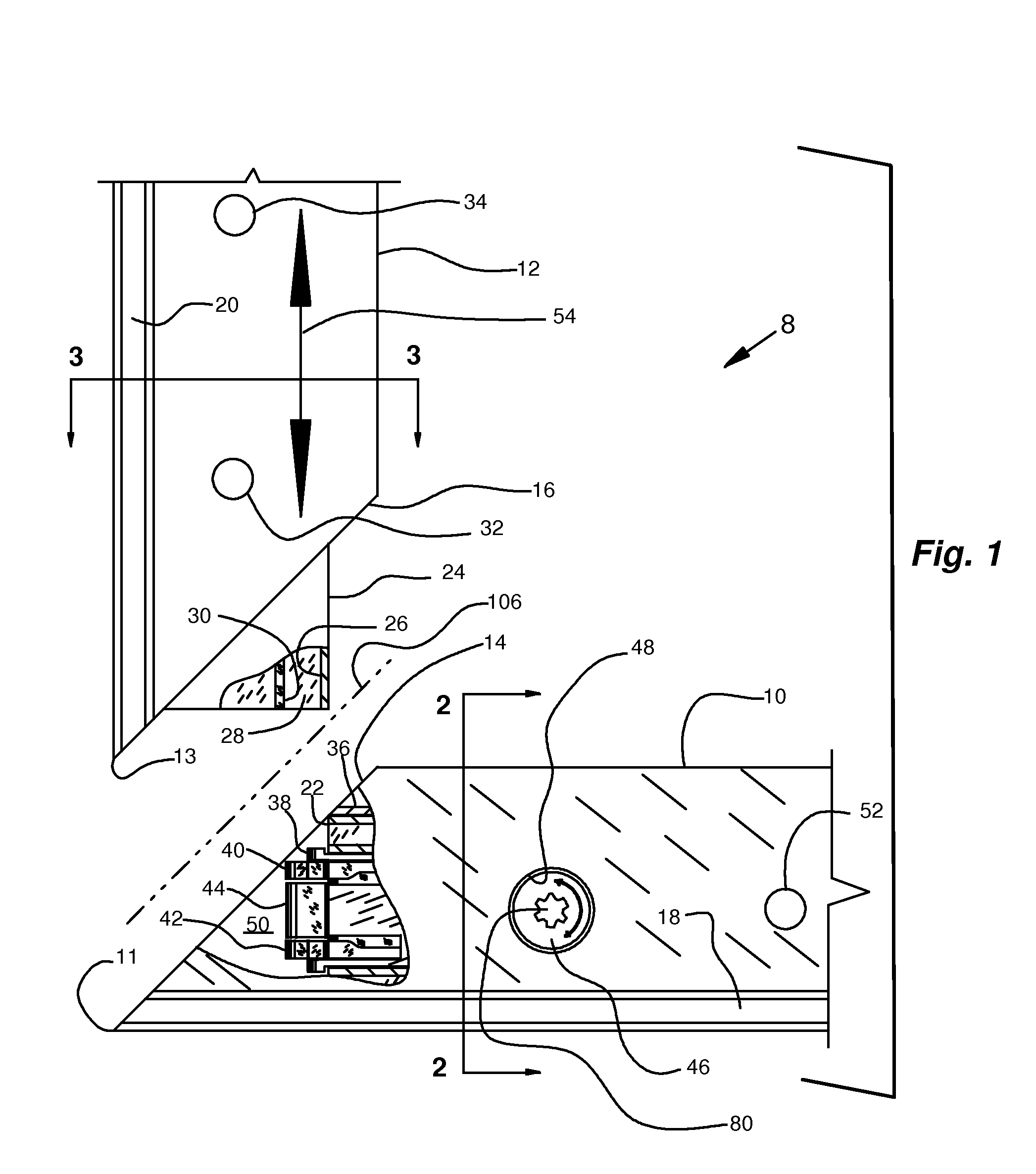
[0007]The elements of a quick release coupling are generally permanently assembled to frame members so there are no loose parts to keep track of as the disassembled frame is moved from one location to another. In particular embodiments, for example, once the mitered ends of the respective frame members are brought into alignment with one another, a twist of a simple
hand tool moves gripping elements in a gripping member between disengaged and engaged configurations. This locks the frame members into an assembled relationship. According to certain embodiments, similarly assembling three other joints between frame members quickly and easily secures the frame members into a substantially rigid generally rectangular frame. The
assembly of the entire frame typically takes less than a minute. Disassembly is generally even quicker.
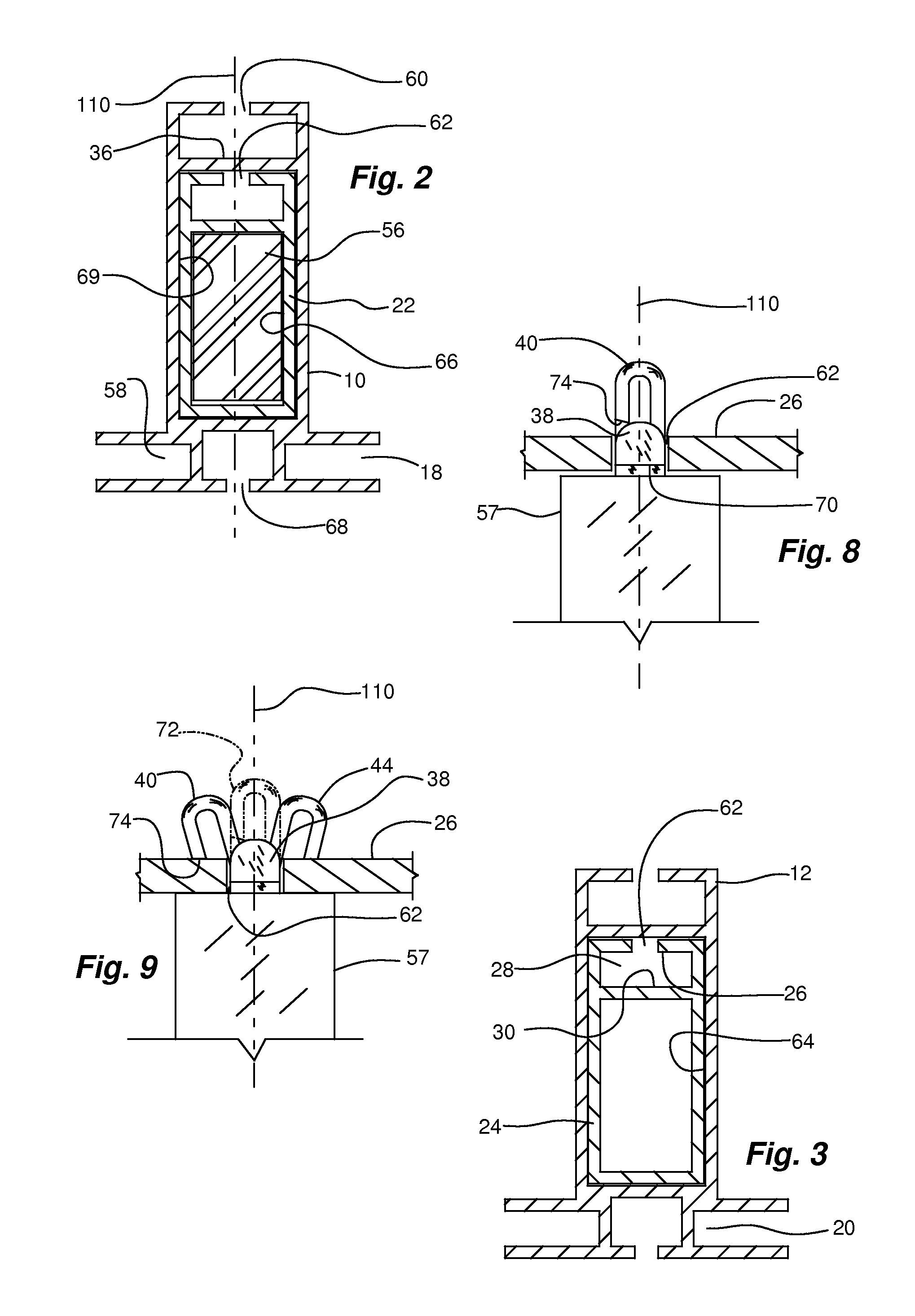
[0008]In embodiments, rigidity in the assembled joints is accomplished by using a quick release coupling in which, among other things, the area of gripping engagement is removed both spatially and angularly from the plane of the joint, and the gripping elements themselves are substantially protected from
torsional forces. According to certain embodiments this spatial and angular separation from the joint plane is accomplished by the use of a quick release coupling that includes sleeve members nested in frame members, and a gripping member nested in a sleeve member. The gripping member is quickly actuatable between engaged and disengaged configurations.
[0013]According to certain embodiments, a quick disconnect gripping member takes the form, for example, of a cassette member that is axially slidably received and retained in the sleeve cavity in the first sleeve member. The retention of the gripping member in the sleeve cavity is permanent in the sense that it need not be removed from the sleeve cavity when the frame joint system is disassembled.
[0018]In certain embodiments, the frame joint extends at approximately 45 degrees to the longitudinal axes of the mated frame members. According to further embodiments, the gripping member is axially slidably received and releasably retained in the sleeve cavity. According to some embodiments, the first and second sleeve members are substantially shorter than the first and second frame members in which they are mounted. In general, the respective sleeve members need only be of sufficient
axial length so that when retained in the respective frame cavities and releasably engaged in a joint system, they are substantially prevented from lateral or rotational movement in the respective frame members in which they are nested.


 Login to View More
  Login to View More