

Method and apparatus for controlling ventilation systems
- Summary
- Abstract
- Description
- Claims
- Application Information
AI Technical Summary
Benefits of technology
Problems solved by technology
Method used
Image

Examples
Embodiment Construction
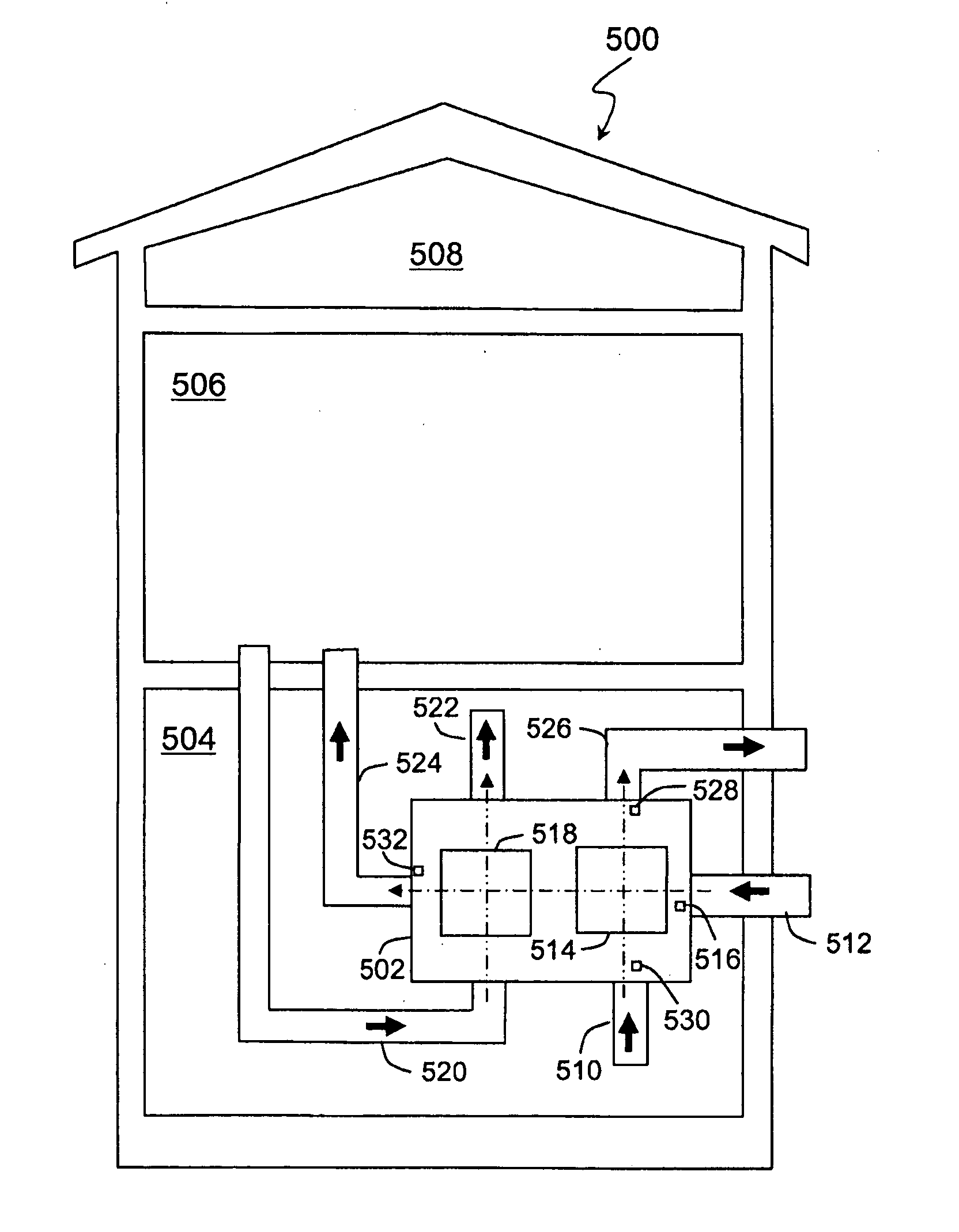
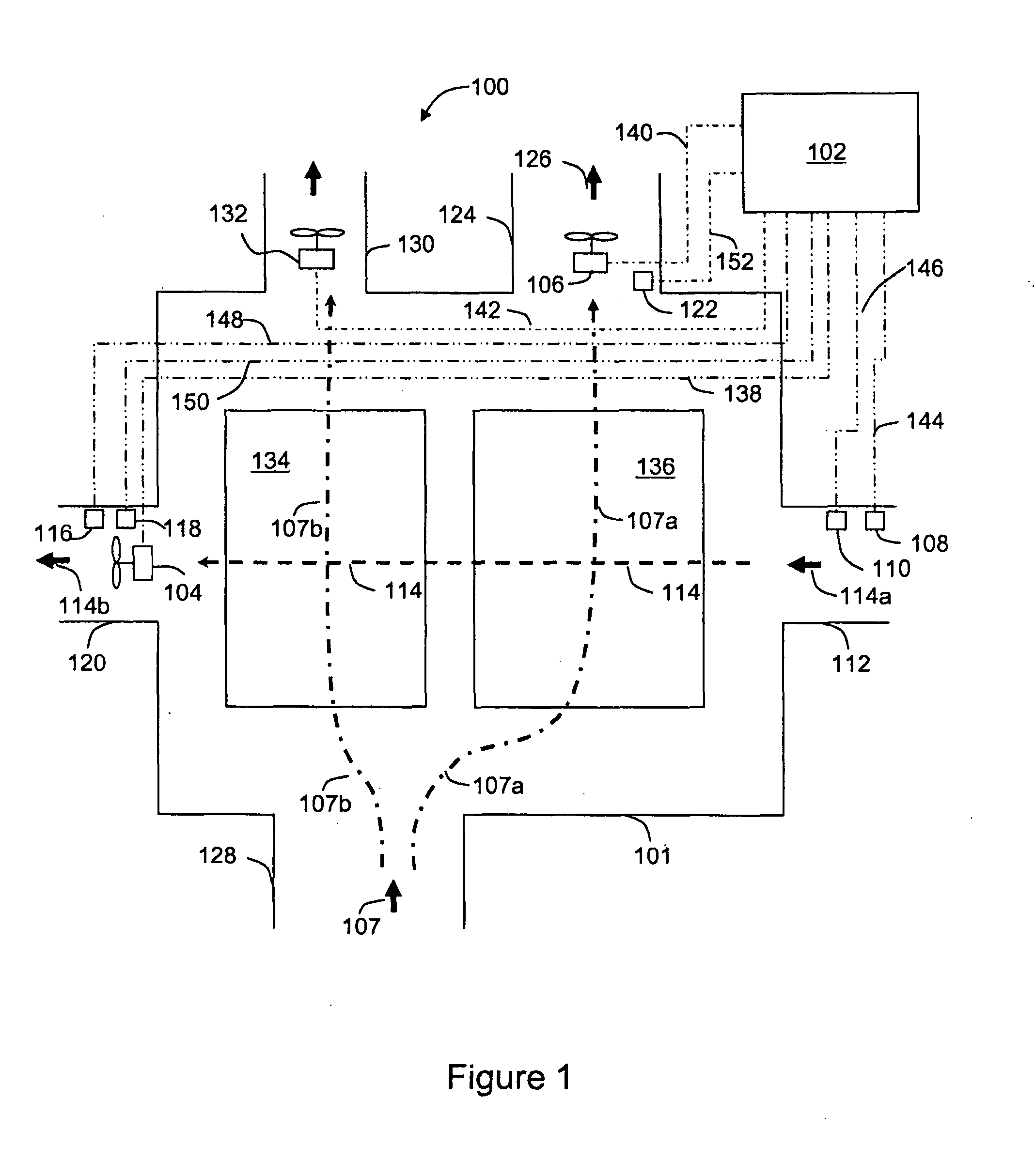
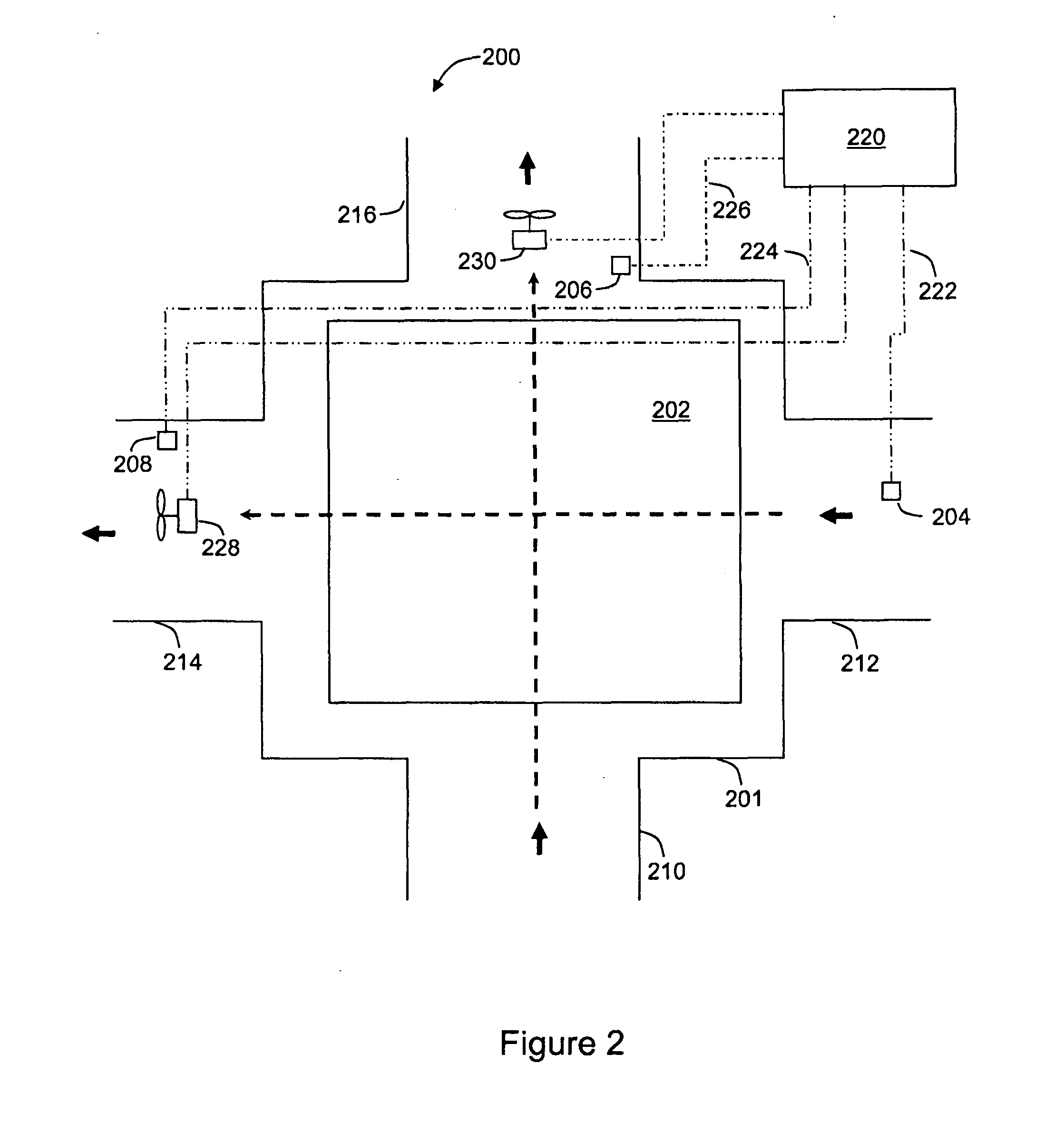
[0045]In accordance with one embodiment of the present invention, a first temperature sensor may be positioned in the supply airflow at a position proximate to a supply inlet of the ventilator. A second temperature sensor may be positioned in the supply airflow at a position proximate to a supply outlet of the ventilator. A third temperature sensor may be positioned in the exhaust airflow at a position proximate to the exhaust outlet of the ventilator. Optionally, a fourth temperature sensor may be positioned in the return airflow at a position proximate to the exhaust inlet of the ventilator.
[0046]An energy exchange core, such as a heat exchange core or an enthalpy exchange core, may also be provided where the supply airflow and the exhaust airflow do not mix in the ventilator. Alternatively, the airflows may mix in the ventilator in the absence of a core. Energy transfer may occur between the supply and exhaust airflows, with heat and / or moisture transferred therebetween.
[0047]A r...
PUM
 Login to View More
 Abstract
Description
Claims
Application Information
 Login to View More