With the dramatic expansion of knowledge in
medicine over the last century came an equally extensive increase in complexity
in patient treatments for an ever expanding
list of illnesses.
The usage of these resources within a hospital is currently poorly coordinated with manually created schedules, an inefficient mix of paper charts and electronic medical records (EMR), along with numerous phone calls, pages and voice mails.
The resulting
system is very inefficient, requiring the
nursing staff to spend a disproportionally large amount of their time on care coordination.
Despite these efforts patients routinely wait long hours for care, no matter if previously scheduled or not.
As a consequence hospitals have to, at times, go on ambulance diversion where ambulances are redirected to other (potentially more distant) facilities since the ED can not accept any more patients.
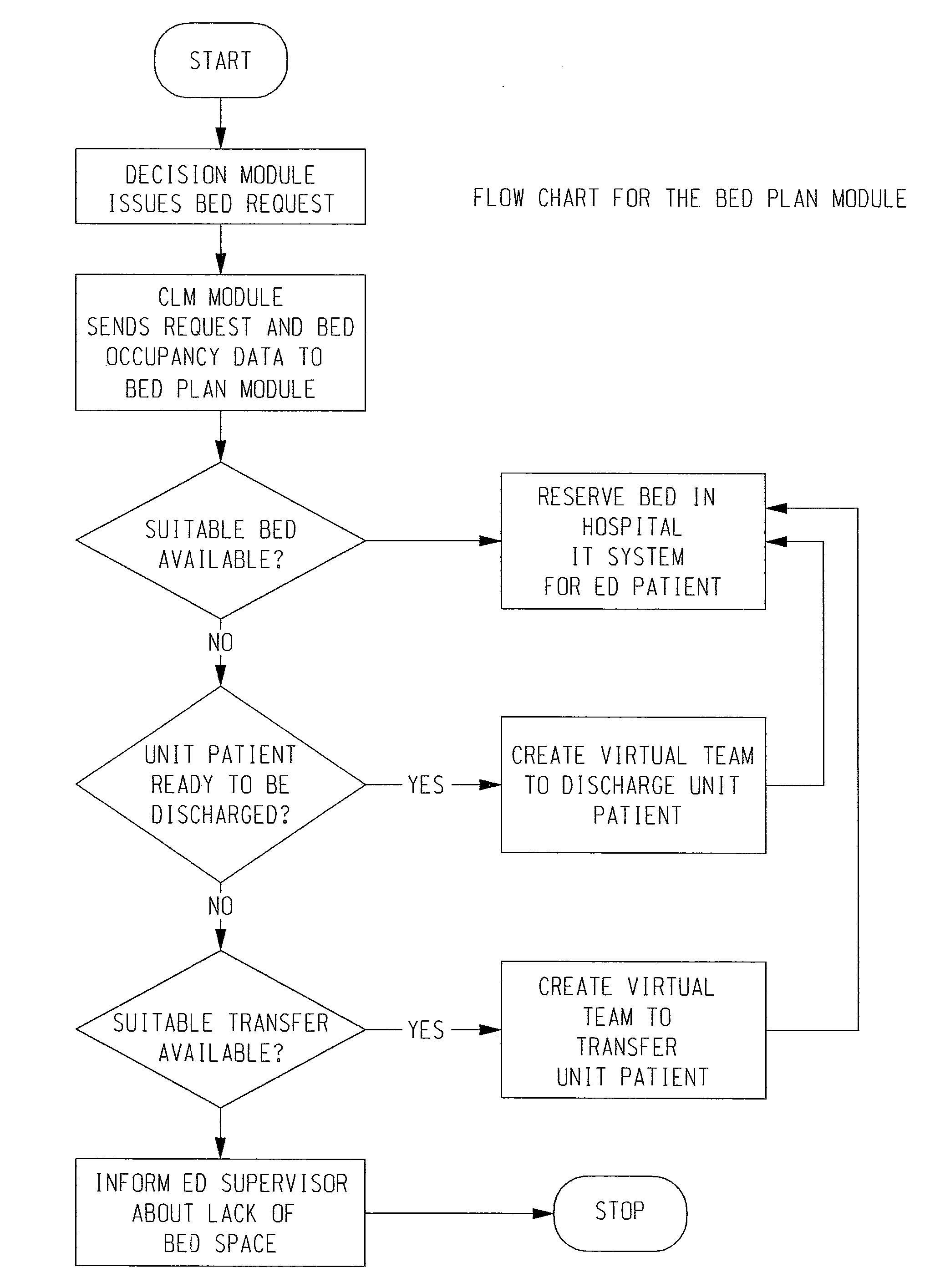
If the in-hospital unit has sent home nurses for the day already, the unit may not be able to take on any more patients from the ED even if beds would be available.
During the execution of this process, the patient is ‘boarded’ in the
emergency department, continuing to tie up costly resources.
As a consequence, the preparation of resources for patients that are admitted to the hospital is not started until a formal admission decision has been made, often hours after the patient arrived at the ED unit.
The problem arising from this is the
extended time that admitted patients have to wait in the ED (while continuing to consume ED resources) until they can be transferred to the appropriate interior unit.
Even if patients or ambulances do call ahead, EDs often lack the ability to use “call in” information of any kind to prepare resources for their incoming patients.
They often only have limited information about the general capabilities and the current status of a given ED.
As a consequence, patients whose condition can be treated at an urgent
care center may end up going to an overcrowded emergency department, enduring a long wait time while further contributing to the patient overload there.
The lack of information about emergency departments extends to emergency medical technicians (EMTs) in ambulances as well.
They generally do not have up-to-date information about current ED patient levels and sometimes even lack accurate information about the capabilities of emergency departments as shown in studies in which between 7% and 21% of trauma patients were taken to the wrong hospital.
Furthermore, patients coming to an emergency department (either on their own or in an ambulance) and the emergency department to which a patient is heading to typically know very little about each other.
As a consequence patients (and ambulances) regularly make suboptimal decisions about which facility to go to and EDs are unable to prepare resources for incoming patients.


 Login to View More
  Login to View More