An eighteenth object of the present invention is to provide a
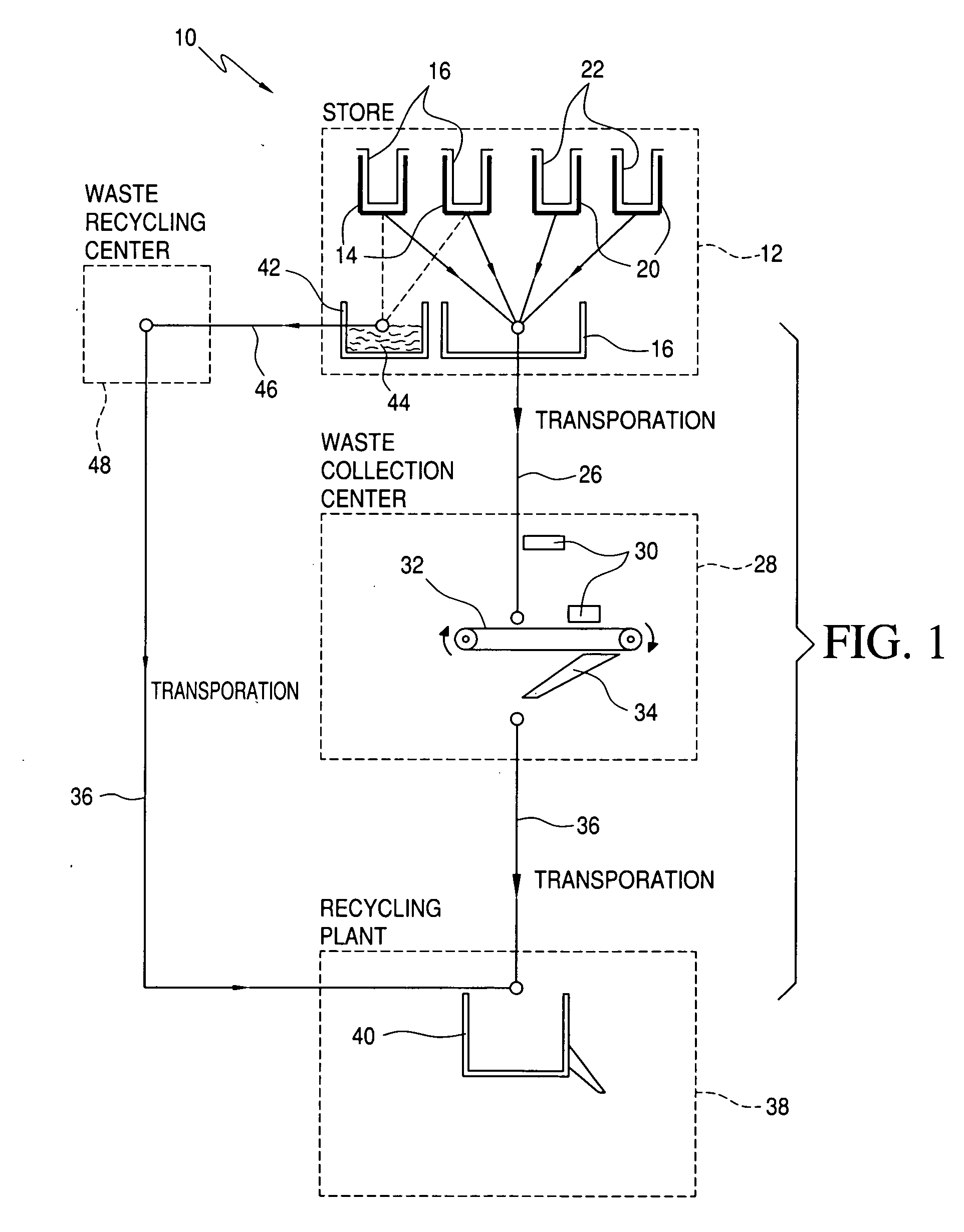
waste recycling collection system, which affords the ability to track custody of targeted waste from the waste receptacle to the recycling process to eliminate
contamination of the targeted waste being recycled in combination with the waste collection device according to the present invention.
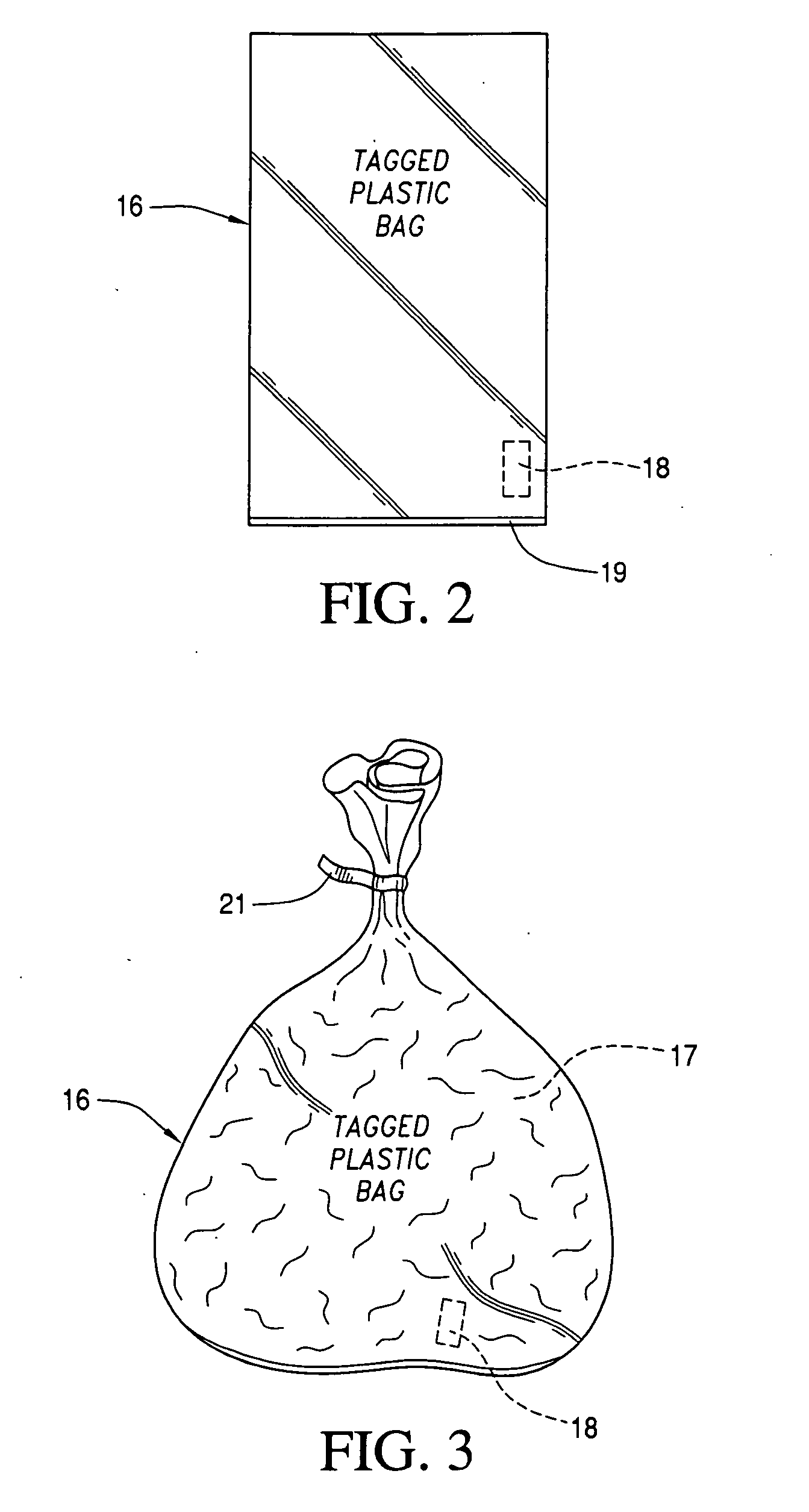
In a preferred embodiment, multiple RF tags are associated with each
plastic bag or other container to provide redundancy in the event one or more RF tags are damaged or disabled so that the
plastic bag or container can still be located, for example, in the general
waste stream at a waste collection center. The RF tags are relatively inexpensive, and thus economically allowing for redundancy of the RF tags in the applications of the present invention(s).
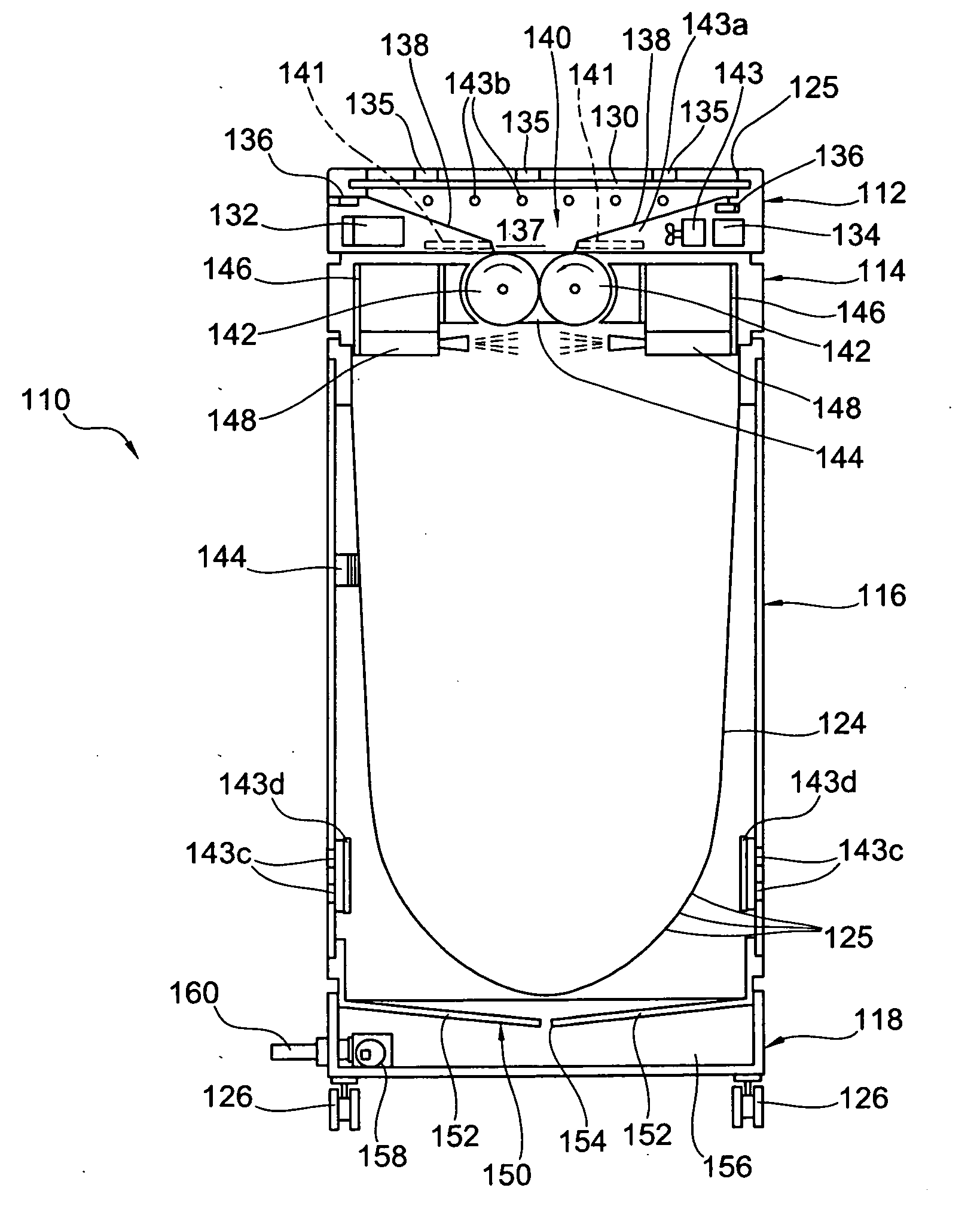
A collection vessel lower portion is located below the collection vessel housing. In a preferred embodiment, the collection vessel lower portion contains a collection pan,
sump pump, drain and / or
siphon to collect and eliminate the water or liquid from the waste collection device.
When the waste collection bag is filled, the waste collection bag is removed from the waste collection device. For example, a front door on the collection vessel housing is opened, and then the filled waste collection bag is removed therefrom. In a preferred embodiment, a transport bag is fitted around (i.e. nested outside) the waste collection bag just prior to removal of the waste collection bag from the collection vessel housing. The transport bag is preferably a non-perforated bag configured to contain and seal the filled waste collection bag, and prevent leaking of the waste collection bag during removal from the collection vessel housing and subsequent transport and storage thereof.
The collection bag upper portion is preferably provided with an access door through which waste can be inserted. For safety purposes, the access door is preferably an automated door having a
proximity sensor to “sense” the presence of a hand as it approaches the opening to open the automated door. The shredder mechanism located below the automated door is provided with an
interlock so that the shredder mechanism will not operate when the automated door is open, and will lock the automated door closed during operation of the shredder mechanism. The
interlock can also include one or more proximity sensors so that the shredder mechanism will not operate if an individual or user is within a predetermined distance of the waste collection device (e.g. within several feet of the waste collection device). This provides
interlock redundancy, and an additional level of safety against injury to the individual or user of the waste collection device.
The waste collection device is preferably configured to disinfect the waste, in particular disinfect the waste as it is being inserted into the waste collection device and / or when the waste is being stored inside the waste collection device. For example, the waste collection device is provided with a spray device for disbursing a liquid or powdered
disinfectant onto the shredded waste. The spray device is preferably located inside the waste collection device, and configured to spray the shredded waste falling out of the shredder mechanism. Alternatively, or in addition, the spray device disburses
disinfectant onto the waste sitting in the waste collection bag. For example, the
waste stream is sprayed when exiting the shredder mechanism, and again sprayed at a later time when sitting in the waste storage bag. A time sequenced or programmed sequence of spraying can be configured to ensure that the waste is adequately disinfected while sitting in the waste storage bag. In operation, a waste storage bag can be replaced in minutes, hours, or even days depending on the amount of use of the particular waste collection device. Thus, timed or programmed re-treatment of the waste may be necessary to prevent deterioration of the waste stock material to allow later recycling thereof.



 Login to View More
  Login to View More